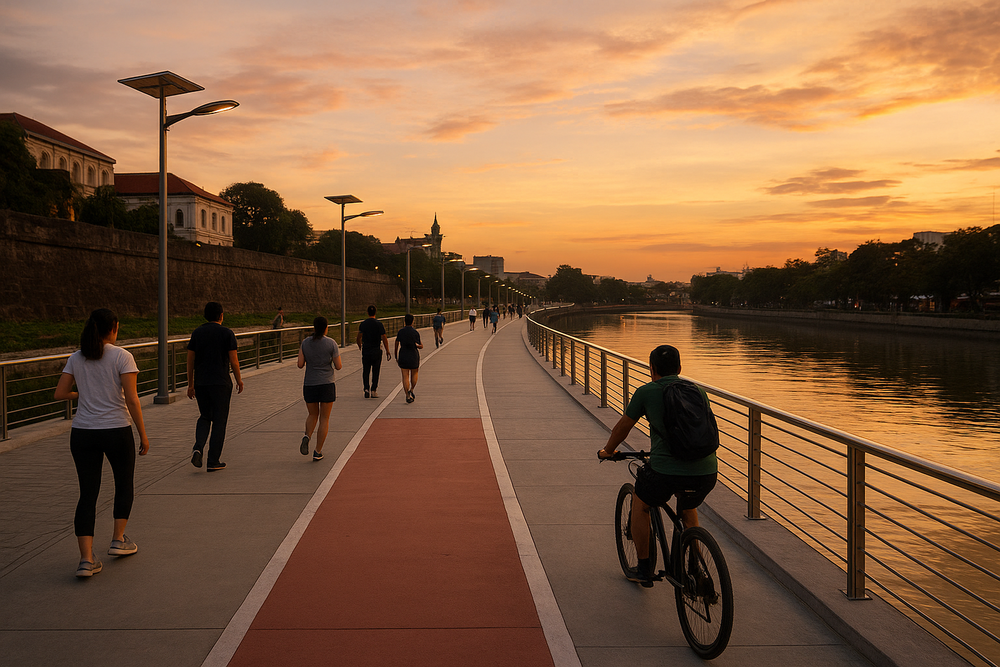
The Pasig River Esplanade is expected to open to the public within 10 days, marking the near-completion of one of Metro Manila’s most ambitious urban rehabilitation efforts in decades. The announcement, made on Saturday by First Lady Liza Araneta-Marcos, places the finishing touches of the riverside promenade firmly on track for late January 2026, in time for preparations linked to the Philippines’ hosting of ASEAN 2026.
The esplanade forms part of the broader Pasig Bigyang Buhay Muli (PBBM) programme — a government-led initiative to restore the historically vital but long-polluted Pasig River into a walkable, livable public space. Spanning a river system that stretches 27 kilometres across Metro Manila, the project has steadily reshaped sections of the riverbank into landscaped walkways, heritage corridors and bike-friendly routes.
A River Long Neglected Nears a Public Return
Once a commercial artery during the Spanish colonial era, the Pasig River deteriorated into one of Southeast Asia’s most polluted waterways by the late 20th century. Its revival has been attempted repeatedly since the creation of the Pasig River Rehabilitation Commission (PRRC) in 1999, though progress was often slowed by fragmented oversight and chronic pollution.
The current push gained momentum in July 2023, when President Ferdinand R. Marcos Jr. issued an executive order creating an Inter-Agency Council for Pasig River Development, bringing together 15 government agencies and seven local councils. The aim was to streamline decision-making and deliver visible results within three years.
Those results are now coming into view along Manila’s historic core.
Intramuros Phases Lead the Transformation
The most advanced sections of the esplanade are located in Intramuros, where multiple phases have already opened:
- Phase 1C (Jones Bridge to Plaza Mexico), opened in June 2024, introduced a two-level promenade with a roof-deck walkway, bike lanes and more than 30 commercial stalls.
- Phase 3 (Plaza Mexico to Fort Santiago), inaugurated in February 2025, created a heritage corridor linking centuries-old stone walls and plazas.
- Phase 4 (Post Office to Arroceros Park), opened in October 2025, connected the riverwalk to Liwasang Bonifacio and Manila City Hall.
Together, the completed Intramuros stretches add roughly 2,000 square metres of new public open space, much of it accessible until midnight under solar-powered lighting.
Final Works Under Way
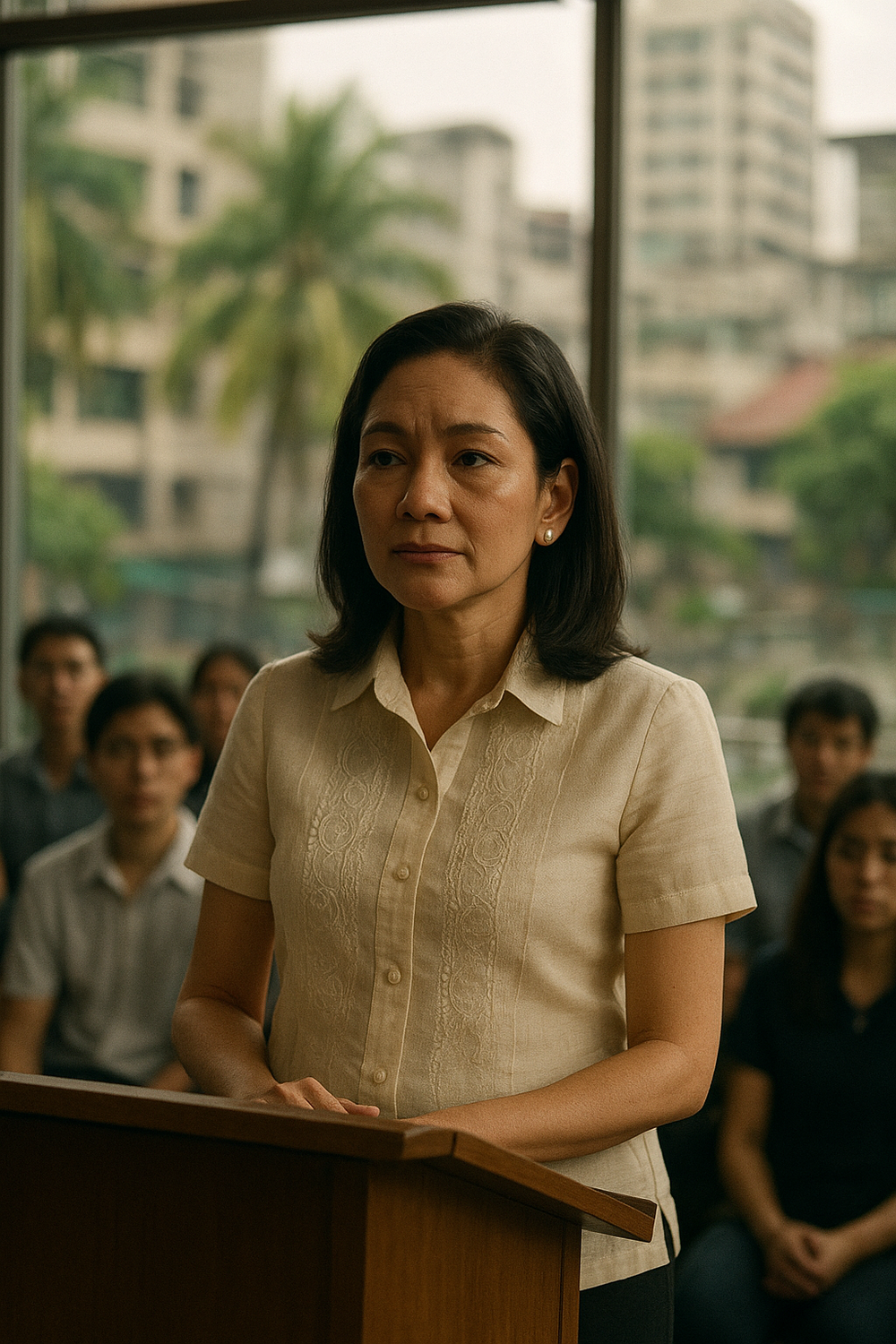
Speaking on January 18, First Lady Marcos said the remaining enhancements were in their final stages. “The improvements at the Pasig River Esplanade are expected to be completed by late January,” she said, describing the project as part of the country’s preparations for ASEAN 2026.
The last phase includes finishing touches to pedestrian pathways, landscaping, lighting and utility integration. Once opened, the esplanade will allow uninterrupted foot and bicycle access between key civic and historic landmarks, an uncommon luxury in one of Asia’s most densely populated capitals.
Private Muscle, Public Oversight
A defining feature of the project has been the heavy involvement of the private sector. San Miguel Corporation (SMC) has led large-scale dredging operations, removing more than 1.3 million metric tonnes of silt and solid waste from the river by August 2025 — work carried out at no cost to the government.
Water concessionaires Maynilad and Manila Water have installed sewage treatment facilities to curb direct wastewater discharge, while environmental groups assisted in clearing smaller tributaries.
DHSUD Undersecretary Avelino Tolentino III said the collaboration showed how private initiatives could reinforce public stewardship of shared spaces, boosting commerce while strengthening long-term custodianship of the river.
Urban Gains for Daily Life
Beyond its visual appeal, the esplanade is designed as everyday infrastructure. The promenade provides free, safe space for joggers, cyclists and families, shortens walking routes between government offices, and creates small-scale livelihoods through regulated vending.
Solar lighting, landscaped buffers and sewage treatment aim to improve both safety and public health — small but significant gains in neighbourhoods long exposed to flooding and polluted waterways. For residents of riverside districts, the esplanade functions less as a tourist attraction and more as an outdoor extension of the city’s limited living space.
Challenges Beneath the Surface
Urban planners caution that success now depends on sustained maintenance and local ownership. Architect and planner Paulo Alcazaren noted that delivering visible results in just over two months demonstrated what coordinated action could achieve, but warned that early engagement and clear custodianship would be critical for longevity.
The Pasig River remains vulnerable to upstream pollution, informal settlements along its banks, and the institutional complexity of managing water systems across multiple jurisdictions.
A Symbol, Not an Endpoint
For the Marcos administration, the riverwalk has become a tangible symbol of renewal — proof that long-stalled infrastructure can be revived when political will, private resources and public pressure align. Yet officials acknowledge the esplanade is only a segment of a far larger rehabilitation effort.
As Metro Manila prepares to welcome international delegates in 2026, the Pasig River’s re-emergence as a public space stands as both a milestone and a reminder: reviving a river, like restoring a city, is a task measured not in openings, but in years.