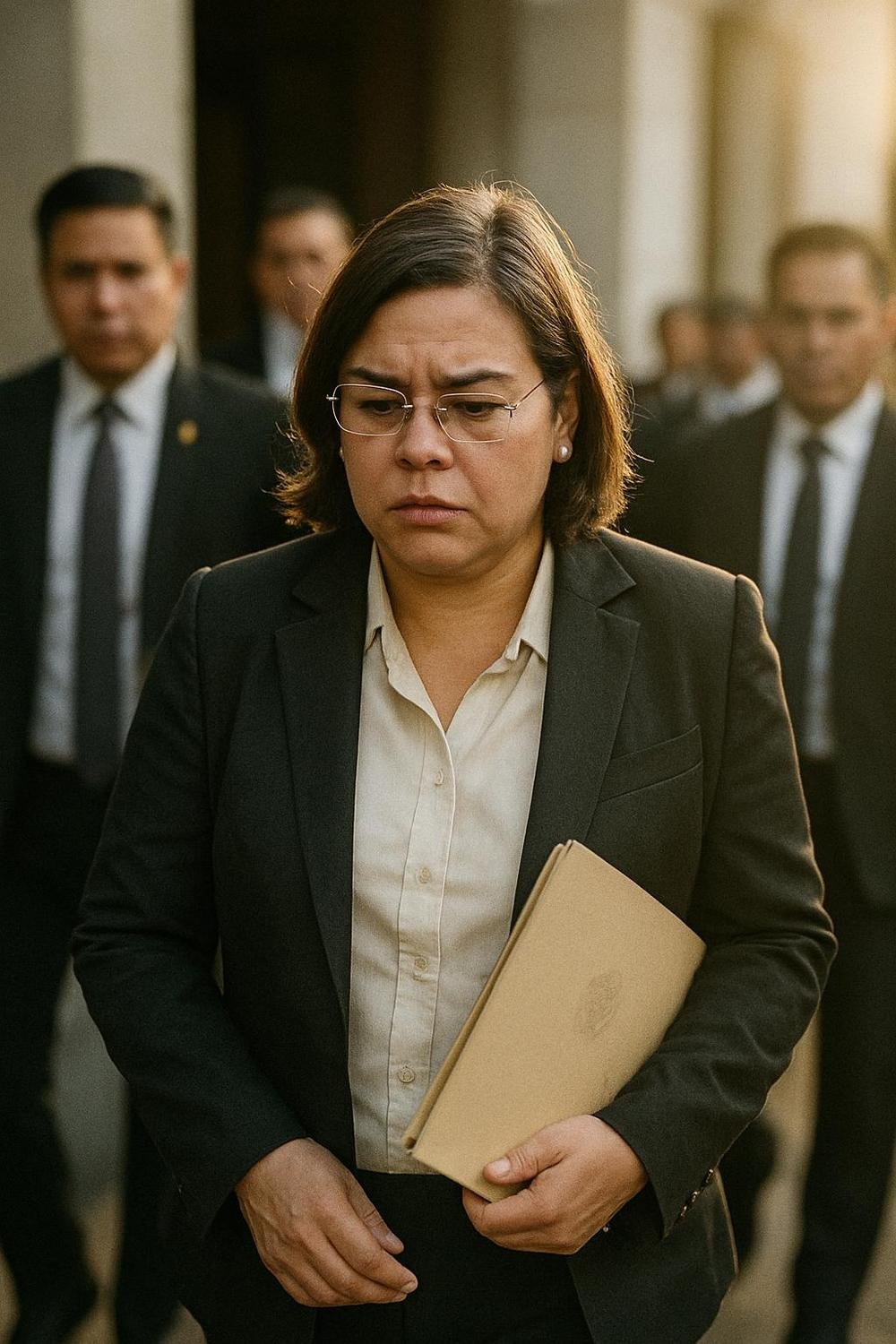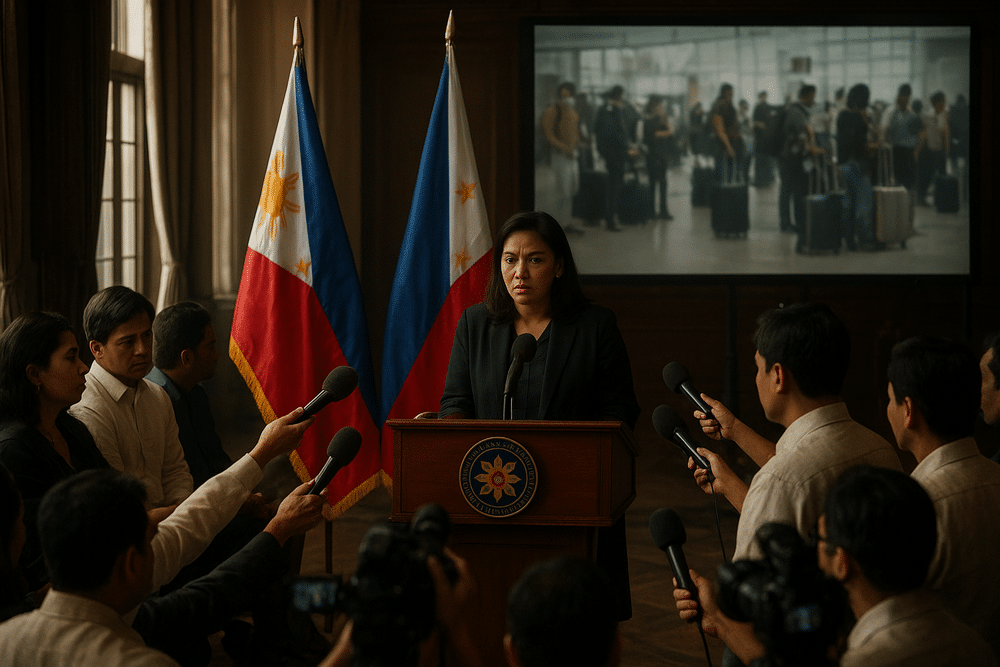
Malacañang on Tuesday sharply rebuked Vice President Sara Duterte after she accused the Marcos administration of failing to prepare for the escalating Middle East crisis, setting off a public rift at a time when roughly 2 million overseas Filipino workers (OFWs) in the region face mounting uncertainty.
The Palace questioned whether the Vice President herself had neglected her duty if, as she claimed, warnings of a potential war had been circulating as early as 2022. The exchange has shifted national attention from evacuation logistics and oil price shocks to a confrontation at the top levels of government.
Vice President: ‘We Did Not See Any Preparations’
Speaking during a Holy Mass at San Pedro Cathedral in Davao City on March 11, Duterte criticized what she described as the administration’s lack of foresight.
“Dapat noong 2022 pa lang naghanda na ang pamahalaan na ito, pero wala tayong nakitang paghanda at wala tayong nakikita na pagbibigay man lang ng solusyon sa mangyayaring problema sa susunod na buwan at sa susunod na taon,” she said.
In English, she added: “The government should have prepared as early as 2022, but we did not see any preparations, nor did we see any attempt to provide solutions to the problems that will arise in the coming months and years.”
Duterte further asserted, “We have not seen anything being done by the administration. We already heard about the threat of war as early as 2022.”
She also suggested that repatriation efforts should be straightforward. “It is not difficult to send airplanes to bring [OFWs] back home,” she said, signaling dissatisfaction with the pace of the government’s response.
Palace Fires Back, Raises ‘Breach of Trust’ Issue
The Presidential Communications Office responded within 24 hours, with Press Officer Claire Castro challenging the Vice President’s assertions and credibility.
Castro said that if Duterte had prior knowledge of credible threats as early as 2022, she had a responsibility to alert authorities.
“If she was aware of the situation as early as 2022 and did not communicate this directly to our citizens, then who is truly neglecting their responsibilities?” Castro said. “If she chose not to disclose this information, it would undoubtedly constitute a breach of public trust. We refer to this as nonfeasance—when government officials do not fulfill their responsibilities.”
She added that national decisions must be grounded in verified information: “A leader ought to provide informed opinions, offer recommendations, and make decisions based on facts, situations, the conditions of stakeholders, rather than relying solely on rumors.”
The Palace also pointed out that Duterte was abroad when the conflict erupted, though it did not specify her location.
Government Moves to Manage Repatriation
Even as the political dispute intensified, the administration outlined its response measures.
President Ferdinand Marcos Jr. confirmed that two chartered flights had been arranged: one from Riyadh, Saudi Arabia, serving OFWs in Kuwait and Bahrain, and another from Fujairah, United Arab Emirates, for workers in Dubai.
The President directed Migrant Workers Secretary Hans Leo Cacdac to travel to Dubai to oversee coordination. Cacdac said, “The government is all hands on deck, following President Ferdinand R. Marcos Jr.’s directive to look for the welfare and protection, and assist affected OFWs and their families.”
Marcos, however, cautioned against launching a full-scale evacuation for now. “This is not as yet the time to undertake a government-sponsored mass repatriation effort,” he said, citing restrictions in regional airspace.
He added: “OFWs are being kept safe by the governments of the countries where they have been working.”
As of the initial phase of response, the Department of Migrant Workers and the Overseas Workers Welfare Administration (OWWA) reported assisting 1,824 OFWs with food, hygiene kits, temporary shelter, and welfare checks.
Fuel Subsidy and Energy Controls Announced
The economic aftershocks of the Middle East tensions have begun to ripple through global oil markets. In response, the administration announced a ₱5,000 fuel subsidy for public transport drivers.
President Marcos also ordered all government agencies to reduce fuel and electricity consumption by 10 to 20 percent, a conservation measure meant to cushion the country from potential supply disruptions.
Malacañang said the government would not seek foreign loans to finance its response. “At this point, borrowing has not been taken into account,” Castro said after consultations with Finance Secretary Frederick Go.
Still, economists warn that oil price volatility could eventually push up transportation and food costs, placing added pressure on Filipino households already coping with inflation.
Local Governments Step In
Several local governments have begun parallel preparations. In Quezon City, Mayor Joy Belmonte formed an inter-agency task force to assist residents working in the Middle East.
“We want to assure our QCitizens in the Middle East that they are not alone during this time of crisis,” Belmonte said.
For families dependent on remittances, the stakes are high. The livelihoods of millions hinge on the stability of host countries in the Gulf and surrounding regions. Uncertainty abroad often translates into anxiety at home — a quiet but pervasive strain felt in households across the Philippines.
A Broader Political Fault Line
The clash over crisis preparedness has exposed deeper tensions within the executive branch. Duterte also used her remarks to question the administration’s record on other issues, including flood control accountability.
“It has almost been a year since President Marcos said ‘Have some shame.’ It has been nearly a year and until now no one has been held accountable over the flood control issue,” she said.
For now, Congress has not launched a formal inquiry into the dispute, and no legislative measures directly addressing the Vice President’s claims have been filed.
What remains clear is that while missiles and military maneuvers may be thousands of miles away, their impact travels swiftly — through oil markets, air travel routes, and political fault lines at home. As the Middle East crisis unfolds, Filipinos are left watching not only developments abroad but also the unity, or lack of it, among their own leaders.