Malacañang has dismissed calls for a formal medical bulletin on the health of Philippine President Ferdinand “Bongbong” Marcos Jr., saying his brief hospitalization for diverticulitis does not rise to the level of a serious condition that warrants official medical documentation.
The Palace said on January 22, 2026, that the President’s own assurances of good health, alongside regular updates from his communications team, should be sufficient to allay public concern following his overnight stay at St. Luke’s Medical Center in Quezon City.
A Precaution, Not a Crisis
According to Malacañang, President Marcos was admitted late on January 21 after experiencing abdominal discomfort and was placed under overnight medical observation as a precautionary measure. Doctors diagnosed his condition as diverticulitis—an inflammation of small pouches in the colon—but ruled out any life‑threatening complications.
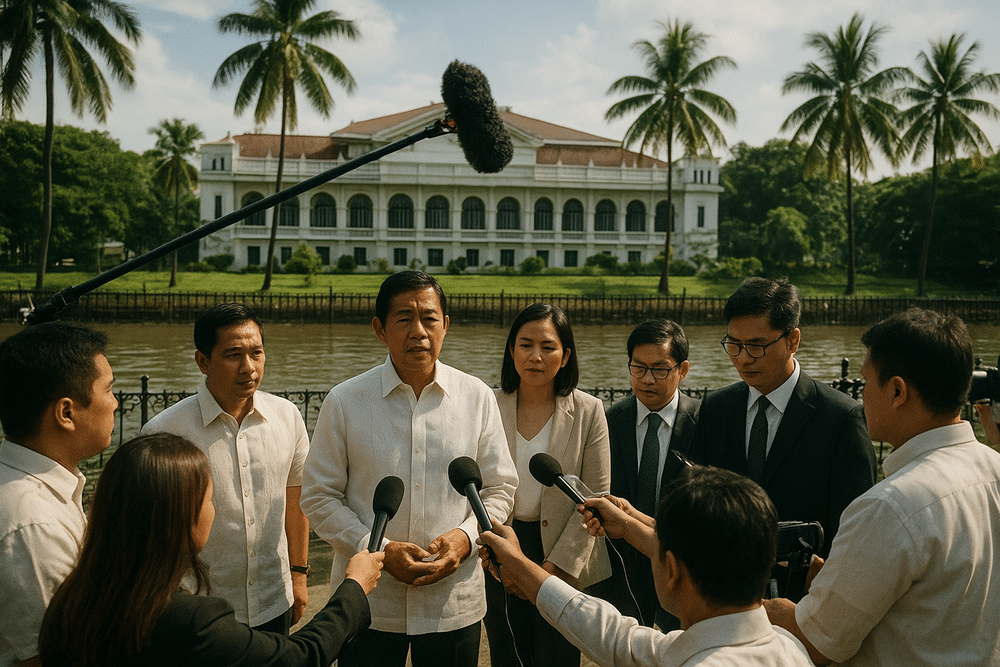
By the following morning, the President had been discharged and returned to Malacañang Palace, where he resumed essential duties. Palace Press Officer Claire Castro told reporters that the President’s condition was stable and that there was “no cause for alarm.”
“The President spent the night under medical observation as a precautionary measure after experiencing discomfort,” Castro said. “His doctors advised rest and monitoring, and his condition remains stable.”
Why No Medical Bulletin
At the center of the issue is the administration’s firm view that formal medical bulletins are reserved for serious health concerns. Responding to questions from journalists, Malacañang argued that publishing a detailed medical report would be unnecessary—and potentially misleading—given the President’s quick recovery.
“In our view, medical bulletins are typically reserved for serious health concerns,” Castro said. “If the President himself has stated that his condition is not life‑threatening, it begs the question of why a medical bulletin is warranted at this moment, especially since we are already providing updates on his health.”
The Palace also stressed that the most credible reassurance comes directly from the President, noting that it is ultimately his body and his personal assessment of how he feels.
Back at Work Behind Palace Doors
Despite missing the Outstanding Young Men (TOYM) 2025 awards ceremony on January 22—where Executive Secretary Ralph Recto stood in for him—Marcos was not entirely out of action.
Within hours of his return to Malacañang, he administered the oath of office to newly appointed Philippine National Police chief Gen. Jose Melio Natez Jr. He was also scheduled to hold two private meetings later that afternoon.
Castro emphasized that the President had continued to work even in the early hours of his hospitalization, attributing his condition in part to “extreme fatigue from work.”
“What’s important here,” she said, “is that he is now back at work and is at Malacañang. He is in good condition.”
Palace Seeks to Reassure Public
In a separate statement sent to journalists, Acting Presidential Communications Secretary Dave Gomez said the President had completed his medical treatment and was steadily improving.
“The President has recently completed his medical treatment and is on the mend from diverticulitis,” Gomez said. “His medical team has reported steady improvement.”
He added that while Marcos would continue to prioritize essential duties, some public engagements could still be handled by Cabinet members or the Executive Secretary as a matter of prudence.
Questions of Transparency Linger
The Palace’s decision not to issue a medical bulletin comes amid heightened public sensitivity to presidential health and transparency. While no law explicitly mandates regular disclosure of a sitting president’s medical condition, past administrations have typically issued bulletins during prolonged or serious illnesses.
Malacañang, however, appears keen to draw a clear line between a minor, treatable condition and circumstances that might raise constitutional or governance concerns.
For now, the administration insists that continuity in leadership remains intact. The President’s brief absence from public view—about a week by late January—has not disrupted government operations, officials say.
A Calculated Message
By declining to release a medical bulletin, Malacañang is sending a calculated signal: that the episode was a health hiccup, not a political event. Whether that approach strengthens public confidence or invites further scrutiny may depend less on official statements than on what Filipinos see in the days ahead—namely, a President visibly and consistently at work.
As the Palace sees it, transparency has been served not through clinical charts and test results, but through a simple message repeated throughout the day: the President is back, stable, and governing.