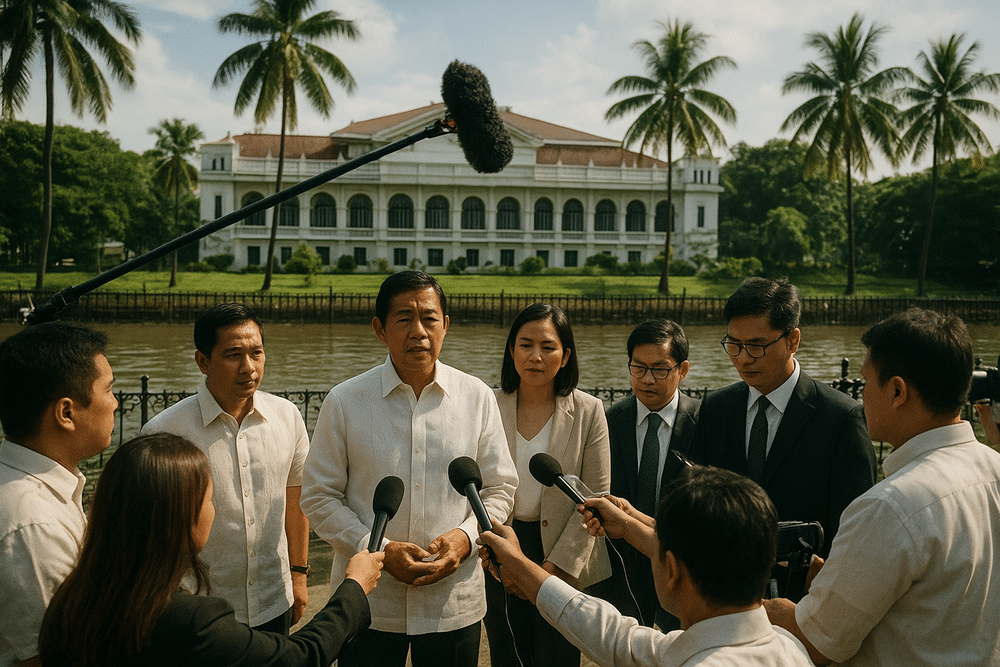
Malacañang on Saturday firmly denied fresh rumors that President Ferdinand “Bongbong” Marcos Jr. had been rushed to hospital, saying he was “well, healthy, and working” despite viral claims online that he had been admitted anew to a Quezon City medical center.
The rumors, which surfaced on February 28, claimed the President was rushed to St. Luke’s Medical Center in Quezon City. Palace officials said no such hospitalization occurred. Instead, they said Mr. Marcos was attending a private meeting with the Presidential Management Staff (PMS).
“The President was in a private meeting with PMS this morning. He is well, healthy, and working even on a Saturday,” Presidential Communications Office (PCO) Undersecretary Claire Castro said in a message to reporters.
Rumors Follow January Health Scare
The latest speculation comes weeks after the Palace confirmed that Mr. Marcos spent one night in hospital on January 21, 2026 for medical observation. Doctors diagnosed him with diverticulitis, an inflammation of small pouches in the colon that physicians say can be linked to stress and aging. The condition was described as non-life-threatening.
Following that diagnosis, the President limited public engagements for around two weeks, monitoring government operations while recovering. By January 26, Malacañang announced that his schedule had returned to normal.
Days later, on January 28, Mr. Marcos publicly assured Filipinos he was “already okay,” after a separate fake medical report circulated online. Both Malacañang and St. Luke’s Medical Center dismissed that document as falsified.
Palace Moves to Quell Misinformation
The February 28 rumor closely mirrored earlier online claims, prompting swift denial from the Palace. Castro declined to elaborate on the details of the private PMS meeting but stressed that the President was carrying out his duties.
The recurring speculation has prompted calls for accountability. Earlier this year, authorities were urged to investigate the source of falsified medical documents purportedly linked to the President. Under its general mandate to probe fake or falsified records, the National Bureau of Investigation may examine such incidents, though officials have not publicly detailed the status of any inquiry.
For St. Luke’s, the premier hospital drawn into both waves of misinformation, the stakes involve institutional credibility. The facility had previously confirmed that a circulating medical document was “fake and falsified,” distancing itself from the claims.
Health and Governance
While the rumors have not disrupted daily life — there have been no reported impacts on transport, markets, employment, or public services — speculation about a sitting president’s health can ripple through the national mood. Leadership stability, like a steady keel on a ship, underpins confidence in governance.
The Philippines, an archipelago often buffeted by political and economic crosswinds, watches closely for signals of continuity at the top. In this context, even unverified social media posts can amplify uncertainty.
Malacañang’s message on Saturday was direct: there is no new health emergency. The President, officials said, was at work.
As of this writing, no official bulletin indicates any hospitalization beyond the confirmed January 21 observation. The Palace maintains that Mr. Marcos remains in good health and continues to perform his duties.