Authorities at Manila’s main airport have intercepted 5.424 kilograms of suspected shabu hidden inside three inbound parcels at the NAIA cargo complex, in a seizure valued at ₱36,883,200. The operation, carried out on 11 February 2026, underscores renewed efforts to prevent the country’s busiest gateway from being used as a pipeline for illegal drugs.
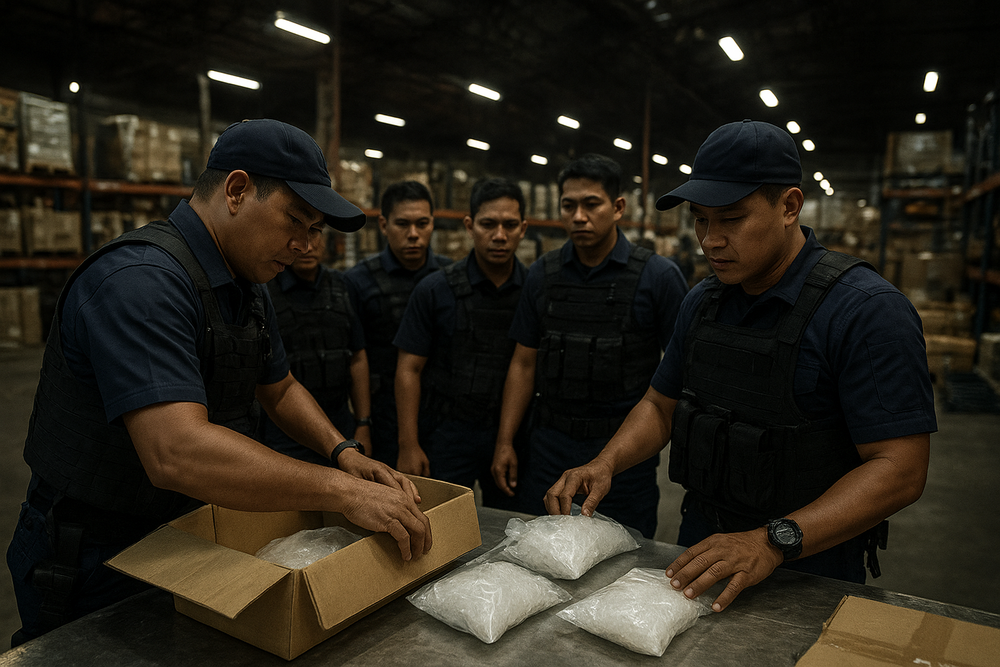
The packages were discovered at the On Board Courier Area of the PAIR-PAGSS Cargo Import Warehouse within the Ninoy Aquino International Airport (NAIA) complex in Pasay City. Authorities say the intercepted shipment, had it slipped through, could have fed distribution networks in Metro Manila.
Routine Screening Uncovers High-Value Contraband
The seizure stemmed from routine X-ray screening conducted by members of the NAIA Inter-Agency Drug Interdiction Task Group (NAIA-IADITG), a unit operating under the Philippine National Police (PNP). Three inbound parcels raised suspicion during imaging checks and were subjected to manual inspection in coordination with the Bureau of Customs (BOC) and the Philippine Drug Enforcement Agency (PDEA).
Inspectors uncovered what authorities described as crystalline substances consistent with shabu, the street name for methamphetamine hydrochloride. The combined weight reached 5,424 grams, with an estimated street value nearing ₱37 million.
On 12 February, officials turned over the seized substances to PDEA’s national headquarters for laboratory examination and proper disposition.
Consignees Under Investigation
Authorities identified three consignees linked to the parcels. Their identities remain withheld as investigators validate documentation and build a case for potential violations of Republic Act No. 9165, the Comprehensive Dangerous Drugs Act of 2002.
Under the law, the importation of dangerous drugs in quantities of this scale carries penalties ranging from life imprisonment to reclusion perpetua, along with fines between ₱500,000 and ₱10 million, depending on the amount involved.
Officials are also examining whether the shipment forms part of a broader distribution network operating within Metro Manila.
Police: Airports Will Not Be Gateways for Drugs
PNP Chief Police General Jose Melencio Nartatez Jr. commended the inter-agency team for what he described as focused and effective enforcement.
“Hindi puwedeng maging gateway ang ating paliparan para sa droga (We will not allow our airports to be a gateway for illegal drugs). We will keep tightening our watch, strengthening coordination, and holding accountable anyone involved in bringing these illegal substances into the country,” he said.
He added that intercepting shipments before they reach the streets prevents wider social harm. “This is exactly the kind of work we want to see—quiet, focused, and effective. Bago pa makarating sa lansangan, naharang na natin. That means fewer lives ruined, fewer families broken, and fewer communities threatened by illegal drugs.”
The PNP chief also issued a warning to criminal groups: “Let this serve as a warning: we are watching, and we are relentless. The PNP will not give drug syndicates the space to operate – whether on the streets or through our ports of entry.”
Why the Seizure Matters
Methamphetamine remains one of the most prevalent illegal drugs in urban centers across the Philippines. Law enforcement officials argue that airport and seaport interdictions act as choke points, cutting supply chains before narcotics filter into neighborhoods.
In densely populated parts of Metro Manila, access to shabu has long been linked by authorities to addiction, petty crime, and family disintegration. By intercepting large shipments at entry points such as NAIA, enforcement agencies aim to reduce availability and disrupt the economics of street-level distribution.
While no private sector groups or transport companies were directly implicated in this case, the seizure highlights the critical role of cargo monitoring systems and inter-agency coordination in safeguarding commercial channels from exploitation.
Ongoing Investigation
The NAIA-IADITG, together with the BOC and PDEA, continues to trace the origins of the three parcels and determine whether local facilitators helped orchestrate the shipment. Authorities have not disclosed the point of origin of the packages, pending investigation.
The case serves as a reminder that international cargo hubs remain both economic lifelines and frontline defenses. In this instance, officials say, vigilance at the warehouse floor prevented nearly ₱37 million worth of suspected illegal drugs from reaching Philippine streets.