The Metropolitan Waterworks and Sewerage System-Regulatory Office (MWSS-RO) has imposed a P42,569,790.85 penalty on Maynilad Water Services Inc. for failing to provide uninterrupted water supply to tens of thousands of customers in southern Metro Manila, regulators announced in March. The sanction covers service disruptions that left 98,331 customers without the required 24-hour water supply in February 2026.
The fine, issued under Resolution No. 2026-04-CA, will be returned directly to affected households through rebates of P432.92 per connection, reflected in their April 2026 billing statements.
Regulator Cites Breach of 24-Hour Supply Obligation
In a virtual press briefing, MWSS-RO Chief Regulator Patrick Lester N. Ty said the agency’s investigation found that Maynilad failed to meet its contractual service obligations.
“The MWSS RO found that Maynilad failed to meet its service obligation of providing an uninterrupted 24-hour supply of water at a minimum pressure of seven pounds per square inch to 98,331 customers,” Mr. Ty said.
Under its concession agreement, Maynilad must deliver round-the-clock water supply at a minimum pressure of seven pounds per square inch (psi) and comply with the Philippine National Standards for Drinking Water. The February interruptions fell short of that requirement in areas served by the Putatan Water Treatment Plant and Poblacion Water Treatment Plant, both of which draw raw water from Laguna Lake.
The disruptions affected communities in the southern portion of Maynilad’s West Concession Area, including parts of Muntinlupa and Las Piñas, where households reported prolonged periods of low pressure or no water at all.
Weather and Laguna Lake Conditions Blamed
Maynilad acknowledged the penalty and linked the outages to seasonal weather conditions during the recent Amihan, or northeast monsoon.
“Maynilad acknowledges the decision of the MWSS Regulatory Office imposing a penalty related to water service interruptions that affected portions of the southern part of its concession area during the recent Amihan season,” the company said in a statement.
The utility attributed the interruptions to fluctuations in Laguna Lake’s raw water quality.
“The interruptions were associated with weather-driven changes in raw water conditions in Laguna Lake, which required operational adjustments in our treatment facilities, including reductions in plant production levels to ensure that treated water continued to comply with the Philippine National Standards for Drinking Water,” the company said.
Such adjustments, while intended to safeguard water quality, reduced output and contributed to supply gaps across the affected service zones.
Rebates to Offset Customer Burden
Regulators said the P42.6 million penalty will not be absorbed by the state but returned in full to customers. Each of the 98,331 affected connections will receive a P432.92 rebate in April 2026.
The timing of the rebate coincides with a scheduled water rate adjustment, offering modest financial relief to households already grappling with supply instability.
“Further details regarding the nature, scope, and procedures of the rebate program will be discussed during a Public Information Drive (PIDr) to be conducted by the MWSS RO in coordination with Maynilad on March 27, 2026,” Mr. Ty said.
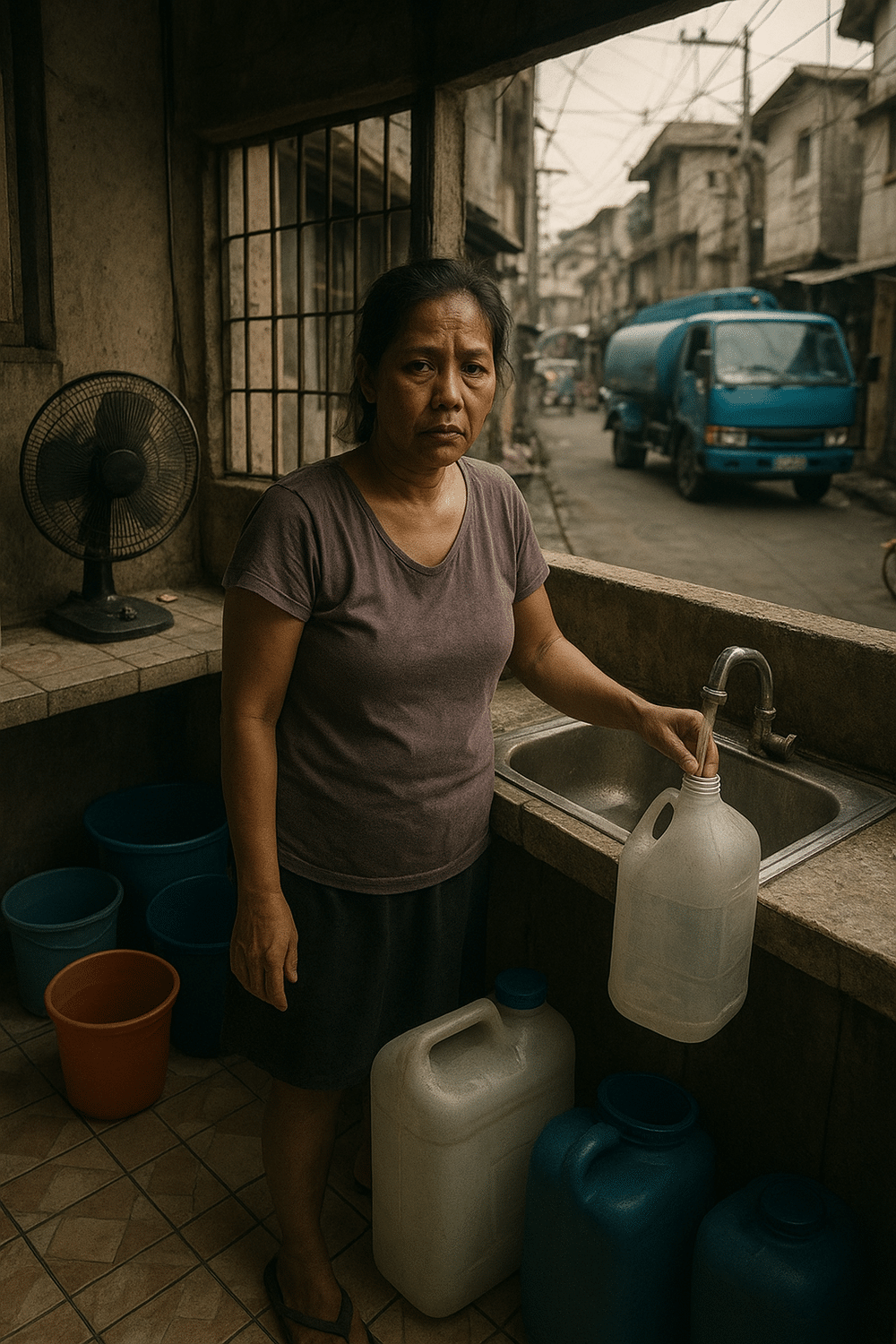
For many families, especially those in lower-income communities, even brief interruptions can trigger additional expenses from buying water containers or arranging deliveries. In dense urban neighborhoods, where storage capacity is limited, a disrupted tap can quickly ripple into daily routines — from cooking and bathing to sanitation.
Pressure to Improve Service Reliability
Beyond the monetary penalty, MWSS-RO directed Maynilad to accelerate measures to improve service reliability in the southern part of its concession area. The regulator emphasized that weather disturbances do not excuse non-compliance with service standards.
The episode underscores the vulnerability of Metro Manila’s water system to environmental fluctuations, particularly for facilities dependent on Laguna Lake. As climate variability intensifies, utilities face increasing pressure to balance water quality safeguards with uninterrupted supply.
For regulators, the message is clear: service failures carry financial consequences. For nearly 100,000 households in southern Metro Manila, the April rebate may soften the blow — but it does not erase the uncertainty that comes each time the tap runs dry.