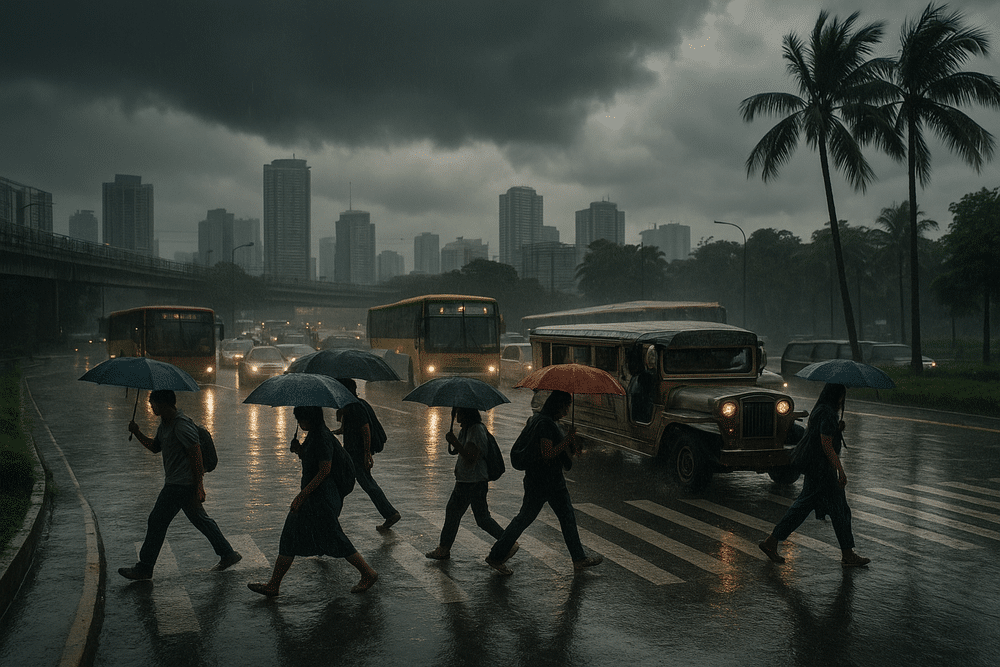
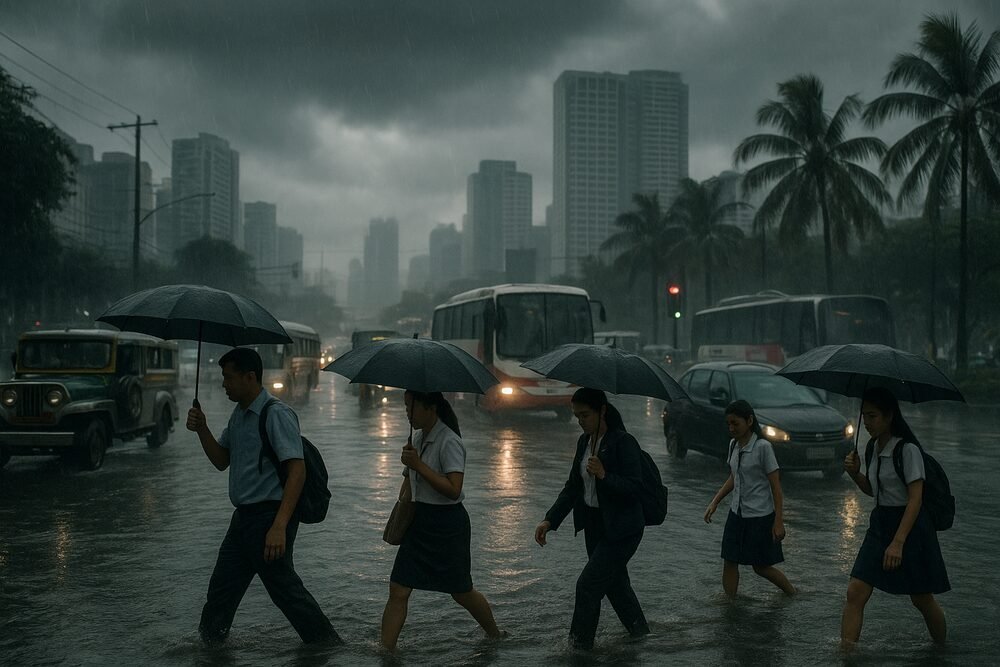
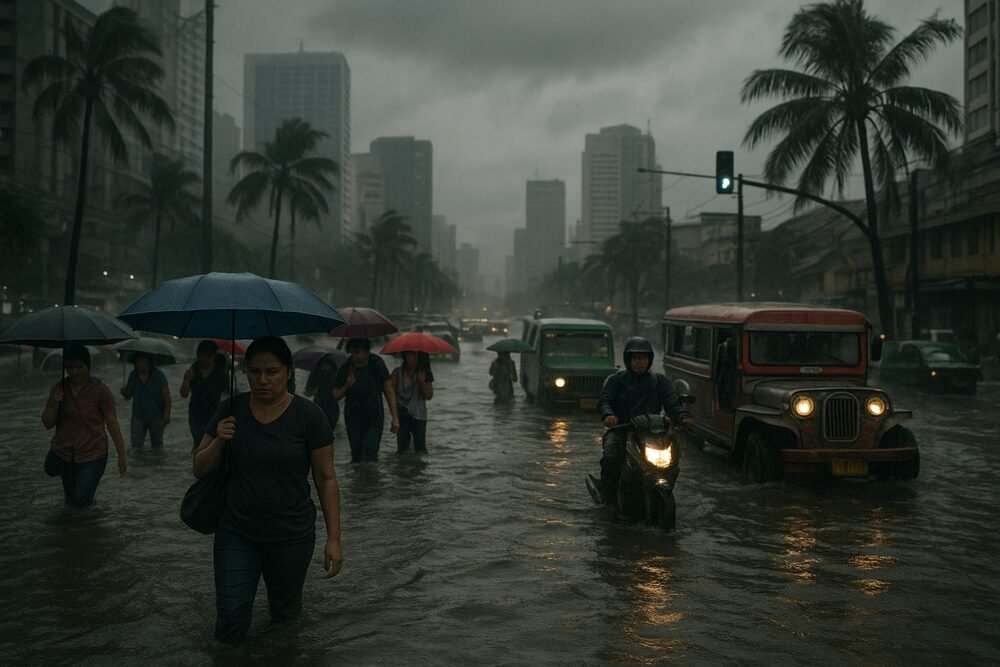
The Philippine Atmospheric, Geophysical and Astronomical Services Administration (PAGASA) said on Saturday that the northeasterly wind flow, or amihan, together with easterlies, will bring isolated rains across much of the Philippines, with Metro Manila facing a 100 percent probability of rain on March 8.
While no severe weather warnings have been issued, forecasters cautioned that localized downpours and thunderstorms could disrupt daily routines in Luzon, the Visayas and parts of Mindanao in the days ahead. Temperatures will remain typically warm for early March, ranging from the mid-20s to low-30s Celsius across most key cities.
Rain Likely to Peak in Metro Manila
In the capital region, rain chances are expected to taper after Saturday’s near certainty of showers. PAGASA projects 90 percent probability of rain on March 9, easing to 80 percent on March 10, then falling to 40 percent and 30 percent on March 11 and 12, respectively. Temperatures in Metro Manila are forecast to range between 25°C and 33°C.
Further north, Laoag City faces comparatively lighter conditions, with rain probabilities fluctuating between 20 percent and 40 percent over the same period and temperatures between 24°C and 33°C.
For much of the archipelago, March typically brings 3 to 8 rainy days, with around 75 millimeters of rainfall and an average of 11.7 hours of sunshine per day. This transitional period bridges the cooler months and the approach of the hot dry season, creating a mix of sun and sudden showers.
Amihan’s Waning Grip
PAGASA weather specialist Veronica C. Torres said earlier this month that the amihan’s effects could briefly intensify before weakening.
“Pero pagdating nga ng Wednesday, posibleng lumakas yung epekto ng amihan. So nakikita natin sa Palawan area na lamang yung mga tansa ng mga thunderstorm at sa Metro Manila and the rest of Luzon by Wednesday,” Torres said in a March 1 forecast.
She added: “For weather pa rin may mga tsansa ng mahihinang pag-ulan at pagdating nga ng Thursday posibleng mas humina yung epekto ng amihan.”
The northeast monsoon typically ushers in cooler, drier air from mainland Asia. As it wanes, easterly winds—warm and moist currents from the Pacific—begin to assert influence. The meeting of these air masses often results in isolated thunderstorms, particularly in the afternoons and evenings.
Localized Disruptions, No Major Threats
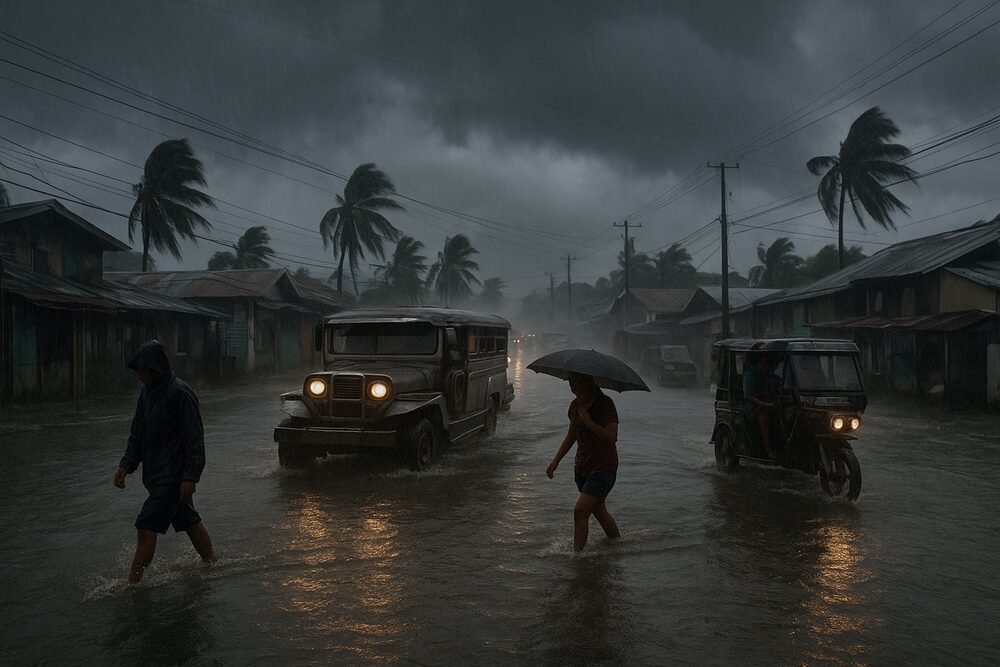
Authorities have not raised alerts for flooding or severe weather. However, in urban corridors such as Metro Manila—where even brief downpours can clog major thoroughfares—commuters may face slower travel times. Flood-prone intersections and low-lying roads remain vulnerable to water buildup during heavy bursts of rain.
In agricultural communities, the intermittent showers could cause minor delays in dry-season planting and crop drying. PAGASA’s probabilistic forecasts, which distinguish between wet days and days with less than one millimeter of rain, are used by farmers to better time planting and post-harvest operations.
Fisherfolk along the eastern seaboard and in Palawan may also encounter occasionally rough seas due to easterlies, potentially affecting small-scale fishing activities.
Near-Normal Rainfall for March
PAGASA’s updated seasonal outlook indicates that rainfall levels for March are expected to hover within 81 to 120 percent of normal, suggesting no dramatic deviation from historical patterns. Across major regional centers, temperatures are forecast within seasonal norms: 22°C to 32°C in Metro Manila, 15°C to 26°C in Baguio, and mid-20s to low-30s in Cebu, Iloilo, Tacloban and Legazpi.
The agency operates under Republic Act No. 10692, mandating the provision of timely weather forecasts and warnings, while local government response mechanisms fall under Republic Act No. 10121, the Disaster Risk Reduction and Management Act.
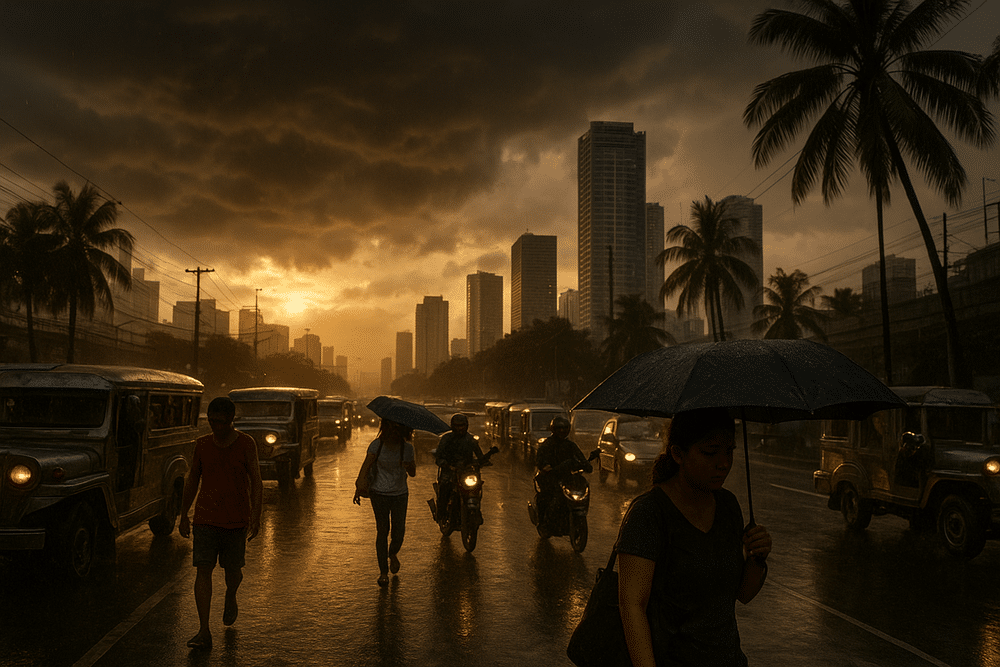
For now, the prevailing message remains one of vigilance rather than alarm. As the amihan loosens its grip and easterlies take hold, the country can expect a familiar March rhythm: warm mornings, bright midday skies and, at times, sudden curtains of rain before dusk.