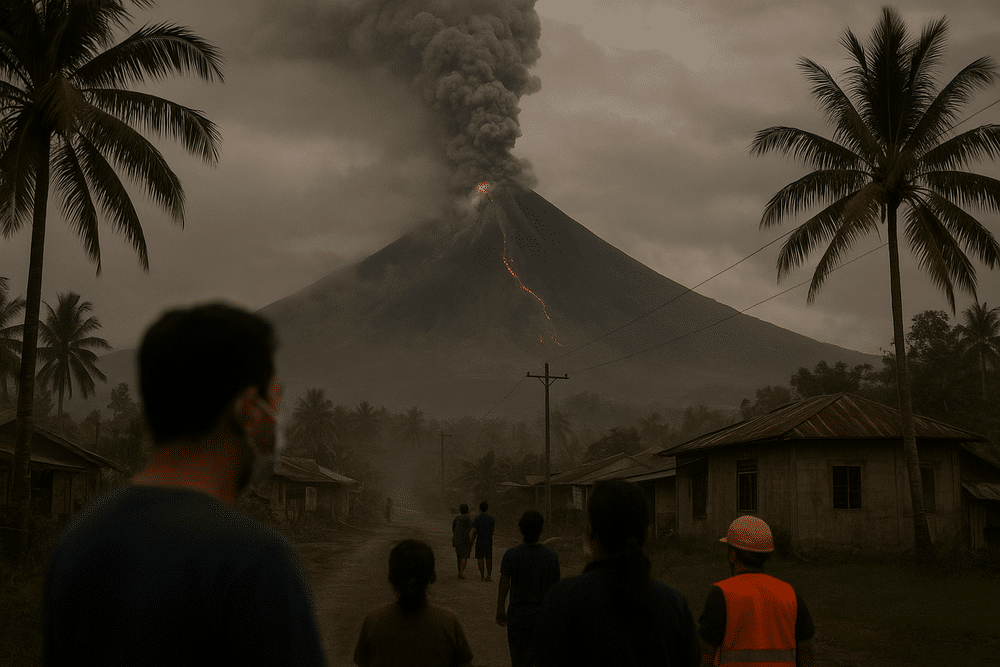
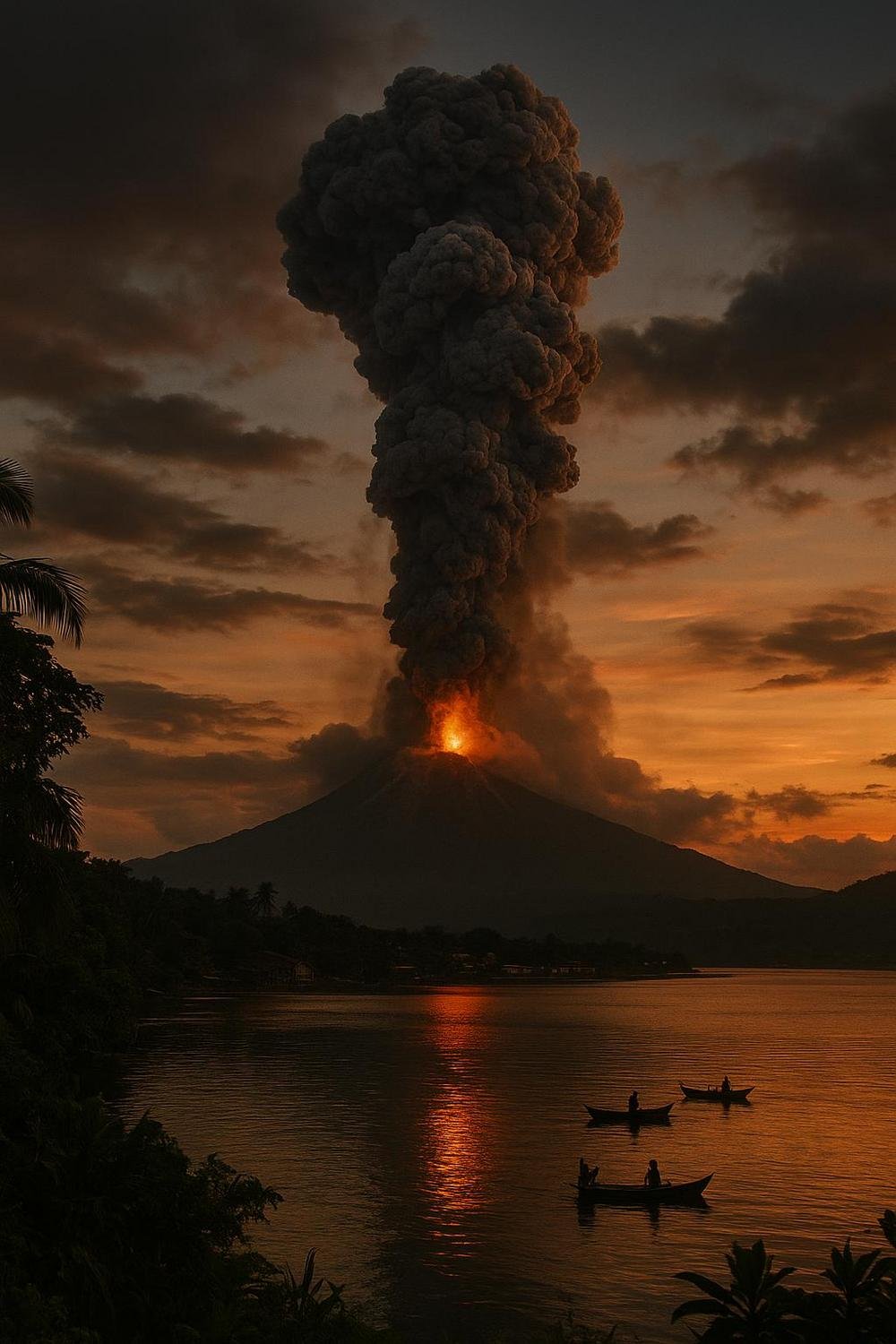
Mayon Volcano unleashed 279 volcanic earthquakes in a single day on Saturday, intensifying concerns over a possible hazardous eruption as state volcanologists maintained Alert Level 3 for the 69th consecutive day. The Philippine Institute of Volcanology and Seismology (PHIVOLCS) said the surge in seismic activity underscores continuing magmatic unrest beneath the iconic cone in Albay province.
In its 12 a.m. March 15 bulletin, PHIVOLCS reported “279 volcanic earthquakes; 324 rockfalls and 3 pyroclastic density current signals” recorded between midnight March 14 and midnight March 15. Lava flows continued to descend several gullies, while sulfur-rich gases streamed into the atmosphere — a potent mix that signals magma remains active beneath the summit.
Alert Level 3 Remains in Force
PHIVOLCS reaffirmed that Alert Level 3 remains over Mayon, indicating high unrest with magma near the surface and an increased likelihood of a magmatic eruption. The agency has described the situation as a “magmatic eruption of a summit lava dome, with increased chances of lava flows and hazardous PDCs.”
Under this alert level, entry into the 6-kilometer Permanent Danger Zone (PDZ) is strictly prohibited, with authorities warning that the danger zone may expand if unrest escalates. PHIVOLCS has also advised aviation authorities to keep aircraft away from the summit due to the risk of sudden ash emissions.
“Those living within the 6-kilometer permanent danger zone (PDZ) [must] be prepared for immediate evacuation,” PHIVOLCS official Teres Bacol previously warned.
In addition to the 279 earthquakes, monitoring instruments detected 324 rockfalls and three pyroclastic density current (PDC) signals — fast-moving avalanches of hot gas, ash, and volcanic debris capable of devastating areas downslope.
Minor strombolian activity — short-lived bursts of incandescent material — was recorded between 9:49 a.m. and 9:55 a.m. on March 15. Observers described the crater glow as “fair,” although cloud cover obscured the plume for much of the monitoring period.
Gas Emissions and Ground Inflation Signal Magma Movement
Gas measurements taken on March 14 showed sulfur dioxide (SO₂) emissions of 2,430 tonnes, slightly above the 2,425 tonnes recorded two days prior. Elevated sulfur emissions typically reflect the continuous release of gas from rising magma.
Meanwhile, ground deformation data indicate that the volcano’s edifice remains inflated, suggesting ongoing magma accumulation beneath the summit dome. Combined with sustained seismicity and lava extrusion, the data point to a system under pressure — like a tightly sealed vessel venting in bursts.
Weeks of Escalating Unrest
The current episode of unrest began early this year. Mayon was first placed under Alert Level 2 on January 1 following signs of rising instability. On January 6, authorities raised the status to Alert Level 3 after detecting dome collapse, pyroclastic density currents, incandescence, and new lava extrusion.
Since then, activity has fluctuated but remained elevated. On March 13 alone, PHIVOLCS logged 139 volcanic earthquakes and 303 rockfalls. The sharp increase to 279 quakes on Saturday signals intensifying internal movement.
Communities on Edge
The prolonged alert has strained communities across Albay, particularly families living within or near the 6-km PDZ. Many depend on farming abaca, rice, and vegetables on fertile volcanic soil — land they have now been forced to leave behind.
Ashfall has intermittently affected parts of Legazpi City and neighboring towns, reducing visibility and posing health risks. Residents have been advised to remain indoors during ash episodes and to wear protective masks. Jeepney drivers and daily commuters face hazardous road conditions when ash accumulates.
Heavy rains could further complicate the situation. PHIVOLCS warned that loose volcanic deposits may generate lahars — fast-moving flows of mud and debris — in channels downstream of the volcano, posing an additional threat to low-lying communities.
Preparedness and Prohibitions
Authorities continue to coordinate preparedness efforts under the framework of the Philippines’ disaster management law. Local government units in Albay, alongside the Office of Civil Defense, are overseeing evacuations and compliance within the PDZ.
PHIVOLCS reiterated its firm directive: “Entry within PDZ must be prohibited.” The agency stressed that rockfalls, landslides, ballistic fragments, lava flows, pyroclastic density currents, moderate explosions, and rain-induced lahars remain possible.
For now, Mayon stands restless but contained — a symmetrical cone masking volatile forces beneath. Whether the coming days bring a gradual easing or a more forceful eruption remains uncertain. What is clear is that the volcano continues to rumble, and authorities are watching it closely.