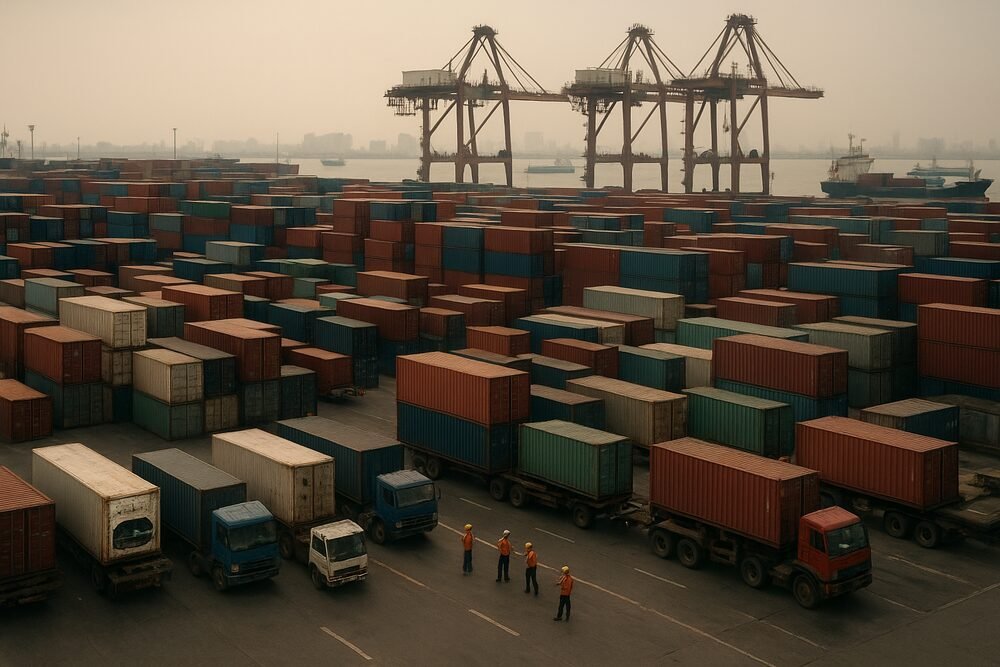
President Ferdinand Marcos Jr. has ordered government agencies to confront mounting pressure at the country’s busiest ports, as rising cargo volumes push Manila terminals close to capacity and extend vessel waiting times. The directive comes amid concerns that bottlenecks at the capital’s gateways could ripple through supply chains and raise costs for consumers already grappling with higher prices.
Data from the Philippine Ports Authority (PPA) show that cargo throughput reached 308.5 million metric tons in 2025, a 6.6 percent increase from the previous year. Container traffic surpassed 8 million twenty-foot equivalent units (TEUs), up 2 percent year on year, reflecting steady post-pandemic trade expansion and domestic demand. But that growth has placed strain on facilities that handle the lion’s share of the country’s imports and exports.
Manila Ports Near Critical Utilization Levels
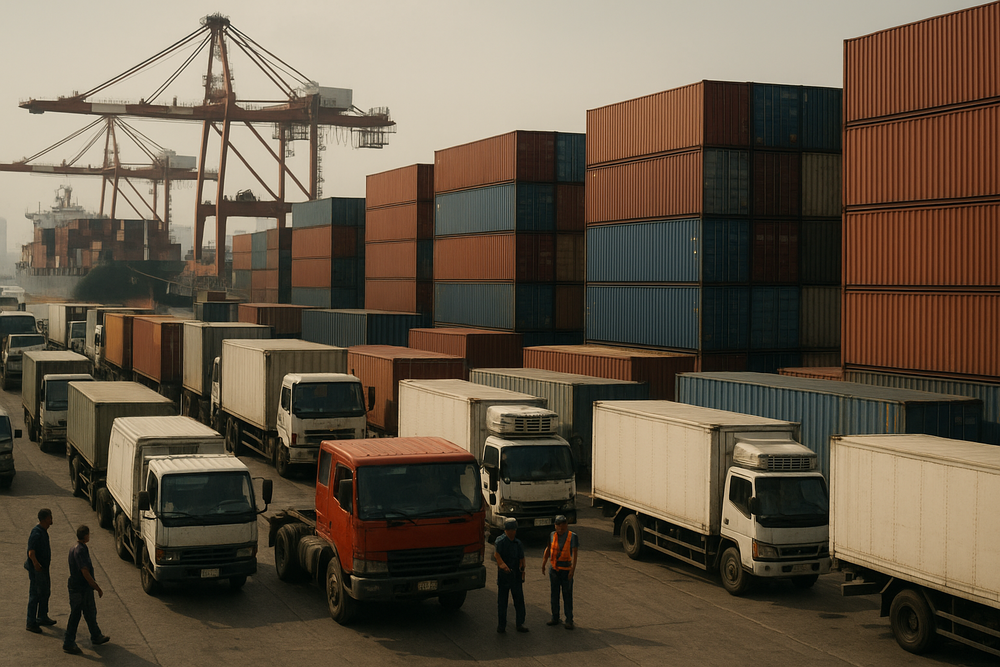
The Manila International Container Port (MICP) and the Manila International Container Terminal (MICT) — which together process roughly 70 percent of the country’s container traffic — are operating close to congestion thresholds.
As of Feb. 23, MICP yard utilization stood at 88.56 percent, approaching the 90 percent level authorities use as a benchmark for declaring congestion. At MICT, overall yard utilization has ranged between 81.99 percent and 83.54 percent in recent weeks. However, refrigerated container, or “reefer,” yards have faced sharper pressures, with utilization rates fluctuating between 96.37 percent and 105.98 percent in early February.
At Manila South Harbor, overall utilization reached 89.02 percent, with reefer capacity between 64 percent and 70 percent.
Vessels calling at the Port of Manila have reported waiting times of 2.7 days in late January and 2.4 days in early February, largely attributed to constraints in reefer slots and slower cargo withdrawals following the extended Christmas season and the run-up to Lunar New Year.
Marcos Orders Swift Inter-Agency Action
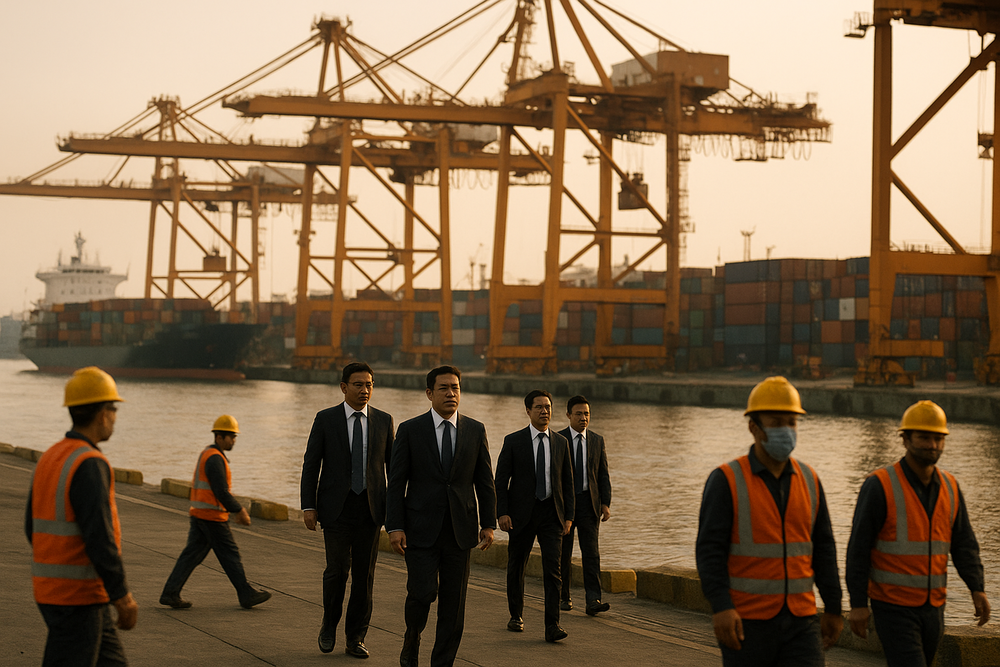
In response to the tightening capacity, Mr. Marcos instructed concerned agencies — including the PPA and the Bureau of Customs (BOC) — to prioritize measures that would ease yard congestion and maintain fluid cargo movement.
Customs Commissioner Ariel Nepomuceno acknowledged the strain, saying regulators were refining how congestion should be defined and addressed.
“We are still working on clarifying what constitutes port congestion. We need to broaden our understanding of the underlying issues,” Mr. Nepomuceno said on Feb. 23.
The BOC has convened stakeholders, including shipping lines and logistics groups, in recent weeks to coordinate preventive steps and manage yard inventory more efficiently.
PPA General Manager Jay Daniel Santiago, however, pushed back against characterizations of a crisis.
“There is no port congestion. Let’s not create a scenario which will create undue concern to the public that there will be a hike in prices,” Mr. Santiago said. “Yard utilization at the Manila ports remains healthy even if utilization is above optimum. Higher utilization does not mean congestion.”
Growth Tests Capacity
The pressure reflects the Philippine economy’s renewed momentum. MICT alone handled a record 3 million TEUs in 2025, underscoring Manila’s role as the country’s primary trade artery.
Other major ports are operating with more breathing room. As of mid-February, Batangas was at 49.6 percent utilization, Subic at 60 percent, Cebu at 33 percent, while Davao ranged between 0.6 percent and 68.34 percent. The uneven distribution of cargo has intensified calls to divert more shipments away from Metro Manila to ease strain on its road network and terminals.
Meanwhile, the PPA implemented tariff adjustments at Manila North Port from Jan. 1, including a 20 percent increase in passenger terminal fees and staggered hikes in cargo-handling charges, citing inflation and modernization needs. Authorities maintain that these adjustments are separate from current congestion concerns.
Truckers and Brokers Sound Warning
Industry groups describe a more fragile situation on the ground. The Philippine Chamber of Customs Brokers, Inc. (PCCBI) warned that the system is “grappling with a severe truck deadlock caused by the limited capacity of empty container yards, which prevents the timely return of empties and, in turn, stalls the withdrawal of laden containers from terminals.”
Truckers say delays in returning empty containers have persisted since November, compounding yard build-up and slowing cargo turnaround. Like a clogged artery, even brief slowdowns in container returns can constrict the steady flow of goods in and out of the port.
The Confederation of Truckers Association of the Philippines has reported bottlenecks that spill onto major thoroughfares, affecting both freight schedules and urban traffic.
Possible Impact on Consumers
Analysts caution that prolonged inefficiencies could carry consequences beyond the docks. Matthew Sy-Tan, an analyst at Wealth Securities, said the implications are straightforward.
“The slower movement of goods will affect the supply of goods in stores while higher logistics costs may be passed on to consumers,” he said.
Metro Manila serves as the principal entry point for imported foods, consumer goods and manufacturing inputs. Delays in cargo withdrawal can disrupt supply chains extending to provincial markets, potentially raising retail prices or causing temporary shortages.
For small retailers and market vendors, even a few days’ delay in deliveries can erode margins. For households, the cumulative effect may appear in incremental price increases on staples and everyday necessities.
Balancing Growth and Efficiency
The PPA projects further expansion in sea cargo and anticipates a 6.15 percent increase in roll-on/roll-off traffic in 2026. While stronger throughput signals economic vitality, it also underscores the need for resilient infrastructure and agile coordination among agencies and private operators.
Mr. Marcos’s directive places urgency on that task. Whether the current strain proves a temporary byproduct of seasonal surges or an early warning of structural limits will depend on how quickly authorities can unclog chokepoints and distribute traffic more evenly across the archipelago’s ports.
For now, Manila’s docks remain busy but operational — hovering just below the official threshold of congestion, and under close watch from both Malacañang and the industries that rely on them.