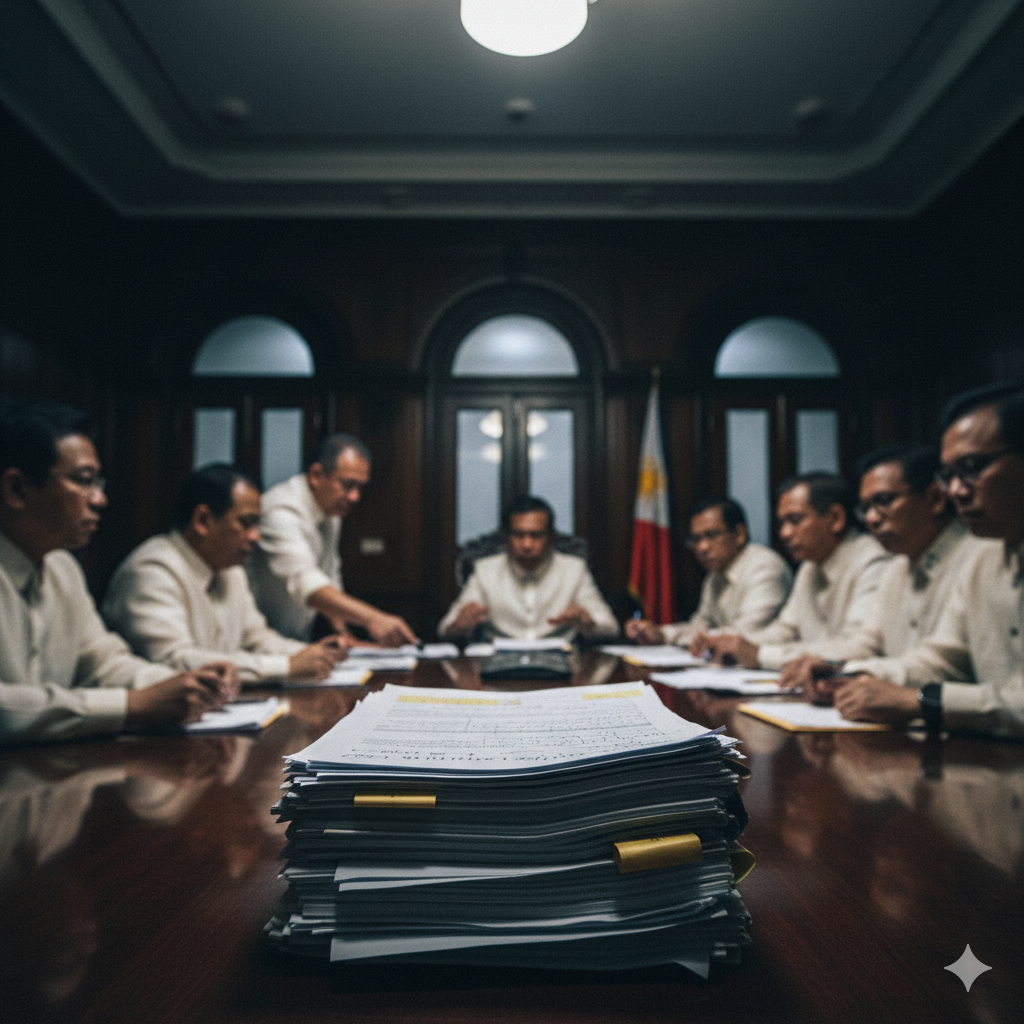
President Ferdinand R. Marcos Jr. has publicly articulated his primary Christmas wish: the swift passage of a “good budget” for 2026 by the Philippine Congress. The statement, made during a podcast aired on Thursday, December 11, 2025, underscores the critical final phase of deliberations over the massive 6.793 trillion PhP spending plan, which the administration views as indispensable for meeting its key economic and social objectives.
Budget Seen as Engine for Economic Stability
The proposed 2026 General Appropriations Bill (GAB) represents a significant increase—approximately 7.4 percent—over the 2025 budget’s 6.326 trillion PhP outlay. The administration relies on this increased funding to drive its Medium-Term Fiscal Program. Key goals tied directly to the budget’s enactment include the generation of more job opportunities, the gradual reduction of the national deficit and debt, and the ambitious goal of lowering the nation’s poverty rate to single digits by the close of the President’s term.
The urgency of the President’s appeal is set against a tight legislative schedule. The House of Representatives approved its version (HB 4058) in October, and the Senate passed its counterpart version on December 9, 2025. With both chambers having ratified their respective bills, the process now shifts to the Bicameral Conference Committee, scheduled to convene between December 12 and 14 to reconcile differences. The executive branch aims for the President to sign the bill into law as the General Appropriations Act (GAA) by December 29, 2025.
Transparency Reforms Aim to Counter Corruption
The President’s implicit definition of a “good budget” is one free from the controversies that plagued previous legislative cycles. The budget process has faced intense scrutiny recently, highlighted by a public scandal involving alleged graft and kickbacks related to substandard flood control projects under the Department of Public Works and Highways (DPWH).
Congressional leaders have responded to these concerns with significant transparency reforms. The House and Senate adopted a concurrent resolution today, mandating that all Bicameral Conference Committee deliberations on the GAB must be open to the public and conducted via digital livestreaming. This measure aims to prevent the non-transparent, last-minute “insertions” that have historically compromised the integrity of the spending bill.
Furthermore, the Senate’s version of the GAB introduced specific anti-corruption safeguards:
- It reduced the overall DPWH budget by over 50 billion PhP compared to the House version.
- It mandates that all new infrastructure projects must now include specific coordinates and station numbers to prevent the creation of “ghost” or anomalous projects.
Sectoral Priorities Reveal Legislative Friction
While the overall budget is largely agreed upon, significant differences exist in how the two chambers allocated funds to key sectors, a divergence the Bicameral Committee must resolve. Education remains the sector with the highest allocation in both versions, though the Senate proposed approximately 1.375 trillion PhP, notably higher than the House’s 1.283 trillion PhP.
The reduction in the DPWH budget by the Senate, which stands at 570.58 billion PhP, compared to 624.48 billion PhP from the House, reflects the legislative branch’s efforts to align with the presidential directive to curb construction costs and address pervasive corruption.
In the health sector, the Senate version allocated 62.66 billion PhP, increasing funding over the House’s 53.3 billion PhP, specifically to strengthen the Zero Balance Billing program in Department of Health (DOH) hospitals, ensuring better access to medical services for the poor.
The Threat of a Reenacted Budget
The President has previously employed the threat of a veto should the 2026 spending bill contain “unnecessary or excessive congressional insertions,” indicating an openness to operating under a reenacted budget. A reenacted budget would force the government to operate using the 2025 appropriation of 6.326 trillion PhP.
The prospect of a reenacted budget carries serious consequences. It would stall new economic programs and development initiatives, create operational challenges for government agencies, and hinder the projected economic growth outlined in the new budget proposal. Malacañang has nonetheless urged Congress to expedite the passage, signaling that the administration’s preference is clearly for a timely, well-vetted, and corruption-free new budget.
A Quieter Wish for the Holidays
Alongside his public policy wish, President Marcos Jr. also offered a personal, intangible desire for the holidays. He mentioned wishing for more time with his family. He acknowledged the difficulty of balancing the immense demands of the presidency with personal life. The reflection served as a quiet counterpoint to the high-stakes financial and legislative maneuvers dominating the final weeks of the year.