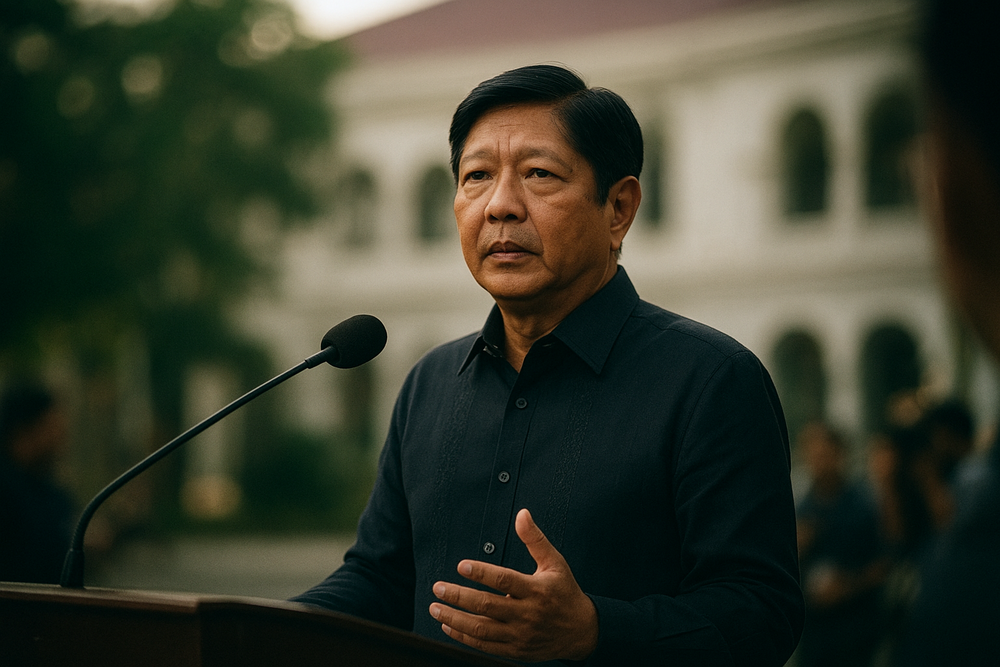
President Ferdinand Marcos Jr. moved this week to tamp down speculation about his political future, telling critics eager for his downfall not to get ahead of themselves, as his administration confronts its slowest economic growth in four years but insists the broader recovery remains intact.
The remark, reported amid heightened political chatter in Manila, comes as fresh data show the Philippine economy expanding by 4 percent in the third quarter of 2025 — a marked slowdown that has sharpened scrutiny of the president’s leadership and emboldened opposition voices calling for change.
A Slowdown That Fuels Political Pressure
The downturn has given critics new ammunition. After registering 5.7 percent growth in 2024, already below government targets, the economy cooled further to 5.4 percent in the first half of 2025 before slipping to its weakest quarterly pace since 2021.
For ordinary Filipinos, the figures translate into mixed signals. Inflation has eased sharply to 1.7 percent by October 2025, offering relief at grocery checkouts and fuel pumps. Yet unemployment stood at 5.3 percent in July, and softer investment has slowed job creation in construction and manufacturing — sectors that anchor livelihoods from Metro Manila to provincial towns.
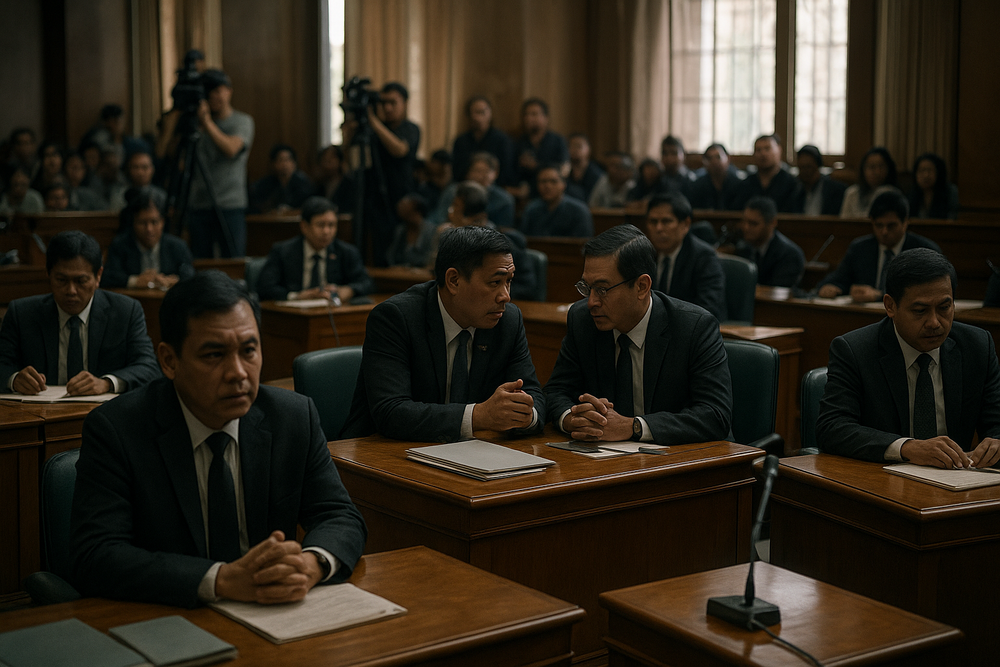
It is against this backdrop that President Marcos delivered his warning against overconfidence among those who want him out of office, projecting calm and continuity rather than concession.
Government Bets on Recovery, Not Retreat
Despite the weaker quarter, economic managers remain publicly upbeat. The Development Budget Coordination Committee has kept its 2025 growth target at 5.5 to 6.5 percent, with projections of 6 to 7 percent in 2026, driven by domestic consumption, infrastructure spending and easing monetary policy.
The Department of Budget and Management estimates nominal output at ₱28.36 trillion to ₱28.62 trillion in 2025, while the Bangko Sentral ng Pilipinas has begun cutting rates as inflation falls within and below its target band.
Supporters of the administration argue that these fundamentals justify Marcos’s confidence. Economist Jonathan Rivera notes that “confidence stems from macroeconomic stability, declining inflation, and strong remittances from overseas Filipino workers (OFWs),” a pillar of household spending across the archipelago.
Sectors Holding the Line
Services, which account for nearly two-thirds of output, remain the economy’s main engine, with ₱3.69 trillion in output in the second quarter of 2025. Tourism’s recovery, contributing close to 9 percent of GDP, has revived coastal economies and urban hospitality hubs alike.
Remittances from OFWs rose 3.6 percent year-on-year in November 2025, cushioning families against slower domestic job growth. Lower borrowing costs have also helped small retailers and commuters, even as large-scale investments hesitate.
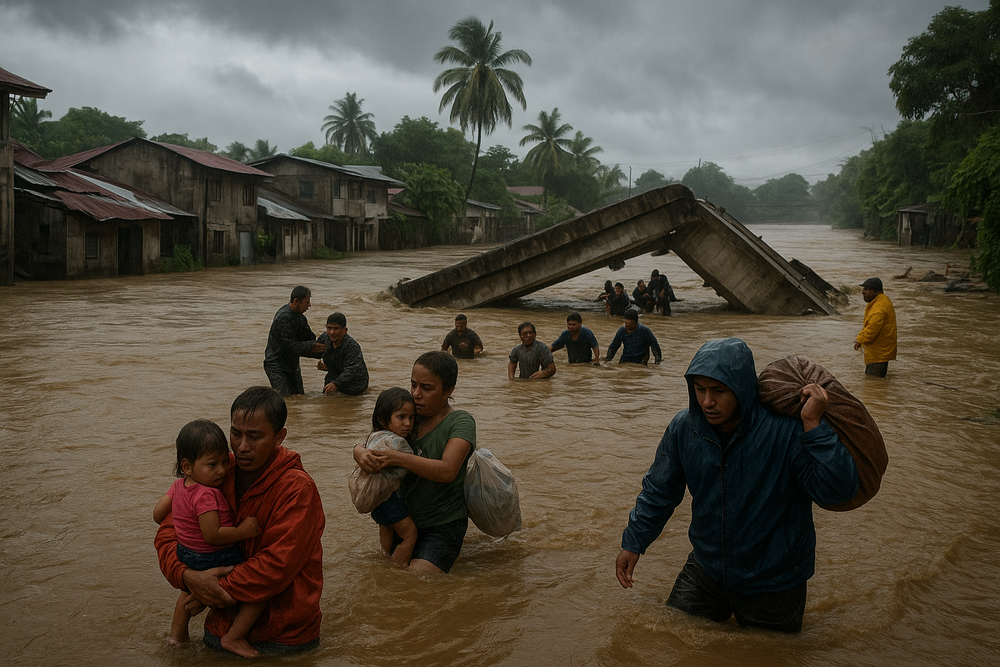
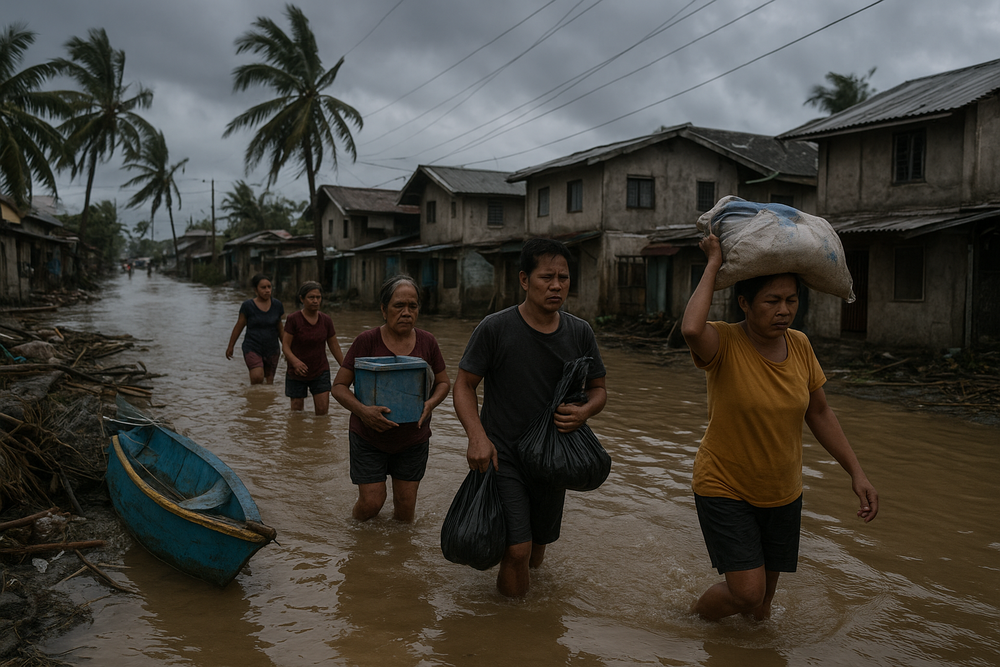
The picture, economists say, resembles a ship navigating calmer seas after a storm — but still vulnerable to sudden squalls from global trade tensions or climate shocks.
Cautious Analysts, Sharper Criticism
Not everyone shares the administration’s optimism. Policy analysts at the Philippine Institute for Development Studies warn that persistent underperformance could delay the country’s ambitions of reaching upper-middle-income status.
“The Philippine economy continues to inch closer to UMIC status, even as it navigates persistent internal and external headwinds,” the institute noted in a recent discussion paper, adding that predictable governance is essential for sustained progress.
Others are blunter. Economist Leonardo Lanzona of Ateneo de Manila University has argued that fiscal restraint alone cannot substitute for a clear development strategy, saying that fiscal discipline is “not a strategy at all” in the absence of deeper reforms.
Confidence as a Political Signal
Marcos’s message to critics is widely read as a political signal as much as an economic one. By dismissing talk of his exit, the president appears intent on projecting steadiness — reassuring investors while reminding rivals that elections, not quarterly data, decide leadership.
Advisers aligned with the business community echo that line. “The fundamentals instill confidence—our youthful workforce and resilient consumption—but global risks and climate-related shocks remain major concerns,” said Jonathan Ravelas of Tacand & Co.
What It Means for the Masa
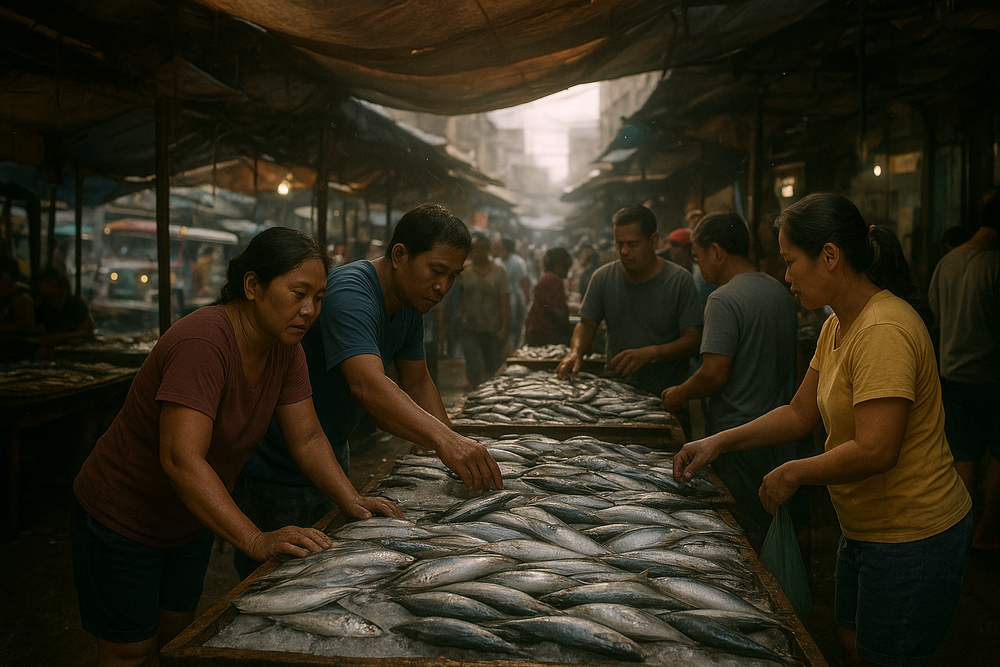
For the masa — ordinary households balancing food prices, transport costs and uncertain work — the debate is less abstract. Slower growth tempers wage gains and job prospects, even as falling inflation stretches pay packets a little further.
The coming quarters will test whether the administration’s confidence translates into tangible improvements, or whether patience wears thin. For now, President Marcos has made his position clear: critics may be watching the numbers closely, but he is not preparing to step aside.