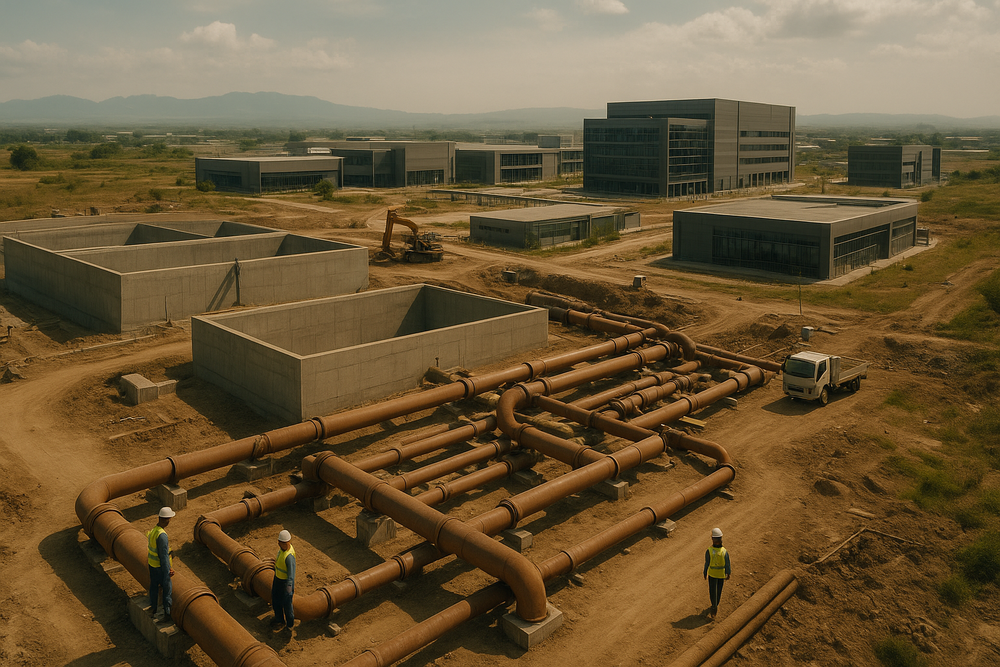
Investment activity in Malta has slowed dramatically, with new data showing a 48 percent drop in investments approved by the Board of Investments (BOI) over the first 11 months of 2025. The decline signals a shift in investor sentiment, particularly among local stakeholders, and raises concerns about the broader economic ramifications—ranging from slowed job growth to dampened development momentum.
Local Caution Amid Global Headwinds
The striking contraction in BOI-approved investments reflects growing unease among local investors, despite headline economic indicators suggesting stability. While Malta’s GDP is forecasted to grow by 3.9% in 2025 and unemployment remains among the lowest in the eurozone at 2.7%-2.9%, tighter margins and unpredictable economic crosscurrents appear to have cooled domestic capital enthusiasm.
“Investment plans saw a decrease, driven by capital expenditure concerns, expansion hesitancy, and increased input costs,” reported the Malta Business Weekly Economic Review, underscoring a cautious stance among companies confronting rising expenses and global uncertainty.
Behind the Investment Slowdown
Several converging factors are shaping this cautious environment. At the forefront is macroeconomic uncertainty, driven by persistent global tensions, energy market volatility, and trade disruptions. Even in Malta’s services-heavy economy, such uncertainty clouds business confidence and compels investors to seek safer ground.
Adding further weight are labour market pressures. Rising wage costs and shortages of skilled workers have made expansion costlier and more complex, pressuring companies to delay or downsize investment initiatives. Though the employment rate is projected to climb by 3.7% in 2025, that momentum may sputter if capital spending remains suppressed.
Malta’s longstanding energy subsidy regime—while easing household and business strain—has begun to distort investment signals, discouraging long-term energy efficiency upgrades and green technology transitions. Meanwhile, the country’s high population density and limited land availability exacerbate infrastructure bottlenecks, making development riskier and more expensive for local investors.
A Mixed Picture in Foreign Investment
While local investors scale back, foreign sentiment toward Malta remains relatively resilient. An Ernst & Young survey conducted in 2025 found that nearly 80% of foreign investors still view Malta as an attractive environment, citing its strategic location, English-speaking workforce, and strong service sectors.
Malta’s real estate market, bolstered over the last decade by steady demand and favorable returns, continues to draw foreign interest. Although the country’s lucrative Citizenship by Investment (CBI) programme ended recently—after generating more than €1.4 billion in economic contributions—the Malta Permanent Residence Programme (MPRP) continues to channel overseas capital into the property and construction sectors.
Possible Consequences for Growth and Jobs
The drop in BOI approvals may have cascading effects on employment and economic development. Fewer greenlit projects can slow the pipeline of new jobs, particularly in sectors dependent on capital expansion—such as construction, infrastructure, and tech innovation.
The decline also threatens to stall progress on national efforts toward economic diversification. Malta has projected a pivot away from its reliance on tourism and gaming sectors toward more innovation-driven industries. With investment drying up at a critical moment, that strategy faces a potential delay.
“Malta’s economy is expected to grow by 3.9% in 2025, placing it among the fastest-growing in the euro area, despite a more challenging global environment,” noted the IMF World Economic Outlook. But analysts caution that missing momentum in private sector investment could undermine the structural reforms and technological investments needed to sustain future gains.
Shifting Climate, Structural Hurdles
Despite recent reform efforts—including updated income tax brackets and raised tax-free thresholds—some structural realities continue to weigh on long-term investor confidence. Malta’s size, demographic pressures, and infrastructure constraints inherently limit economies of scale. Layers of FDI screening mechanisms, aligned with EU security policies, while necessary, may also add complexity to navigating strategic sectors.
In a broader context, Malta is not alone. Global investment flows have declined notably across several jurisdictions in recent quarters due to heightened geopolitical risks and tighter monetary policy. Still, the magnitude of Malta’s locally driven pullback—almost halving in under a year—places it at the sharper end of the trend.
Looking Ahead
The question now is whether this drop marks a temporary recalibration or the beginning of a more entrenched investment freeze. Government officials maintain that macroeconomic fundamentals remain strong, and with inflation expected to ease (to between 2.1% and 2.4% in 2025), there is optimism that investor confidence can rebound with the right signals and policy support.
Yet much may depend on how swiftly challenges—labour shortages, infrastructure capacity, subsidy reform—are addressed, and whether confidence can be rekindled among the domestic investment base.
Until then, the stalling of BOI-approved investments acts as a cautionary marker: high-level economic growth does not always translate into ground-level business confidence. Without revitalized local participation, Malta’s ambitious development goals—and its transition to a more diversified economy—could be left in a state of suspended animation.