Japan has released a 47-year-old Chinese fishing boat captain arrested inside its exclusive economic zone (EEZ) off Nagasaki prefecture, easing what briefly threatened to become another flashpoint between Asia’s two largest economies.
The captain, Zheng Nianli, was detained on February 12 after his vessel allegedly ignored an order to stop for inspection by Japan’s Fisheries Agency. He was freed the following evening, February 13, after Chinese authorities provided a guarantee of cash collateral, Japanese officials confirmed. Beijing urged Tokyo to safeguard the crew’s rights under a bilateral fisheries agreement, underscoring the fragile balance that governs maritime encounters in the region.
Arrest Inside Japan’s EEZ
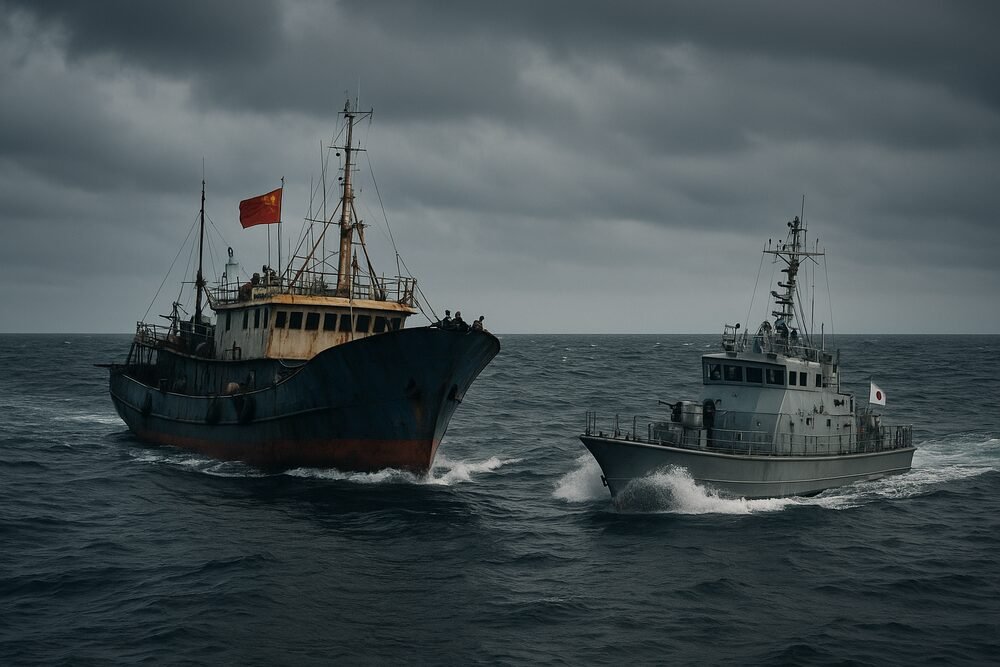
According to Japan’s Fisheries Agency, the incident unfolded when patrol officers directed the Chinese fishing vessel Qiong Dong Yu to halt for inspection within Japan’s EEZ. The ship was located approximately 89.4 nautical miles (166 kilometers) south-southwest of Meshima island, in waters administered by Nagasaki prefecture.
Officials said the vessel refused the inspection order and attempted to flee, prompting authorities to seize the boat and arrest Captain Zheng. The agency described the operation as a law enforcement action within undisputed Japanese waters.
It marked the first seizure of a Chinese fishing vessel by Japan since 2022, a detail that immediately drew attention given the history of maritime confrontations between the two countries.
Swift Release After Diplomatic Intervention
The captain was released before 8 p.m. on February 13, after China submitted a payment guarantee equivalent to bail. Japanese authorities confirmed the release but did not elaborate on the amount of collateral or whether further legal proceedings are expected.
The rapid resolution suggests that both sides sought to prevent escalation. The East China Sea has long been a sensitive arena, and even routine fisheries enforcement can ripple outward if not managed carefully.
Beijing Cites Bilateral Fisheries Pact
China responded within hours of the arrest. Lin Jian, a spokesman for China’s Foreign Ministry, called on Japan to adhere to existing agreements governing fishing activities.
“It is hoped the Japanese side will strictly abide by the China-Japan fisheries agreement, enforce the law impartially and ensure the safety as well as the legitimate rights and interests of Chinese crew members,” Lin said on February 13.
Lin added that the Chinese consulate general in Fukuoka was assisting the crew with their return.
The China-Japan Fisheries Agreement establishes rules for fishing operations and enforcement in designated areas to prevent clashes. While the waters where the arrest occurred are not disputed, the agreement provides a diplomatic framework to manage such incidents.
Echoes of Past Maritime Tensions
The episode inevitably recalls the 2010 East China Sea collision, when Japan’s detention of a Chinese captain near contested islands triggered a diplomatic crisis. Although the circumstances differ—this week’s detention occurred in waters clearly within Japan’s EEZ—the memory of that confrontation lingers in both capitals.
The arrest also comes amid broader regional tensions, including heightened rhetoric over Taiwan under Japan’s current administration led by Prime Minister Sanae Takaichi. While there is no direct link between those issues and the fisheries enforcement action, the strategic backdrop adds weight to even routine maritime encounters.
Limited Broader Impact, Watchful Region
For now, the incident appears contained. There are no reports of injuries, trade disruption, or broader economic consequences. The swift release signals a shared interest in preventing a fisheries violation from spiraling into a diplomatic standoff.
Still, maritime enforcement in East Asian waters remains a delicate exercise—akin to navigating a crowded strait where a single misstep can trigger outsized consequences. As fishing fleets from neighboring nations operate in proximity to overlapping claims and sensitive sea lanes, even isolated detentions can take on symbolic importance.
In this case, Japan asserted its enforcement authority within its EEZ, while China insisted on procedural fairness and crew protections. Both sides stepped back just as quickly as tensions rose—a reminder that in the region’s contested seas, diplomacy often moves at the same speed as patrol boats.