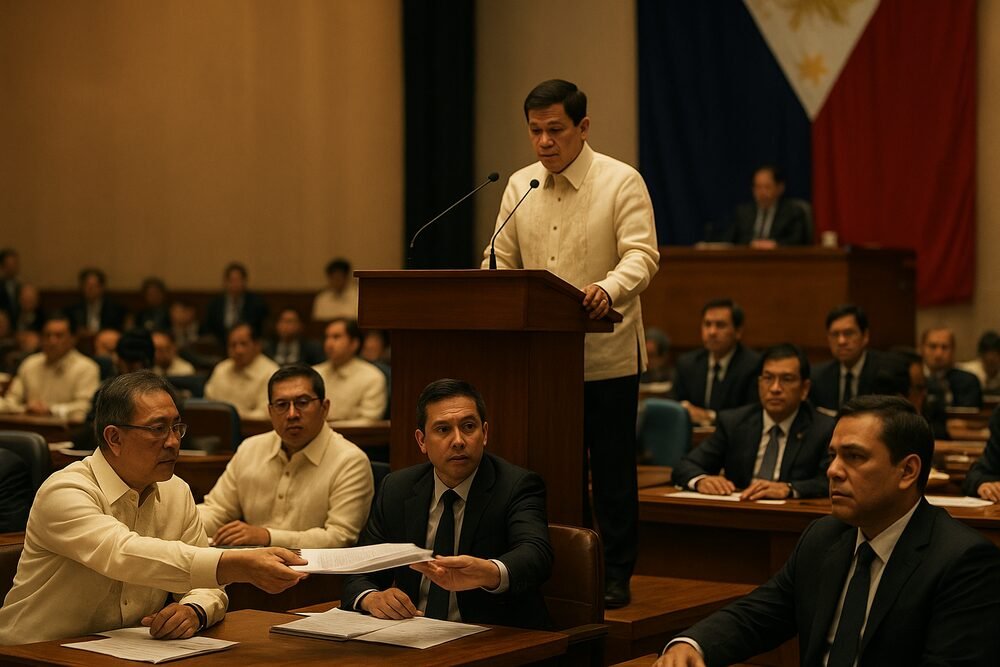
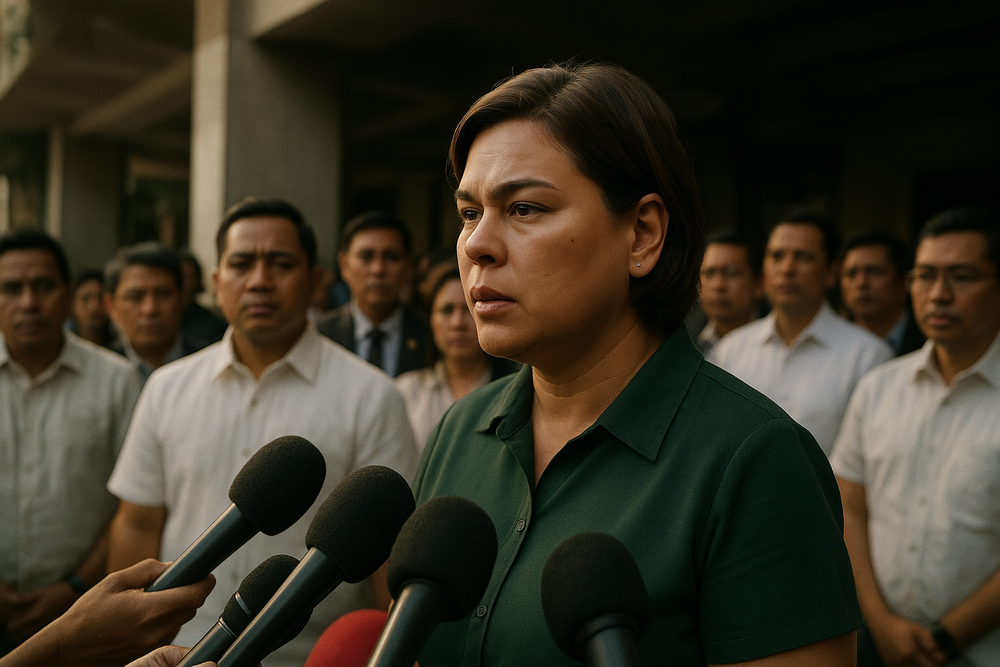
The House of Representatives will refer any impeachment complaint against Vice President Sara Duterte to its Committee on Justice, a senior lawmaker said, setting the stage for renewed proceedings months after the Supreme Court voided a previous attempt to remove her from office.
Senior Deputy Majority Leader Lorenz Defensor confirmed that the chamber has finalized amendments to its internal rules to align impeachment procedures with the High Court’s July 2025 decision, which struck down a fourth complaint against the vice president as unconstitutional.
“Yes, we have completed proposed amendments the Rules Procedure for 20th Congress. We ensured that the constitutional provisions are preserved within the House’s rules, while also respecting the Supreme Court’s interpretation regarding what constitutes a session day for impeachment matters,” Defensor said.
Referral to Justice Panel
Under the revised rules, any verified impeachment complaint must be included in the House’s Order of Business within 10 days of filing and then referred to the appropriate committee within three session days. In impeachment cases, that committee is the House Committee on Justice, which determines whether a complaint is sufficient in form and substance.
Defensor said the House would strictly follow the Supreme Court’s guidance.
“We will comply with the Supreme Court decision upon receipt; this must be included in the Order of Business, called to the floor, and referred to the committee on rules. The committee on rules has three days to pass it to the committee on justice,” he said.
The House currently holds regular session days on Mondays, Tuesdays and Wednesdays, a detail that carries procedural weight under the newly clarified timetable.
Supreme Court Voids 2025 Impeachment
The rule changes follow a dramatic legal reversal last year. On February 5, 2025, 215 lawmakers — more than the constitutionally required one-third of House members — endorsed a fourth impeachment complaint against Duterte. The move effectively initiated impeachment proceedings and transmitted the case to the Senate for trial.
But in July 2025, the Supreme Court, voting en banc, declared the complaint void and unconstitutional. In a decision penned by Associate Justice Leandro Leonen, the Court ruled that the House violated the Constitution’s one-year bar, which prohibits initiating impeachment proceedings against the same official more than once within a year.
The tribunal also cited due process concerns, including the failure to provide Duterte prior notice and a hearing before the complaint was transmitted, and questioned how procedural timelines were triggered inside the House.
“The end does not justify the means,” the Court said, underscoring that constitutional safeguards must be observed even in politically charged proceedings.
On January 28, 2026, the Court unanimously denied a motion for reconsideration, effectively closing the chapter on the fourth complaint.
Constitutional Stakes
Under the 1987 Constitution, the House of Representatives has the exclusive power to initiate impeachment cases, while the Senate has the sole authority to try and decide them. Conviction requires a two-thirds vote of all senators.
The Constitution also embeds a critical safeguard: no official may face impeachment proceedings more than once within a single year. The Supreme Court interpreted this strictly, determining that earlier complaints filed by private citizens in December 2024 triggered the constitutional clock.
The ruling clarified that even technical missteps can derail an impeachment, much like a procedural foul can nullify a decisive goal in a championship match. The charges themselves — which included allegations of culpable violation of the Constitution, treason, bribery, graft and corruption, other high crimes, and betrayal of public trust — were not adjudicated on their merits.
Balancing Accountability and Due Process
The House’s revised rules attempt to strike a careful balance: preserving its constitutional authority while respecting judicial oversight. Defensor stressed the chamber’s intent to retain established terminology while adhering to the Court’s interpretation.
“What we aim for in our regulations is to retain the term session day, even if they interpret it as a calendar day concerning impeachment rules,” he said.
The procedural tightening may shape not only any future complaint against Duterte but also impeachment cases involving other high-ranking officials. By clarifying timelines and referral mechanisms, lawmakers aim to prevent further constitutional challenges that could invalidate proceedings.
Broader Political Impact
While impeachment battles unfold largely in the halls of Congress and the judiciary, their implications ripple nationwide. Questions over accountability, due process, and institutional balance can influence public trust in government.
The Supreme Court’s intervention signaled that even a substantial majority in the House — in this case, 215 signatories — cannot override constitutional guardrails. At the same time, critics have warned that a strict reading of the one-year bar could allow officials to evade scrutiny through procedural maneuvering.
For now, the House appears intent on ensuring that any future impeachment effort proceeds within clearly defined constitutional boundaries. Whether a new complaint will be filed against the vice president remains uncertain, but if it is, the first stop will be the House Committee on Justice — under rules designed to withstand judicial review.
In a system built on checks and balances, the episode underscores a central lesson: accountability mechanisms are only as strong as the procedures that sustain them.