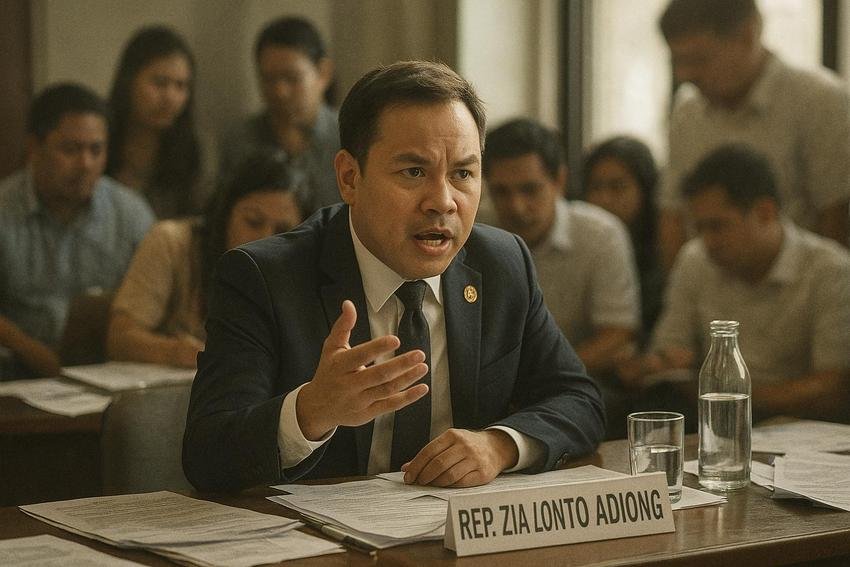
The House Committee on Suffrage and Electoral Reforms has pledged to craft a singular, constitutionally viable Anti-Political Dynasty Bill by consolidating over a dozen separate proposals. With President Ferdinand Marcos Jr. and Malacañang urging deliberate, well-reviewed drafting, the committee emphasizes broad public participation through nationwide consultations to ensure the resulting law balances presidential priorities, legal robustness, and democratic ownership.
Committee Leads Consolidation of Multiple Anti-Dynasty Bills
Under the leadership of Rep. Zia Alonto Adiong, the House panel has committed to merging at least 14 distinct anti-political dynasty proposals into a single comprehensive measure. This initiative—announced on December 12, 2025—will subject each bill to rigorous committee hearings and extensive public consultations across the country.
“Currently, there are at least 14 distinct iterations of the proposed anti‑political dynasty legislation awaiting consideration,” Rep. Adiong said. “We will organize extensive public consultations and hearings across the country to ensure every opinion is acknowledged and taken into account.”
The consolidation is regarded as a legislative priority under the current House leadership. Speaker Faustino “Bodjie” Dy III has highlighted the anti-dynasty bill among key reform initiatives, coordinating closely with the committee to ensure progress aligned with the administration’s broader political reform agenda.
Presidential Support Coupled With Calls for Caution
Malacañang and President Marcos Jr. have publicly declared strong support for the anti-political dynasty measure but have simultaneously cautioned against rushing. The Palace urged lawmakers to address potential gaps and ambiguities before the bill’s enactment to ensure it withstands constitutional scrutiny and yields meaningful results.
A Malacañang spokesperson noted: “Legislation should not be hurried. It needs to be examined closely, debated comprehensively, and all suggestions, opinions, and perspectives must be taken into consideration.”
Constitutional Challenges and Legal Complexities
The 1987 Constitution mandates Congress to enact a law prohibiting political dynasties yet notably does not define the term itself. This omission places a significant responsibility on lawmakers to draft legislation that clearly defines “political dynasty” while respecting constitutional limits.
Experts and policymakers alike emphasize that an acceptable law must carefully navigate:
- Definitions: Establishing who qualifies as part of a political dynasty, including blood relations and affinity degrees.
- Scope of prohibitions: Deciding whether bans apply to candidacy only or also extend to appointments, simultaneous versus successive office holding, and cooling-off periods between terms.
- Enforcement mechanisms: Clear allocation of powers to the electoral commission or an independent body, sanctions, and procedural safeguards.
- Interaction with existing laws: Harmonizing the anti-dynasty measure with current election laws and qualification requirements.
Previous attempts to regulate political dynasties stalled due to constitutional challenges and practical enforcement obstacles. Critics have described past proposals as insufficient, often restricting rather than banning dynastic influence. Both Malacañang and House leaders recognize the need for a durable, legally sound statute.
Public Participation as Pillar of Legitimacy
The committee stresses that nationwide consultations are essential, framing public involvement as a cornerstone for legitimacy and ownership. Scheduled hearings and forums will gather diverse opinions, particularly from local constituencies affected by entrenched political families.
Such broad-based participation aims to mitigate concerns that the final draft will become a diluted or symbolic piece of legislation favoring incumbents. Lawmakers hope transparent, inclusive deliberations will foster a law capable of resisting political capture and judicial invalidation.
Debates Over Effectiveness and Enforcement
Reform advocates largely favor comprehensive bans that limit intergenerational political succession and concentrated local power. They stress strong enforcement provisions as key to transforming political landscapes.
However, skeptics warn that vaguely worded bills or narrow definitions risk creating loopholes that political dynasties can exploit — such as through proxies or reshuffling candidacies among family members. Some question whether executive- or lawmaker-drafted legislation will assert sufficient independence in enforcement to effect meaningful change.
Next Steps and Monitoring Prospects
The consolidation process is underway but the committee has yet to release the final draft. Close attention will be required to the exact text, particularly the bill’s definitions, prohibitions, and enforcement details, which will determine its resilience against potential legal challenges.
Scheduled hearings and consultations will offer insights into the evolving political dynamics and public sentiment. Observers and stakeholders await the committee’s forthcoming timetable and consultation schedule to assess the depth of grassroots engagement.
Given the complex history of anti-dynasty reform in the Philippines, the balance of political will, constitutional prudence, and public demand will dictate whether this promised “acceptable” bill constitutes substantive progress or remains another unfulfilled political aspiration.