The lending arm of Philippine mobile wallet giant GCash disbursed a record ₱362 billion in loans in 2025, a 65 percent surge from the previous year, extending credit to 10.5 million unique borrowers across the country and deepening the reach of digital finance into low-income communities.
Fuse Financing Inc., which operates under GCash parent company Mynt, said the growth reflects the rapid adoption of app-based lending among Filipinos who have long operated outside the traditional banking system. The expansion also drew backing from the Asian Development Bank (ADB), which recently approved a $30 million (₱1.75 billion) credit facility to support further lending to micro, small and medium enterprises (MSMEs).
Rapid Growth in App-Based Lending
By the end of 2025, Fuse Financing’s total loan disbursements had climbed to ₱362 billion, up from ₱219.4 billion in 2024. The loans were extended without traditional collateral, relying instead on GCash’s proprietary “GScore” trust-based credit assessment system.
The borrower base reached 10.5 million, with 90 percent coming from lower socioeconomic segments and 78 percent residing outside Metro Manila. The figures underscore how digital lending platforms are reaching far beyond commercial centers into provincial towns and rural communities.
In a statement issued on February 9, Martha Sazon, president and chief executive of Mynt, said: “Our growth trajectory remains strong as digital finance becomes increasingly woven into our daily lives. We are intensifying our efforts to enhance financial accessibility for the general public through everyday transactions, equitable lending, and inclusive wealth and insurance solutions.”
Backing From a Multilateral Lender
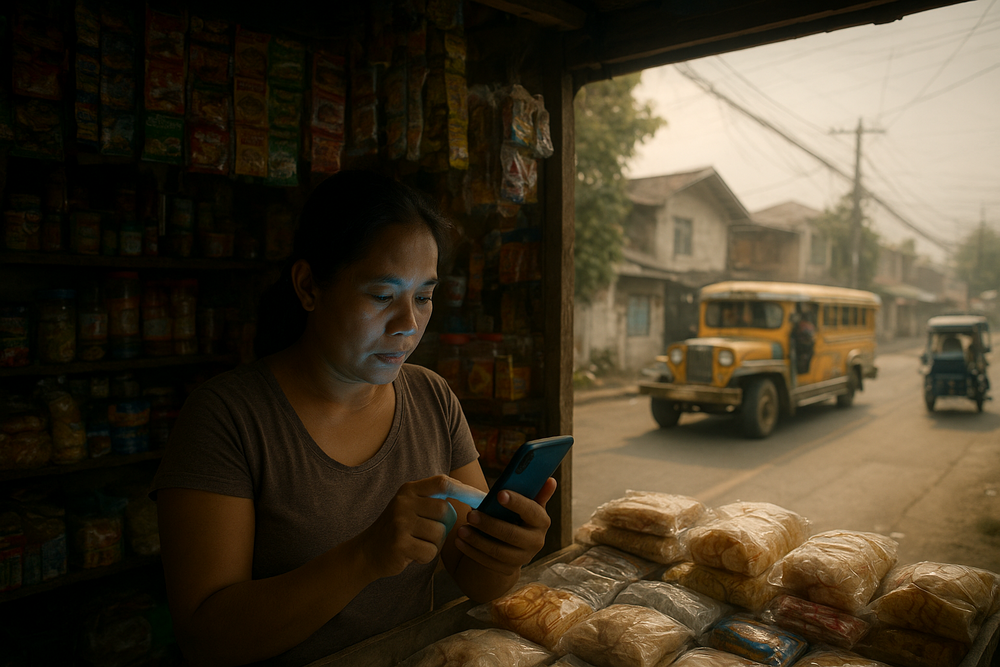
The surge in lending comes as the Manila-based ADB formalized a $30 million facility to Fuse Financing earlier this month. The funding is earmarked in part to expand credit to underserved segments, with 60 percent allocated to women-owned MSMEs, as well as uncollateralized loans for farmers and sari-sari store owners.
Suhail Khan, an ADB director, described the facility as a “foundation for a multi-year partnership” aimed at accelerating access to credit for MSMEs. ADB President Masatsugu Asakawa called the deal a “crucial advancement in promoting financial inclusion in the Philippines.”
The partnership signals growing institutional confidence in digital-first lenders as tools for widening financial access in emerging markets.
Profits Rise, IPO Remains an Option
The lending boom has translated into stronger earnings for Mynt’s shareholders. Globe Telecom, one of Mynt’s principal backers alongside Ayala Corp. and Ant International, reported that its equity earnings from Mynt rose 64 percent to ₱6.1 billion in 2025, accounting for roughly 22 percent of Globe’s pre-tax income.
The earnings growth has revived speculation about a potential public listing. Juan Carlo C. Puno, Globe’s chief financial officer, said: “Mynt and its shareholders remain open to the various capital solutions including an IPO. There is no official decision that has been made regarding the timing.”
Executives noted that any decision would depend on market and regulatory conditions.
An Expanding Digital Ecosystem
Lending forms one pillar of GCash’s expanding financial ecosystem. In 2025, its investment platform GStocks reached 1.7 million users, marking a 65 percent increase from a year earlier. Meanwhile, GInsure sold 132.6 million insurance policies, roughly triple its 2024 level.
By integrating payments, loans, investments and insurance into a single mobile platform, GCash is positioning itself as a one-stop financial hub—particularly for Filipinos who previously relied on informal lenders or cash-based transactions.
For many small entrepreneurs, quick mobile loans offer an alternative to so-called “5-6” lenders, who charge steep interest rates and collect daily. App-based credit, assessed through digital transaction histories, aims to lower those barriers.
Inclusion and Its Risks
Proponents argue the scale of lending demonstrates how technology can narrow longstanding financial gaps. With millions of borrowers outside the capital and most from lower-income households, the model has expanded formal credit deep into the archipelago.
Yet the speed of growth also raises questions about household debt and data safeguards in an era of algorithm-driven credit scoring. Some analysts have questioned whether development funding directed toward a profitable private platform represents the best use of public capital.
Fuse Financing operates under the oversight of the Bangko Sentral ng Pilipinas, which regulates digital lending and fintech platforms. While no specific regulatory actions were cited alongside the 2025 figures, executives acknowledged that evolving macroeconomic and regulatory conditions could shape future plans.
A Turning Point for Digital Finance
The figures mark a watershed for app-based lending in the Philippines. What began as a mobile payment tool has matured into a sprawling financial services platform, disbursing hundreds of billions of pesos in credit and embedding itself in daily commerce.
If the trajectory continues, digital lenders like Fuse may not only rival traditional banks in reach, but also redefine how millions of Filipinos borrow, save and invest — with consequences that extend well beyond balance sheets.