Fuel prices in the Philippines climbed again on Tuesday, marking the sixth consecutive week of increases for gasoline and the eighth straight week for diesel and kerosene, as global geopolitical tensions continue to ripple through the import-dependent nation.
Major oil companies raised gasoline prices by P1.20 per liter, while diesel and kerosene went up by P0.60 per liter each. The adjustments took effect at 6 a.m. on February 17, 2026, across most of the country, with Cleanfuel implementing its changes later in the afternoon at 4:01 p.m.
Six Weeks Up for Gasoline, Eight for Diesel and Kerosene
The latest round of increases builds on a steady climb that began in early January. Since the start of 2026, gasoline prices have risen by a cumulative P4.20 per liter. Diesel has climbed even more sharply, up P7.00 per liter year-to-date, while kerosene has increased by P5.00 per liter.
Just last week, fuel firms also implemented hikes: gasoline by P0.60 per liter, diesel by P1.00 per liter, and kerosene by P0.60 per liter.
As of February 9, diesel was already retailing at around P56.50 per liter nationwide, placing additional strain on transport operators and industries reliant on heavy fuel use.
The price adjustments were announced by leading retailers including Chevron Philippines (Caltex), Petron Corp., Seaoil Philippines Corp., Shell Pilipinas Corp., Petro Gazz, PTT Philippines Corp., and Unioil Petroleum Philippines Inc.
Geopolitical Tensions Drive Risk Premium
The Department of Energy’s Oil Industry Management Bureau said the upward trend is largely driven by instability in key oil-producing regions.
“The primary factor driving oil prices upward is the geopolitical issues, especially concerning Iran. The threat [of] supply disruption [through] the Strait [of] Hormuz [and] the uncertainty surrounding the Iran nuclear negotiations have contributed to a risk premium,” a DOE assistant said in a statement.
The Strait of Hormuz serves as a critical artery for global oil shipments. Even the possibility of disruption is enough to push up international crude prices. For the Philippines, which imports the bulk of its fuel requirements, global volatility translates quickly into higher pump prices.
Under Republic Act No. 8479, or the Downstream Oil Industry Deregulation Act of 1998, fuel retailers are required to adjust prices based on international market movements and import costs. The government monitors price behavior but does not impose direct controls.
A Timeline of Relentless Increases
The escalation has been gradual but persistent since early January:
January 6: Diesel +P0.20/L; gasoline -P0.10/L
January 13: Gasoline +P0.30/L; diesel +P0.20/L
January 20: Gasoline +P1.00/L; diesel +P2.00/L
January 27: Diesel +P1.40/L; gasoline +P0.40/L
February 3: Diesel +P1.60/L; gasoline +P0.80/L
February 10: Diesel +P1.00/L; gasoline +P0.60/L; kerosene +P0.60/L
February 17: Gasoline +P1.20/L; diesel +P0.60/L; kerosene +P0.60/L
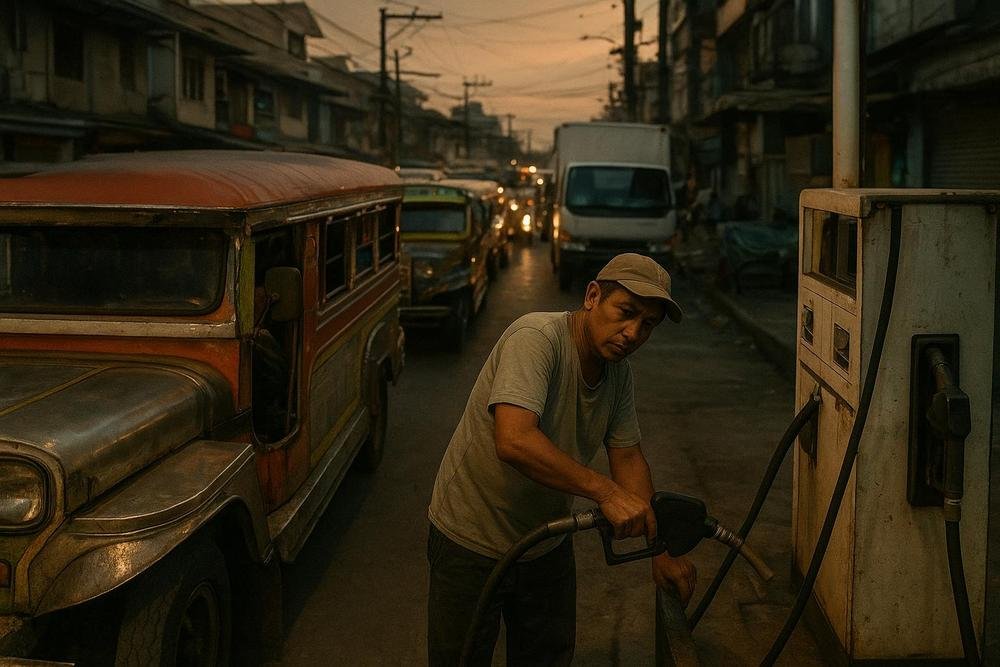
With each adjustment, the cumulative effect has widened. Diesel, a key fuel for public utility vehicles, freight trucks, and agricultural machinery, has seen the steepest rise.
Impact Felt in Transport and Markets
The steady climb in fuel prices is expected to reverberate through daily life, particularly in public transportation and food distribution.
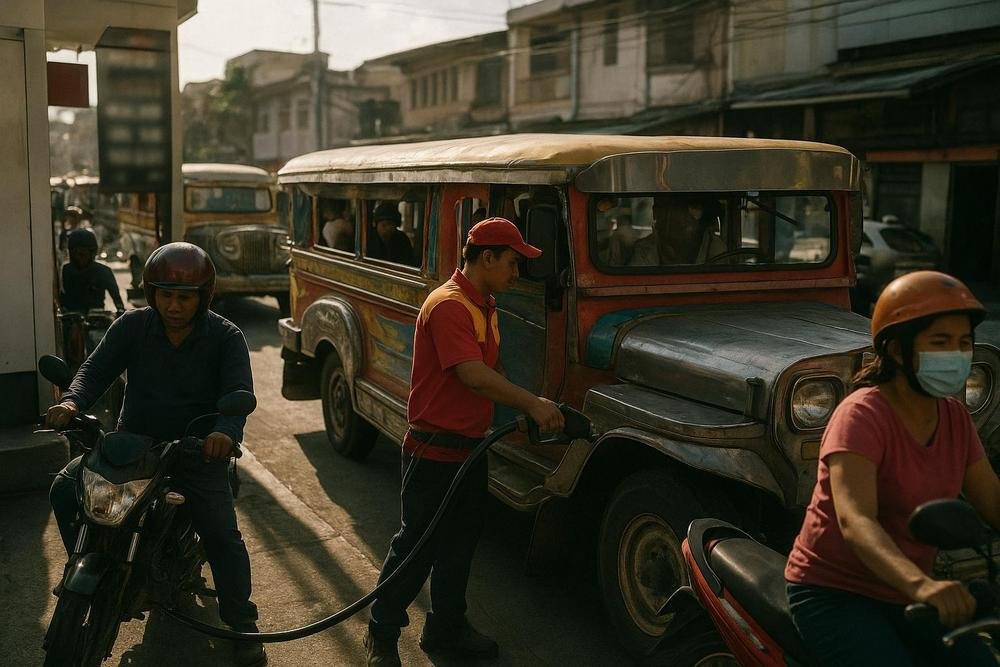
Transport groups in urban centers such as Metro Manila and in provincial routes have warned that higher diesel costs may justify fare increases ranging from P1 to P5 per ride. For daily wage earners, these incremental additions accumulate quickly over a week or month.
Higher fuel costs also raise the expense of transporting vegetables, rice, fish, and other staples from farms and ports to public markets. Analysts estimate goods could rise by 5 to 10 percent as trucking and delivery expenses increase.
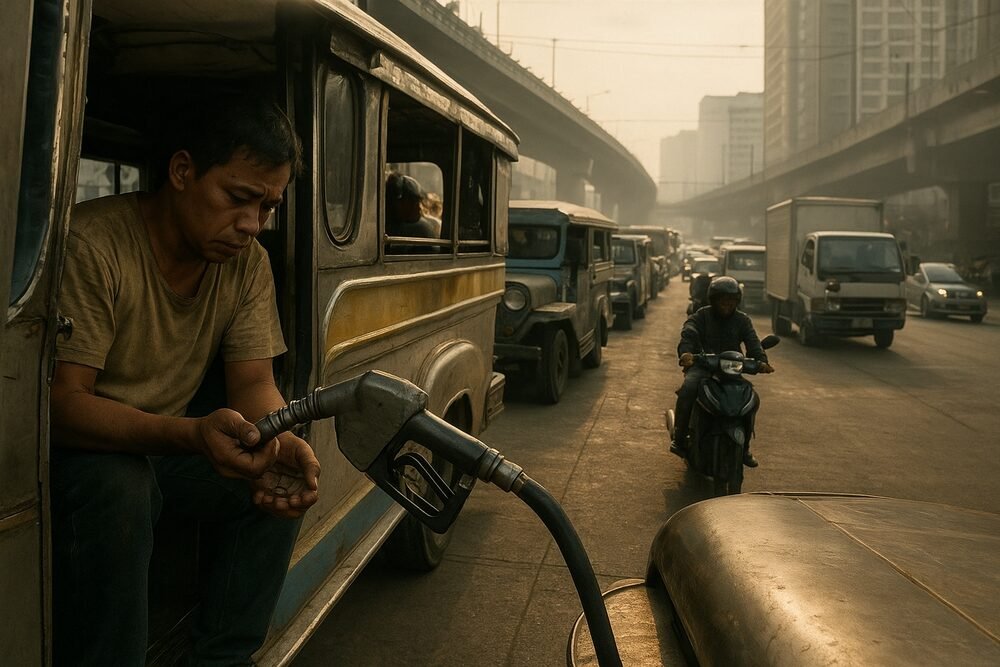
Small retailers and low-income households are often the first to absorb the pressure. Jeepney and truck drivers report tighter margins as fuel expenses eat into daily boundary payments and earnings. In remote island communities in the Visayas and Mindanao, fisherfolk who rely on kerosene for lamps and small-scale operations face escalating operating costs.
An Import-Dependent Economy on Edge
The Philippines’ archipelagic geography makes it especially vulnerable to oil price shocks. With no substantial domestic crude production to cushion global swings, the country functions like a passenger on a ship navigating distant storms — every tremor in the Strait of Hormuz or development in Middle East diplomacy sends waves across local pump stations.
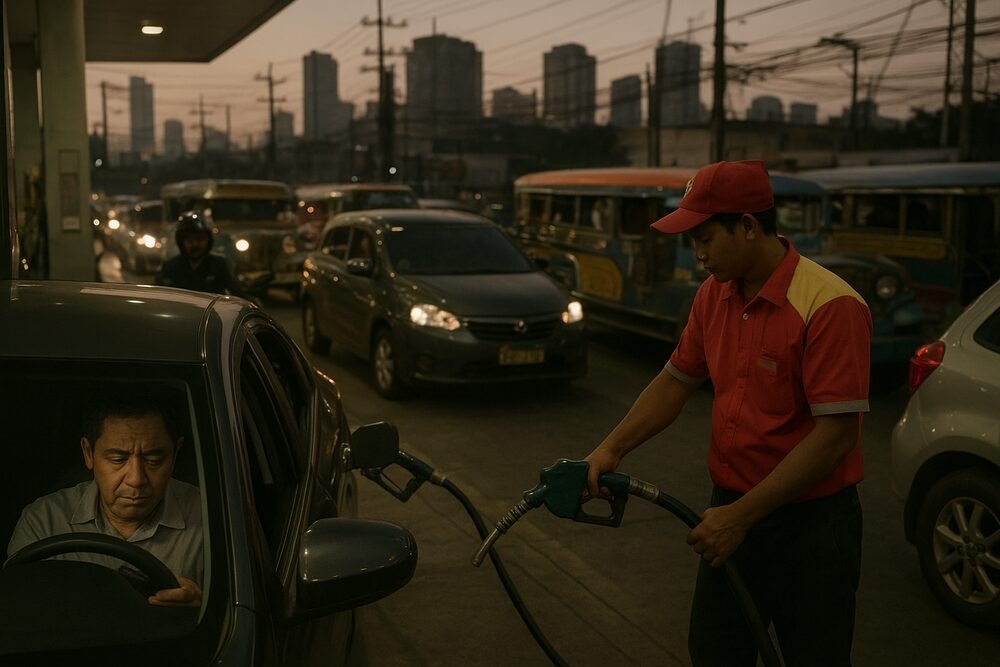
For now, motorists are left to plan their refueling carefully and brace for continued volatility. Unless geopolitical tensions ease or global supply stabilizes, analysts warn that price adjustments are likely to remain sensitive to developments abroad.
As the sixth and eighth straight hikes take effect, the cost of moving people and goods across more than 7,000 islands continues to rise — a reminder that in a globalized energy market, distant conflicts rarely remain distant.