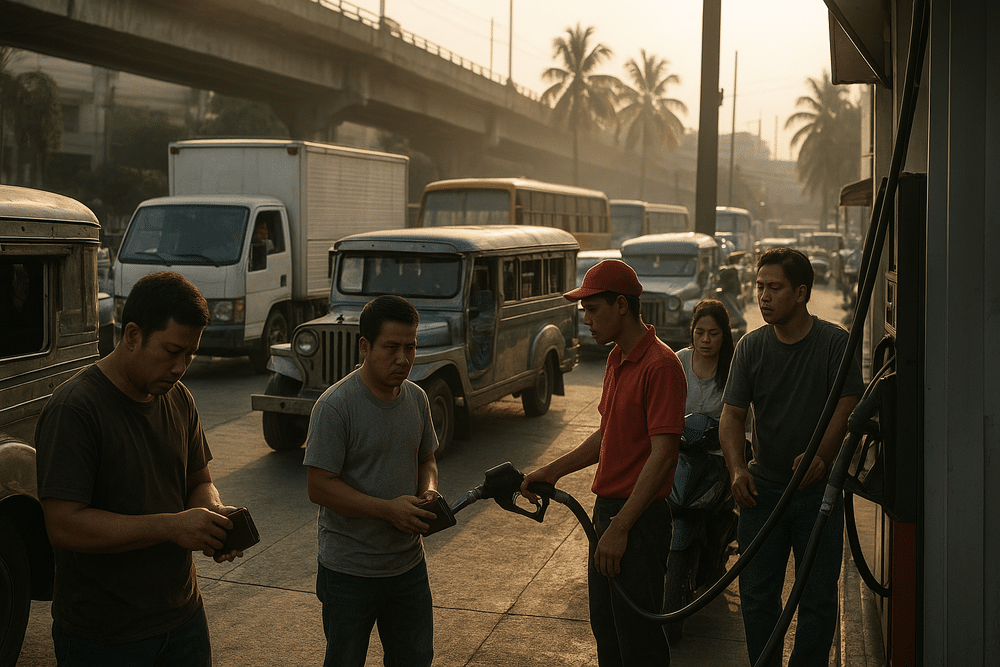
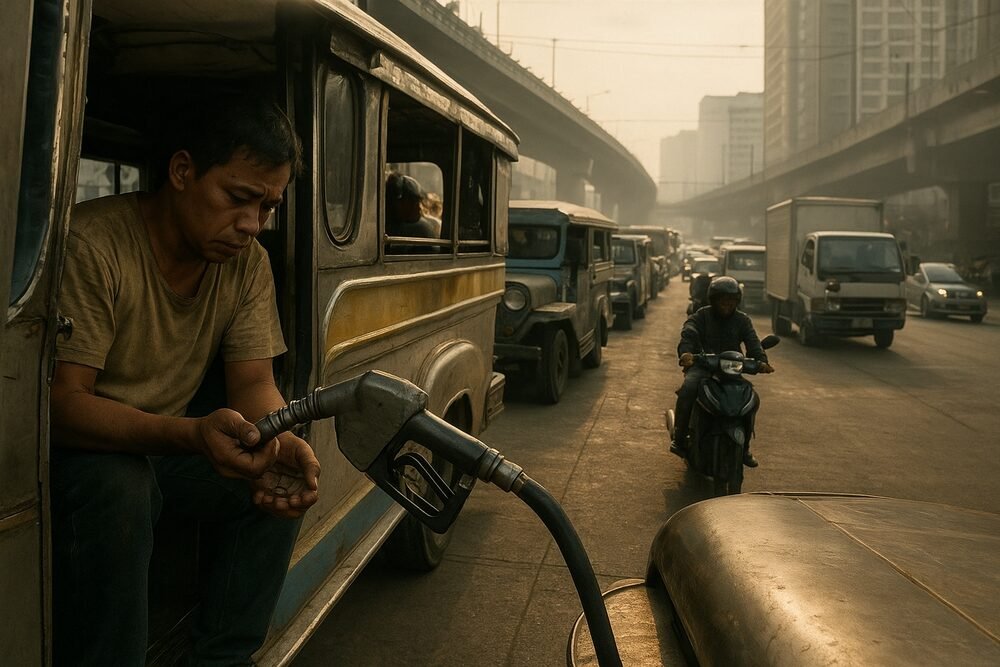
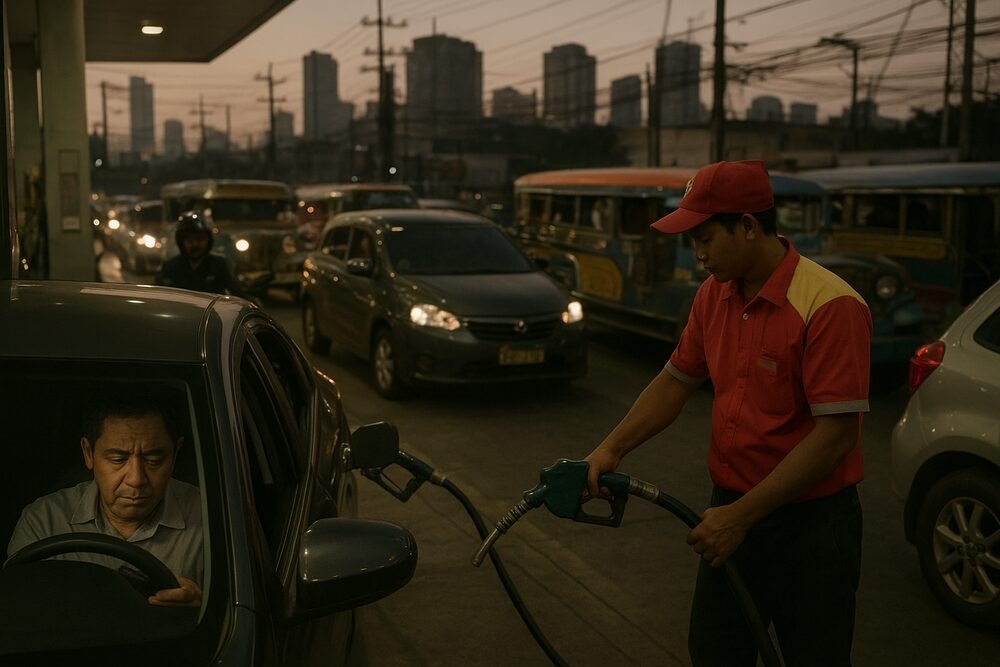
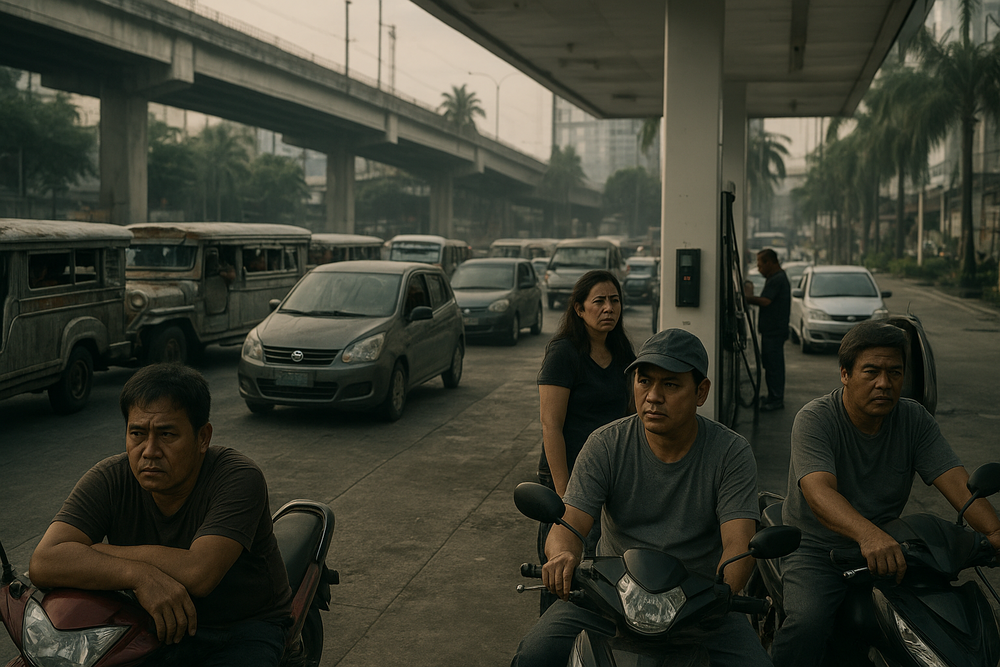
The Department of Energy (DOE) has warned that fuel prices may surge sharply next week, with diesel projected to climb by as much as P19 per liter and gasoline by P9 per liter, as global oil markets react to escalating tensions in the Middle East. If fully implemented in one adjustment, the increase could push diesel prices beyond the P80-per-liter mark and deepen pressure on transport operators, consumers and businesses already grappling with inflation.
Energy officials said the final adjustments will be announced on Monday, March 9, but early projections suggest one of the steepest weekly hikes in recent years. Kerosene may also rise by P31 per liter.
Global Tensions Drive Oil Market Spike
The anticipated price surge follows heightened volatility in international oil markets after the killing of Iranian Supreme Leader Ayatollah Ali Khamenei during US-Israeli airstrikes. The development rattled crude benchmarks worldwide, triggering a spike in premiums, freight, and insurance costs.
Because the Philippines imports all of its petroleum requirements, local pump prices closely track global shifts. Even modest price swings abroad ripple quickly through domestic markets. In this case, the wave resembles more of a jolt than a ripple.
Industry estimates indicate diesel could rise by as much as P19.62 per liter and gasoline by P10.43 per liter. At the upper end, diesel prices could reach P94.43 per liter, while gasoline could climb to P86.93 per liter, depending on location and brand.
Government Pushes for Staggered Hikes
To cushion the blow, the DOE is negotiating with oil companies to implement the increases in stages rather than in one sweeping adjustment.
“The Department of Energy (DOE) is in active negotiations with private oil firms to implement the hikes in stages to avoid a sudden inflationary shock,” Energy Secretary Sharon Garin said.
DOE-Oil Industry Management Bureau Director Rino Abad said companies may opt for staggered increases depending on the scale of the adjustment.
“If the increases are significant, they might opt for daily staggered adjustments. However, if the changes are minor, they could implement adjustments twice a week,” Abad said.
He added: “Diesel prices could reach PHP80 per liter if oil companies implement the full [hike].”
President Ferdinand Marcos Jr. has ordered a multi-agency task force to monitor compliance and prevent profiteering, hoarding, or unauthorized price adjustments.
The DOE warned that “Any entity found engaging in predatory pricing or the illegal stockpiling of petroleum products will face severe administrative and criminal penalties.”
Prices Already Climbing
The looming hike follows a series of increases earlier this year. As of February 24, year-to-date net adjustments stand at:
P4.80 per liter for gasoline
P8.20 per liter for diesel
P6.20 per liter for kerosene
On March 3 alone, oil firms raised prices by P1.90 per liter for gasoline, P1.20 for diesel, and P1.50 for kerosene, marking the eighth consecutive weekly increase for gasoline and the 10th to 11th for diesel and kerosene.
Current pump prices vary widely. Diesel ranges from P56.80 to P74.81 per liter nationwide, with Metro Manila averages between P60.50 and P63.19. Gasoline prices range from P49 to P76.50 per liter, depending on octane rating and location.
Impact on Transport and Goods
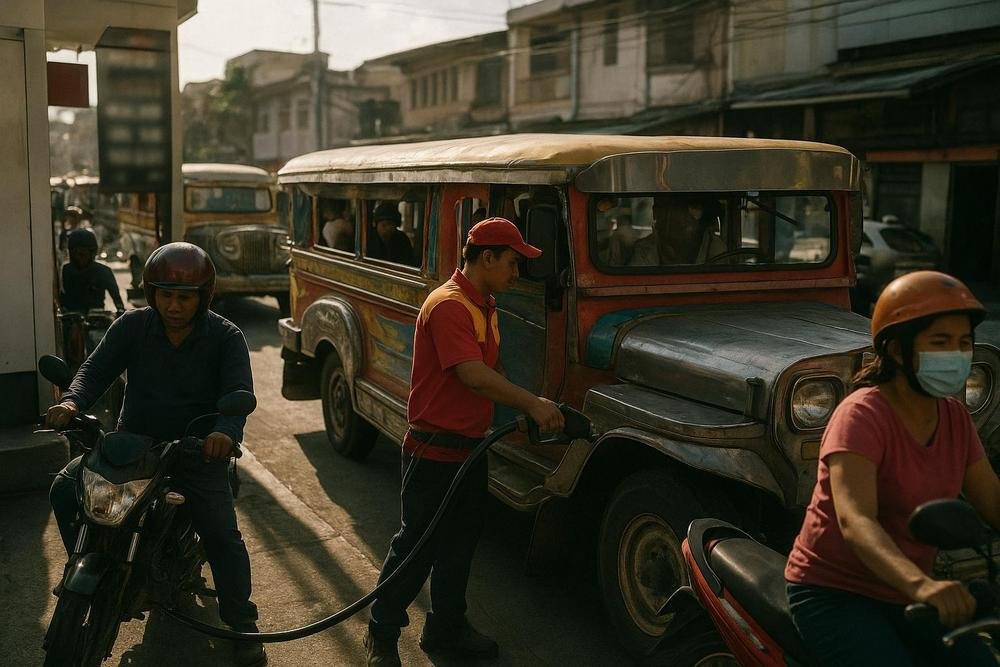
Diesel fuels the country’s transport and logistics backbone: jeepneys, buses, delivery trucks, fishing vessels and farm machinery. A near-P20 increase would cascade through the economy, raising transport fares and delivery costs.
Transport groups and market vendors are bracing for what could become a chain reaction — higher fuel costs pushing up the price of rice, vegetables and other staples. Even a modest fare increase of 10 to 20 percent would strain commuters already managing tight household budgets.
Small retailers and informal transport operators — including tricycle and habal-habal drivers — are especially vulnerable. For many, profit margins hinge on a few pesos per trip.
Supply Diversification Under Review
The DOE is also reviewing supply channels to stabilize availability. Around 30 percent of the country’s diesel supply is imported from China. The government plans to procure at least one million barrels from alternative suppliers, including Korea, Japan, Singapore, Malaysia and Indonesia, through the National Oil Company.
Officials say diversification may help temper future shocks, but they acknowledge that global oil prices remain the dominant factor.
Strict Monitoring Nationwide
DOE field offices in Luzon, Visayas and Mindanao have intensified inspections. In one case, a gasoline station in Tagum City was penalized after prematurely increasing diesel prices by P8.35 per liter.
Authorities stressed that price movements must follow official announcements and existing regulatory frameworks.
With final figures expected Monday, consumers and businesses alike are waiting for clarity — and hoping the increase will be staggered. For now, the numbers alone signal a difficult week ahead, as global geopolitics once again reach deep into household budgets through the price posted at the pump.