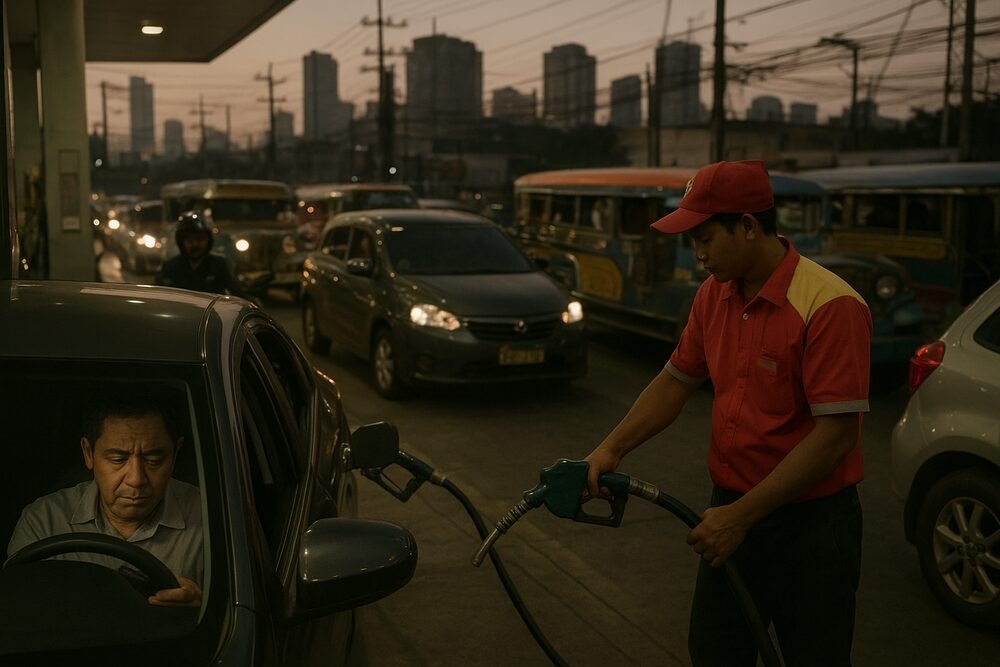
Fuel prices are expected to post another round of increases next week, extending a relentless climb that has already pushed pump costs sharply higher across 2026. Industry forecasts indicate a possible hike of up to P0.60 per liter for gasoline, diesel and kerosene for the week of February 24 to 28, driven largely by geopolitical tensions and global supply risks.
If confirmed, the adjustment would mark between the sixth and eighth consecutive weekly increase, depending on the product, deepening financial strain on motorists and public transport operators throughout the archipelago.
A Steady Climb Since January
Fuel prices have inched up in near-weekly increments since the start of the year. As of mid-February:
Gasoline has risen by a cumulative P4.30 per liter, with the latest posted price at P55.90 per liter as of February 16.
Diesel has climbed by P7.00 per liter year to date.
Kerosene is up by P5.00 per liter.
The increases have come in waves. On January 6, diesel rose by P0.20 per liter while gasoline dipped slightly by P0.10. The reprieve was short-lived. By January 20, diesel jumped by P2.00 and gasoline by P1.00. February brought even steeper adjustments, including a P1.60-per-liter increase for diesel on February 3 and a P1.20-per-liter hike for gasoline on February 17 — the seventh upward adjustment for some products.
“The latest round of hikes extends a painful streak for consumers and transport operators.”
What’s Driving the Latest Forecast
Market watchers attribute next week’s projected increase to renewed supply risks linked to geopolitical issues. As one report noted, “Fuel prices are expected to increase anew next week, by as much as PHP0.60 per liter, on supply risk due to geopolitical issues.”
The Philippines operates under a deregulated, market-based pricing system. Domestic pump prices track global crude oil movements and are adjusted weekly by retailers such as Shell Pilipinas Corp., Seaoil Philippines Inc., Chevron Philippines Inc. (Caltex) and other industry players. Adjustments are implemented nationwide.
With no government-imposed weekly price caps, the system functions like a tide: when global crude rises, local prices swell in tandem. The removal of the Oil Price Stabilization Fund decades ago cemented this market-driven approach, leaving consumers exposed to international volatility.
The Regulatory Framework Behind the Pumps
The Department of Energy (DOE) monitors price movements and communicates adjustments, while the pricing mechanism itself reflects global benchmarks.
Fuel products remain subject to the 12 percent value-added tax under the TRAIN Law (Republic Act No. 10963), maintaining fuel taxes as a key revenue stream for the government.
Public transport fares, however, do not move as quickly. The Energy Regulatory Commission and related authorities oversee fare adjustments for jeepneys, buses and taxis. Proposals for automatic monthly fare adjustments remain under discussion, but current rules require formal approvals before increases take effect.
As noted in a study on energy reforms: “With fares regulated for jeepneys, buses and taxis, the transport sector has to shoulder the cost of increasing fuel prices prior to approval of fare adjustments.”
The Human Cost of Higher Fuel
For ordinary Filipinos, fuel prices are not abstract market data. They shape daily choices — whether to drive to work, how much to spend at the market, or whether to pass transport costs on to passengers.
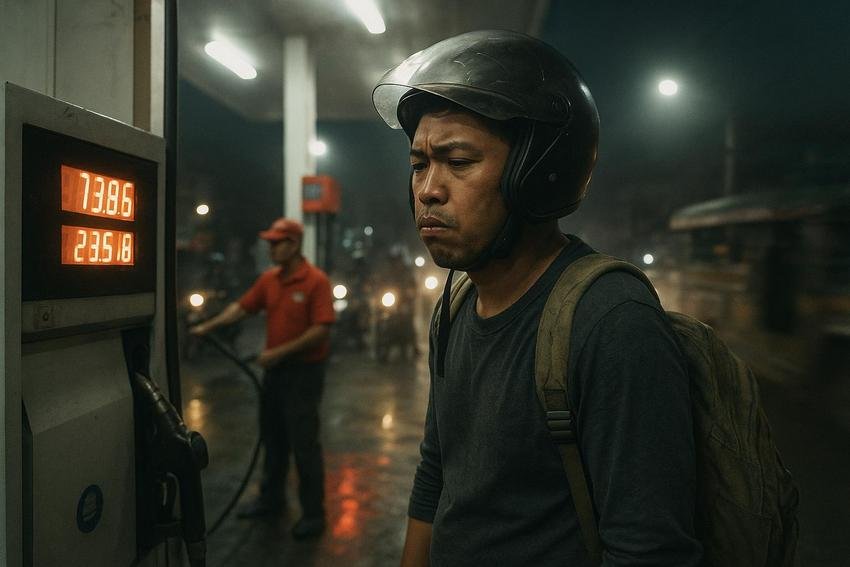
A full 40-liter tank of gasoline now consumes roughly 12.75 percent of average monthly income, underscoring the burden for middle- and low-income households.
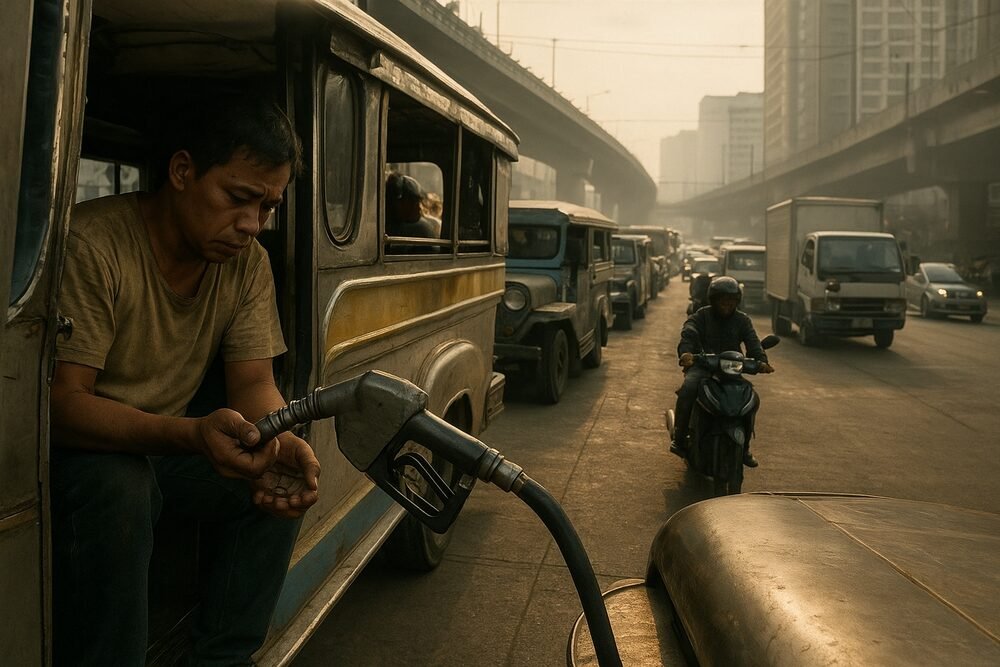
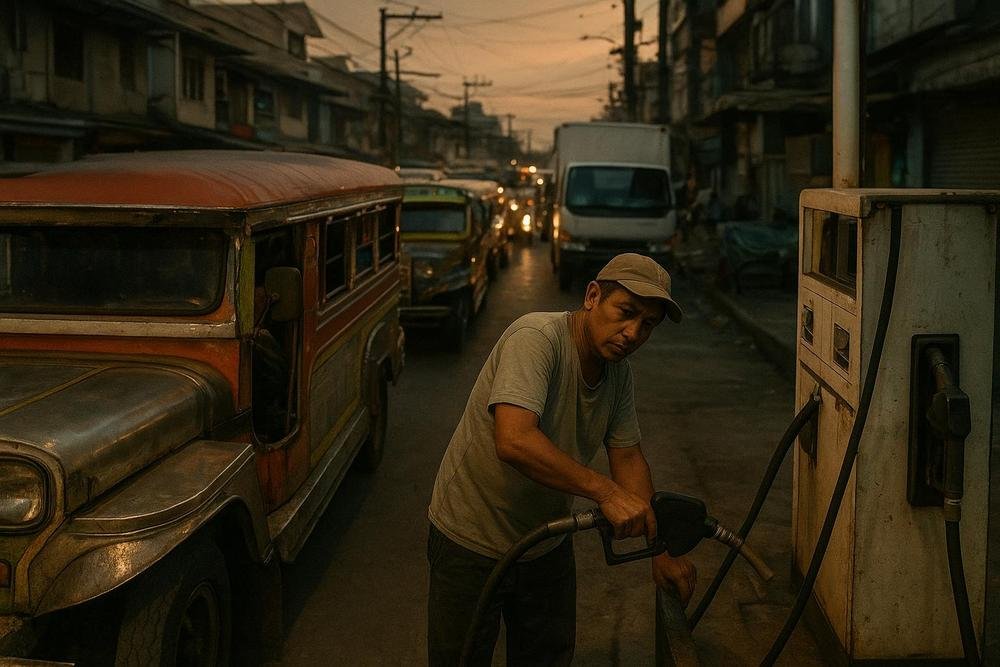
Jeepney and bus drivers operate on razor-thin margins while awaiting fare hike approvals. Farmers in provincial areas rely on diesel to power transport and irrigation. Small retailers often adjust prices of goods to offset higher delivery costs. Each increase ripples outward, touching everything from commuter fares to the price of rice in a neighborhood sari-sari store.
While some civil society groups advocate targeted cash transfers instead of broad subsidies, immediate relief measures have yet to materialize.
What to Expect Next Week
Should the projected P0.60-per-liter increase materialize, motorists will face yet another upward adjustment at the pump beginning February 24. Retailers are expected to announce final figures at the start of the pricing week.
With global markets unsettled and no structural changes in the pricing framework, consumers remain vulnerable to external shocks. For now, the pattern is clear: fuel prices continue to edge upward, week after week, tightening the squeeze on households and transport operators across the country.
In a system driven by global currents, local wallets remain at the mercy of distant events.