As the 33rd Southeast Asian (SEA) Games approach, the Philippine tennis team is set to make a determined push for podium placements, aiming to reinforce its status as a regional contender. The competition, which takes place from December 9 to 20, 2025, in Bangkok and Chonburi, Thailand, will challenge the squad to match and surpass its historic performances against a fiercely competitive field.
A Legacy of Competitiveness in Southeast Asia
The Philippines has long carved out a formidable niche within SEA Games tennis, amassing a total of 114 medals in past editions—23 gold, 36 silver, and 55 bronze. Though Thailand and Indonesia frequently eclipse others in the gold tally, the Filipinos remain reliably strong contenders. At the 2019 SEA Games, hosted in Manila, they ranked fifth in golds but continued to demonstrate overall consistency across events.
Alexandra Eala Headlines a Revitalized Women’s Roster
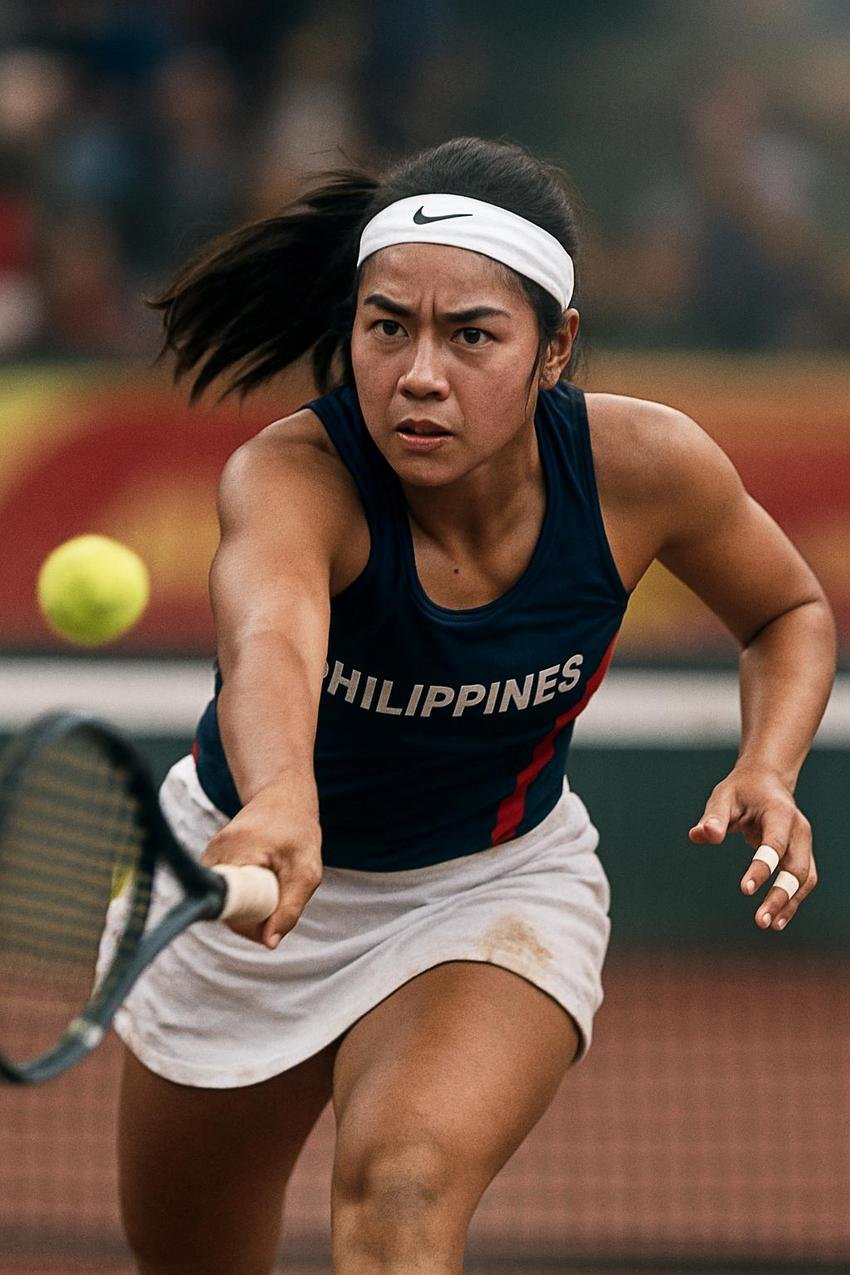
Leading the charge on the women’s side is Alexandra Eala, the nation’s brightest talent and current world No. 50. At just 18, Eala made history earlier this year by defeating 14th-seeded Clara Tauson at the 2025 US Open, becoming the first Filipino to secure a Grand Slam main draw win in the Open era. Her presence has injected energy into the team’s ambitions.
“Having a player of Alex’s caliber is thrilling,” said Denise Dy, head coach of the women’s squad. “She’s a serious contender for gold, and our team is quite competitive.”
Eala is joined by seasoned SEA Games enlistment Shaira Hope Rivera, a 2022 bronze medalist; newcomers Tenneille Madis and Stefi Marithe Aludo round out a mix of experience and emerging talent. For Madis, her SEA Games debut follows a series of encouraging wins at the ITF J30 Manila and Philippine Columbian Association Open, which have filled her with confidence and focus. “I understand the challenges,” said Madis. “Being both physically and mentally resilient will be key to facing my rivals.”
Veteran-Led Men’s Team Carries Momentum
The men’s squad, coached by former Davis Cup player Joseph Lizardo, will look to maintain the strong form it displayed during this year’s Davis Cup Asia/Oceania Zone qualifiers in Malaysia, where they swept through opponents to earn promotion to Group 3. The team’s backbone features doubles specialists Ruben Gonzales Jr. and Francis Casey Alcantara, well-acquainted with podium expectations.
Completing the roster are Jed Olivarez, Alberto Lim Jr., and tournament debutant Arthur Craig Pantino, forming a roster capable of adapting across singles and doubles formats. With this blend of depth and experience, the men’s team hopes to match the women’s medal potential and challenge regional heavyweights.
Strategic Preparations Positioned for Results
Across both squads, extensive international tournament play throughout 2025 served as critical preparation. The coaching team—Dy, Lizardo, and seasoned mentors like Johnny Arcilla and Robert John Angelo—emphasized match simulation, strategic doubles pairings, and physical conditioning. With a compressed competition schedule, endurance and roster flexibility will be key assets in Thailand’s humid December climate.
Thailand and Indonesia Remain the Regional Benchmarks
Regional tennis powerhouses Thailand and Indonesia present formidable hurdles. Host country Thailand is stacking its team with players like Mai Sawkaew and Ruangwattanarach, and benefits from home court familiarity at the National Tennis Center in Muang Thong Thani, Nonthaburi. Indonesia’s roster includes world-ranked players such as Janice Chen (No. 204) and Priska Madelyn Nugroho (No. 315), reinforcing a competitive women’s field.
Vietnam also brings strength, particularly in the women’s bracket, with names like Savannah Ly Nguyen, a 2023 SEA Games bronze medalist, adding depth to an already fierce rivalry among neighboring nations.
Veterans and Newcomers Unite in a Purposeful Campaign
For seasoned athletes like Rivera, who returns for her fourth Games appearance, wearing the national colors carries deep meaning. “Every time I wear the Philippine colors, I’m reminded of the journey, the sacrifices, and the people who believed in me,” she said. “I want to make them proud.”
That blend of motivation, institutional memory, and fresh hunger may offer a unique edge. The team’s depth in specialty areas—particularly in doubles—combined with individual rising stars offers paths to the medal rounds, particularly in mixed events where strategy and synergy can surpass raw power.
Eyes on the Podium—and Beyond
As the SEA Games tennis events unfold from December 9 to 20, the Philippines will strive not just for medals, but for affirmation that its tennis programs are maturing into consistent competitive forces. With Eala at the forefront, and surrounded by committed veterans and rising talents, the squad embodies both national pride and regional ambition.
Balancing expectations with execution will be the central challenge. But if momentum, preparation, and team spirit serve as guides, the Philippines appears poised to leave Thailand with its reputation strengthened—and perhaps, with new medals in hand.