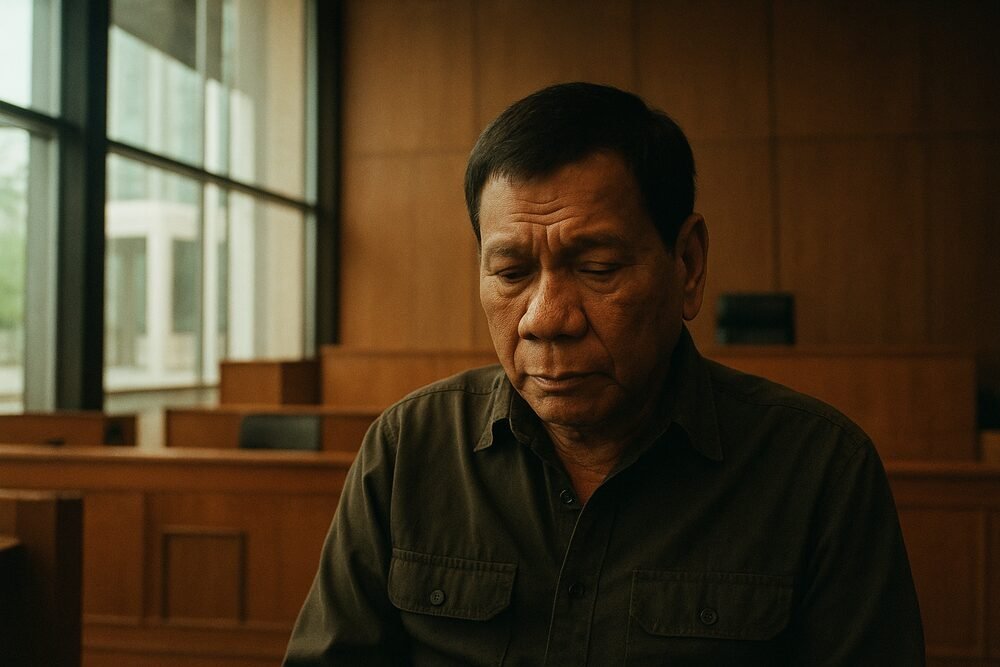
Rodrigo Duterte, the former president of the Philippines who built his political legacy on a relentless campaign against illegal drugs, will appear before judges at the International Criminal Court on February 23, 2026, as prosecutors seek to move his case to full trial. The proceeding, known as a confirmation of charges hearing, will determine whether there is sufficient evidence to try him for crimes against humanity.
By the numbers alone, the case marks a historic turning point: Duterte is the first Philippine president to face an international tribunal, accused of overseeing a campaign that left thousands dead and that now stands at the centre of a global reckoning over power, accountability and sovereignty.
The Charges and the Court’s Mandate
The ICC Prosecutor formally charged Duterte on July 4, 2025, with three counts of crimes against humanity: murder, torture and rape. Judges of the Pre-Trial Chamber found “reasonable grounds to believe that Mr Duterte is individually responsible as an indirect co-perpetrator for the crime against humanity of murder,” allegedly committed between November 1, 2011, and March 16, 2019.
Those dates define the ICC’s jurisdiction. The Philippines ratified the Rome Statute on November 1, 2011, and formally withdrew on March 17, 2019. Despite the withdrawal, the court retains authority over alleged crimes committed while the country was still a member state.
Prosecutors allege responsibility for at least 76 murders within that period. The broader investigation covers conduct in Davao City, where Duterte served as mayor, and nationwide during his presidency.
6,252 Dead — and a Wider Toll
Official figures from the Philippine National Police and the Philippine Drug Enforcement Agency report 6,252 people killed in anti-drug operations from July 1, 2016, to May 31, 2022.
Those numbers do not cover vigilante-style killings or other deaths outside formal police operations. The government stopped releasing updated casualty statistics after June 2022, leaving an information gap that has complicated efforts by victims’ families and advocacy groups to document the full scale of the violence.
Human rights investigators have alleged that police officers falsified evidence to justify unlawful killings, further intensifying scrutiny of law enforcement procedures during the drug war.
From Withdrawal to Warrant
The ICC investigation proceeded in fits and starts. In September 2021, judges authorized the prosecutor to investigate alleged crimes committed from 2011 to 2019. The Philippine government sought to defer the probe under Article 17 of the Rome Statute, which gives priority to domestic investigations. The ICC initially suspended its work but later resumed it in January 2023, concluding that national proceedings did not address the same conduct.
An appeal by the Philippine government failed. In July 2023, President Ferdinand Marcos Jr. announced his administration would “end further engagement with the ICC.”
Yet legal developments continued. On February 10, 2025, the ICC Prosecutor applied for an arrest warrant. Judges issued it on March 7, 2025, initially under seal.
Duterte was arrested on March 11, 2025, at Ninoy Aquino International Airport after returning from Hong Kong. Philippine authorities carried out the operation, coordinated with Interpol. Within days, he was transferred to The Hague and made his initial appearance on March 14, 2025, via video link.
Fitness to Stand Trial
What was meant to be a September 2025 confirmation hearing was delayed after Duterte’s defence filed a Request for Indefinite Adjournment on August 18, 2025, citing cognitive deficiencies.
Judges granted an indefinite postponement on September 8, 2025, ordering further medical and psychological evaluations while Duterte remained at the ICC Detention Centre. The proceedings are now set to begin on February 23, 2026.
The Lawyers and the Bench
Duterte’s defence team is led by Nicholas Kaufman, with Dov Jacobs as associate counsel—both experienced in ICC litigation. Two initially proposed members of the defence, Harry Roque and Salvador Medialdea, withdrew. On March 18, 2026, Vice President Sara Duterte announced their removal from the team.
The case is overseen by a three-judge panel of the Pre-Trial Chamber: Judges Reine Alapini-Gansou, Socorro Flores Liera, and Iulia Motoc.
What the Hearing Means
The confirmation of charges hearing is not a trial. Prosecutors will present evidence to show “substantial grounds to believe” Duterte committed the crimes alleged. The defence may challenge the sufficiency of that evidence.
If judges confirm the charges, the case will proceed to full trial. If they decline, the charges could be amended or dismissed.
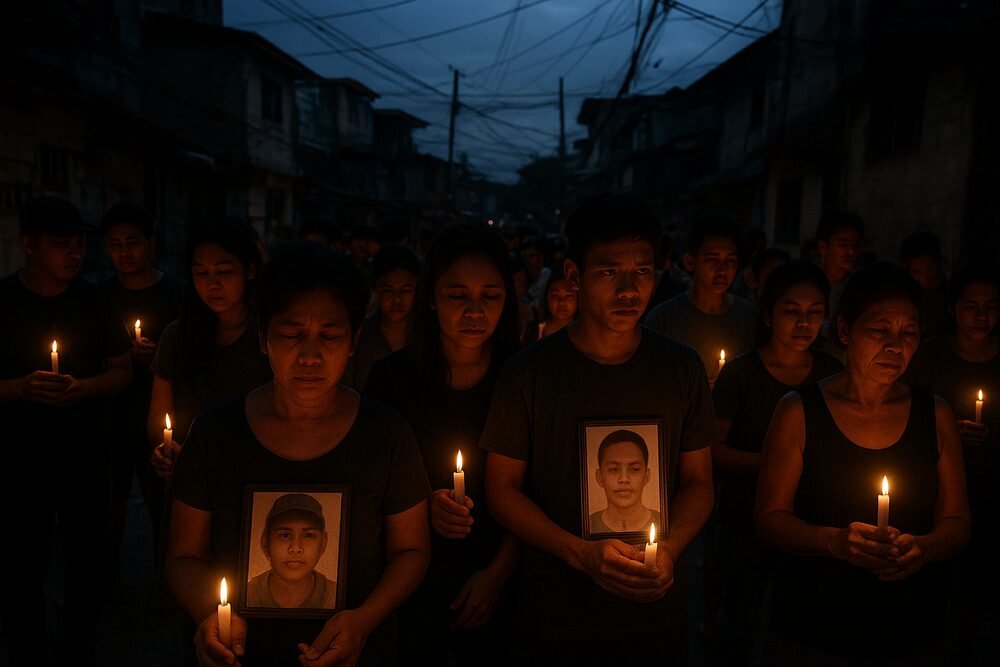
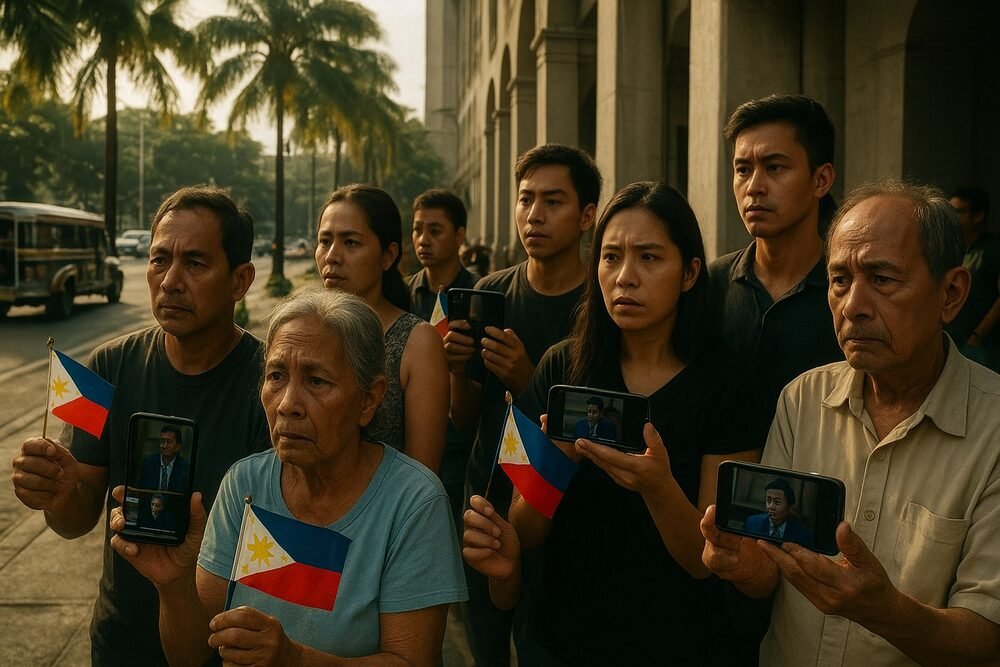
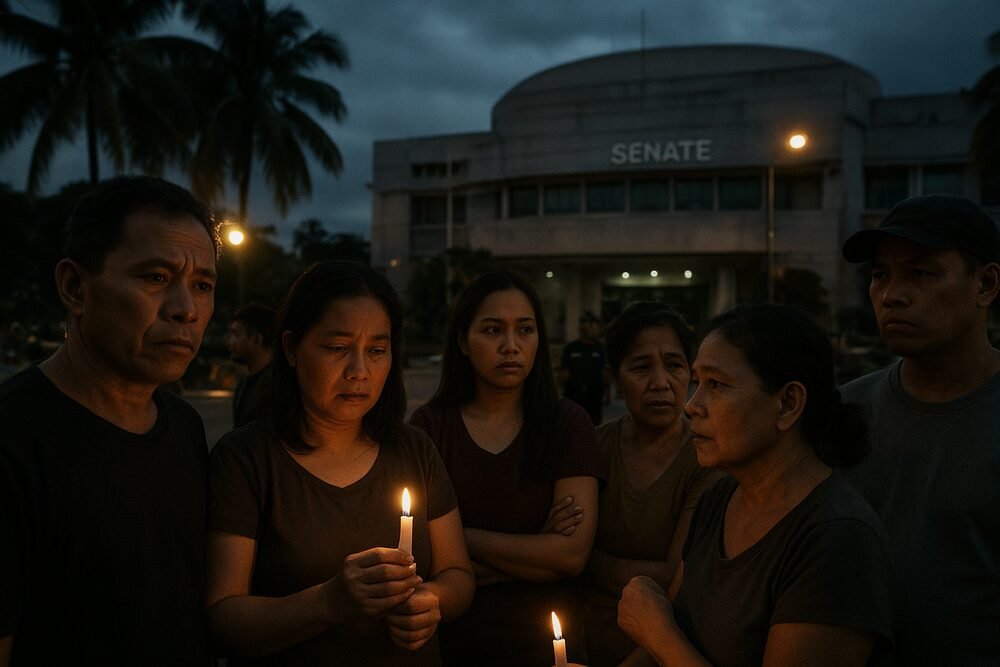
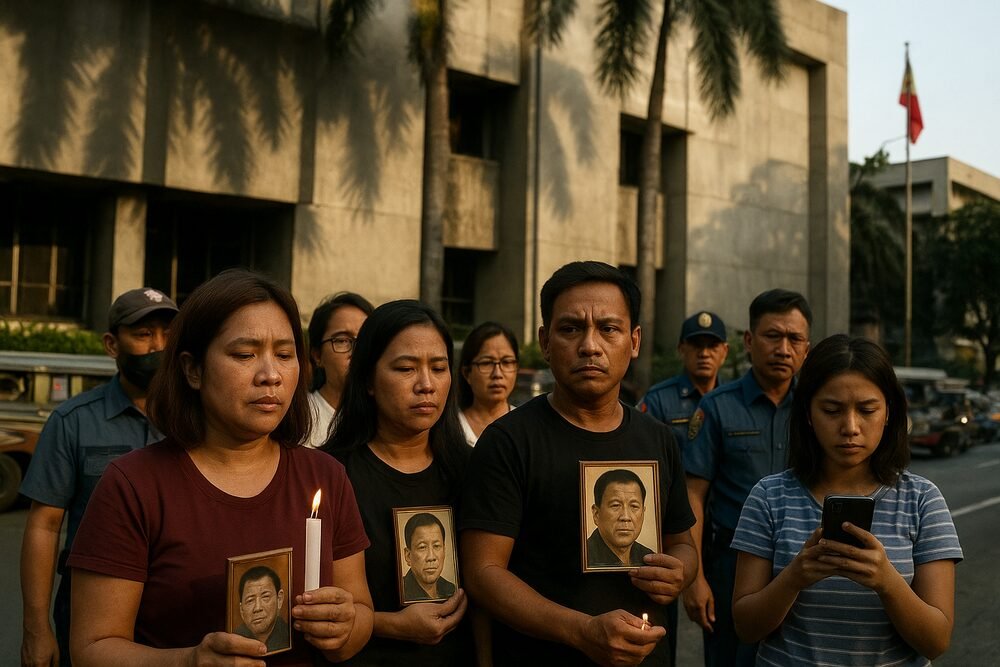
For many families in the Philippines—particularly in urban poor communities where much of the anti-drug violence unfolded—the hearing represents the first time the campaign that reshaped their neighbourhoods will be examined in an international courtroom.
Sovereignty and Accountability
The legal battle also reaches beyond the individual accused. The Philippine Supreme Court ruled in 2021 that the country retains an obligation to cooperate with ICC proceedings despite withdrawal from the Rome Statute. The decision underscored the tension between claims of national sovereignty and commitments under international law.
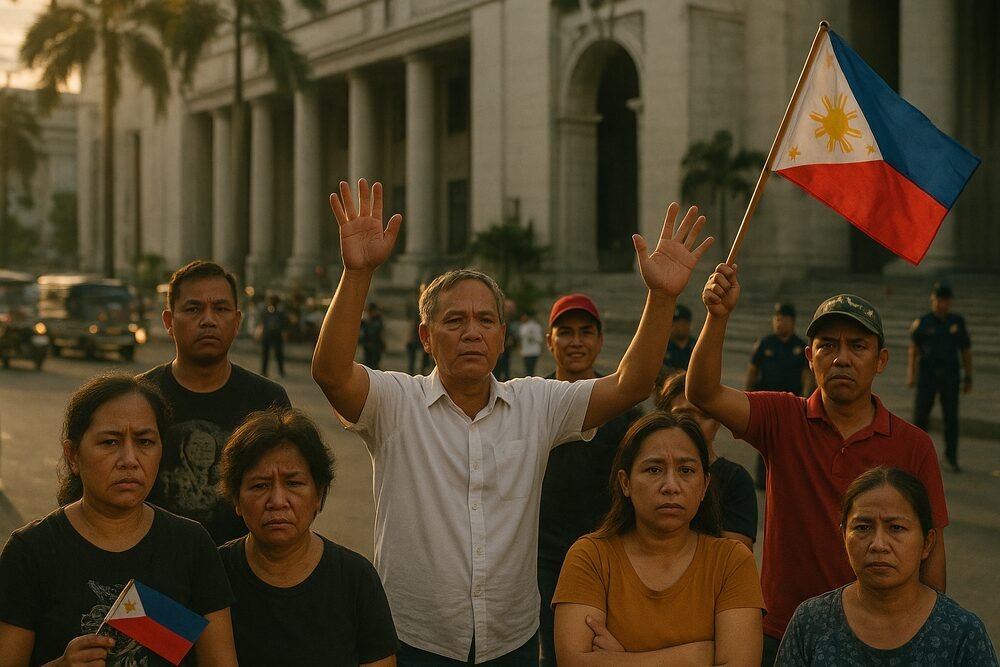
Supporters of the former president argue the ICC case amounts to foreign interference and maintain that the drug war was a legitimate law enforcement effort. Civil society organizations counter that domestic mechanisms failed to deliver accountability, leaving international prosecution as the only viable path to justice.
As Duterte enters the courtroom in The Hague this week, the figures tell a stark story: 76 specific killings cited in the warrant, 6,252 officially acknowledged deaths, and nearly eight years of alleged crimes under ICC jurisdiction. Whether those numbers translate into a full trial—and potentially a conviction—now rests with three judges weighing evidence thousands of miles from where the campaign began.
The hearing may not deliver immediate answers, but it marks a defining moment in the long arc of the Philippines’ drug war—and in the global debate over how far the law can reach when national borders meet international justice.