Duterte Defense Optimistic After ICC Charges Hearing
The legal team of former Philippine President Rodrigo Duterte said it is confident that judges at the International Criminal Court will reach the “right decision” after concluding a pivotal pre-trial hearing this week in The Hague on allegations of crimes against humanity linked to his administration’s war on drugs.
The four-day confirmation of charges hearing, which ended on February 27, 2026, now places the matter before ICC Pre-Trial Chamber I, which has up to 60 days to determine whether the case proceeds to a full trial. The Chamber may confirm the charges, decline them, or request further evidence from prosecutors.
Defense Expresses Confidence After Four-Day Hearing
Speaking after the close of arguments, defense counsel Nicholas Kaufman underscored the team’s trust in the court’s deliberations.
“The judges will take their decision based on the evidence… we trust the judges to take the right decision,” Kaufman said.
The defense forcefully rejected accusations that Duterte was responsible for 78 specific killings presented by the prosecution.
“We attacked every one of those counts that alleged that Mr. Duterte murdered 78 victims. We deny that completely,” Kaufman stated.
Kaufman also argued that Duterte’s age and physical condition mitigate concerns that might otherwise justify continued detention or strict restrictions.
“We’ve argued throughout that because of his age and condition, he does not engage any of those risk factors,” he said, referring to potential risks such as flight or witness intimidation.
What the Judges Must Decide
The decision now rests with Judge Iulia Antoanella Motoc, who presides over the Chamber, alongside Judges Reine Adélaïde Sophie Alapini-Gansou and María del Socorro Flores Liera.
The hearing did not determine guilt or innocence. As Judge Motoc emphasized during proceedings, “The Chamber shall not take any decision with regard to the guilt or innocence of Mr. Duterte during this hearing.”
Instead, judges must decide whether prosecutors have established “substantial grounds to believe” that crimes within the court’s jurisdiction were committed. The Office of the Prosecutor, led in court by Deputy Prosecutor Mame Mandiaye Niang, carries the burden of proof.
According to an ICC statement read during proceedings, “The burden of proof is upon the OTP… which must produce sufficient evidence to prove the charges against Mr. Duterte at the required standard of proof.”
If the charges are confirmed, the case will proceed to trial. If they are declined, the case could effectively collapse unless new evidence is presented. Judges may also adjourn and request additional investigation.
Duterte Remains in ICC Custody
Duterte, 80, has been detained at the ICC Detention Centre in Scheveningen, Netherlands, since his surrender on March 12, 2025. The arrest followed a warrant issued under seal on March 7, 2025, later reclassified publicly.
Although the Chamber ruled in January 2026 that he was fit to participate in proceedings, Duterte waived his right to attend the confirmation hearing in person.
An earlier hearing scheduled for September 2025 had been postponed to allow judges to assess his medical fitness.
Allegations Stem From Drug War Campaign
Prosecutors allege that Duterte and alleged co-perpetrators implemented a policy that led to violent crimes, including murder, against suspected drug offenders during his presidency. The charges fall under the ICC’s jurisdiction over alleged crimes against humanity committed while the Philippines was still a member of the court.
The Philippines withdrew from the ICC in 2019, but the court maintains authority over alleged crimes committed before the withdrawal took effect. Duterte has challenged the court’s jurisdiction.
The prosecution’s case includes allegations tied to the deaths of 78 victims cited in the current charging document, though the broader investigation concerns a far larger number of killings amid the anti-drug campaign.
Hundreds of Victims Represented
539 victims are participating in the process through common legal representatives. Their counsel presented submissions during the four-day hearing, supporting the confirmation of charges so the case may proceed to trial.
While the courtroom exchanges were tightly structured and technical, the stakes extend far beyond its walls. For victims’ families, the proceedings represent a rare opportunity for judicial scrutiny at the international level.
A Decision With Global Political Ripples
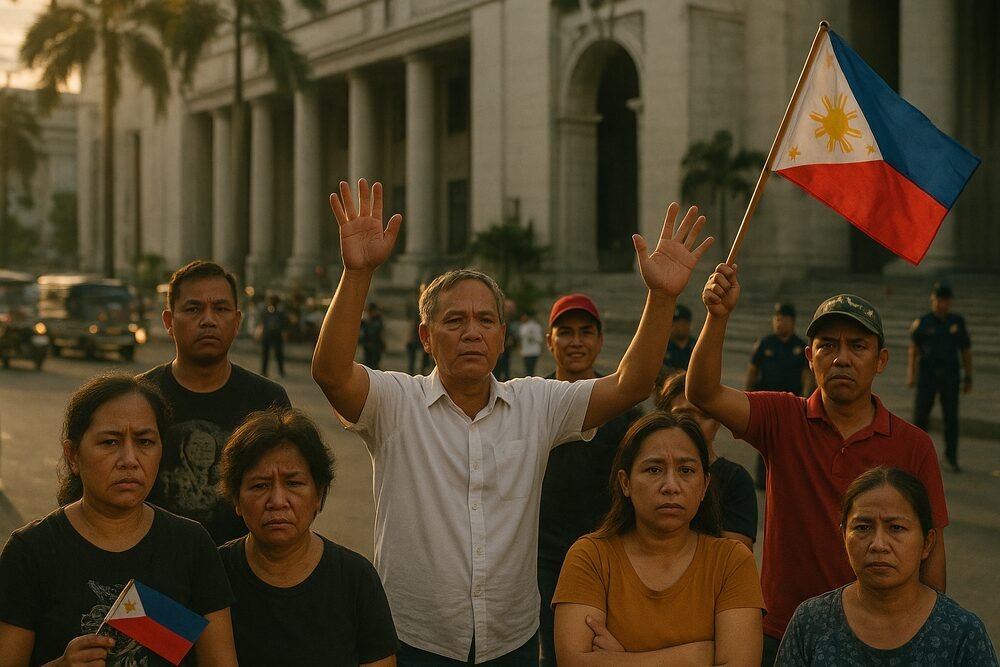
Although the case unfolds thousands of kilometres from Manila, it continues to stir political debate within the Philippines. Supporters have staged demonstrations near the ICC building in The Hague, signaling that Duterte’s base remains mobilised.
For now, the immediate impact on daily life in the Philippines is limited. No policy changes or economic disruptions flow directly from the proceedings. But politically, the case has deepened divisions over accountability, sovereignty and the legacy of the anti-drug campaign.
The judges’ forthcoming ruling will determine whether the proceedings move from preliminary scrutiny to a full criminal trial — a transition akin to crossing from accusation to adjudication. Whatever the outcome, it will mark a defining chapter in one of the ICC’s most closely watched cases in recent years.
Under Regulation 53 of the ICC, the Chamber’s written decision is expected within 60 days of the hearing’s conclusion, placing the world’s attention once again on The Hague as it weighs whether to formally commit the former head of state to trial.