The Department of Information and Communications Technology’s Cybercrime Investigation and Coordinating Center (DICT-CICC) has confirmed it is reviewing alleged links between a Philippine-based firm and a decade-old online reputation campaign for the late financier and convicted sex offender Jeffrey Epstein, following newly released emails from the United States Department of Justice that point to a Filipino team working to suppress negative search results about him.
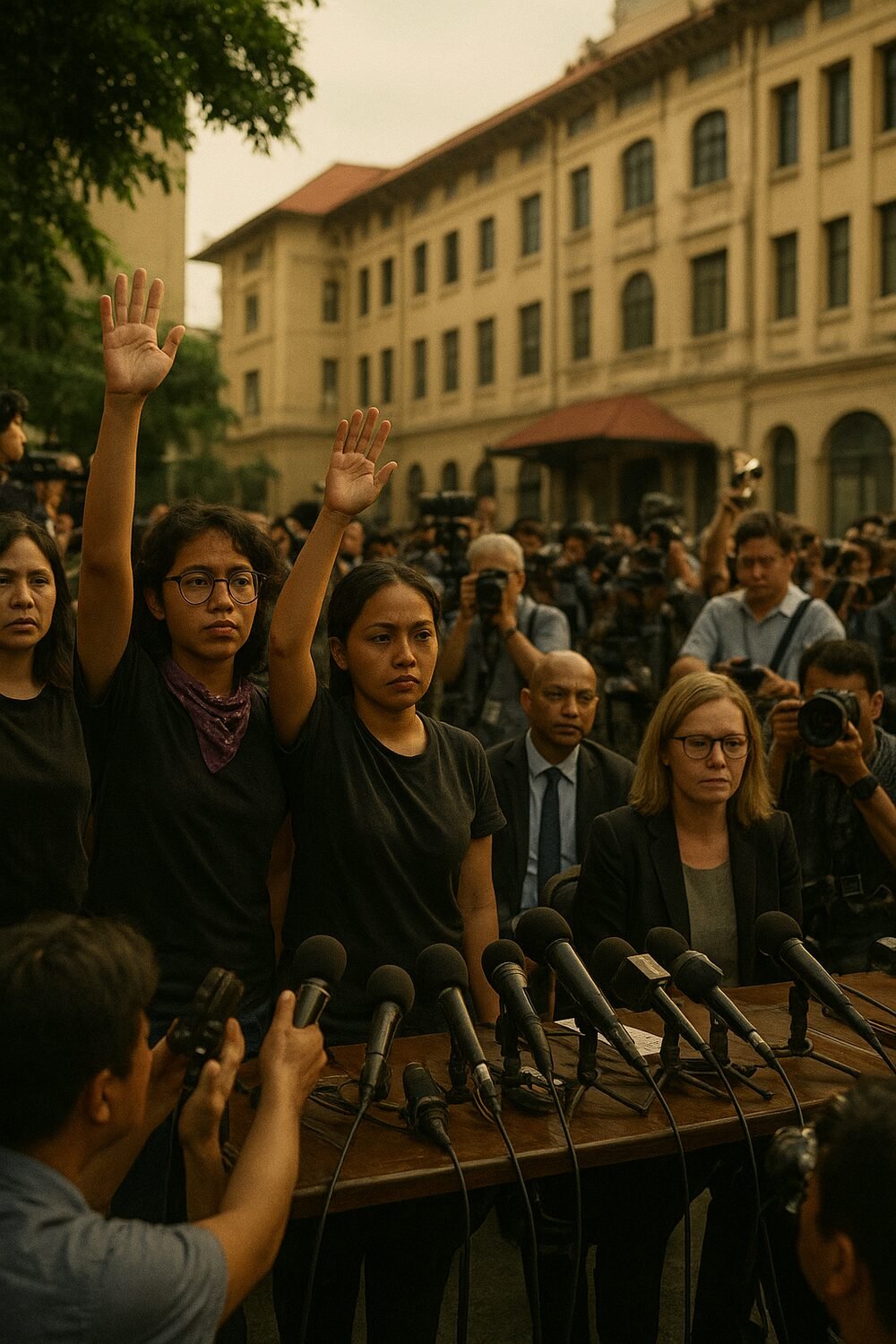
DICT-CICC Executive Director Renato “Aboy” Paraiso said the agency had begun its review “in anticipation po ng Senate and House inquiry,” signaling that the matter could soon be taken up by Congress.
The disclosure has raised urgent questions about the Philippines’ role in the global digital outsourcing industry and whether local workers or firms may have knowingly — or unknowingly — assisted in efforts to obscure information about Epstein’s criminal past.
Emails Detail Philippine Team’s Work
The controversy stems from emails released on January 30, 2026, by the US Department of Justice as part of a new cache of Epstein files. The messages, dated October to December 2010, describe how Epstein enlisted the help of Al Seckel, a science museum entrepreneur and illusionist who later died in 2015, to improve his online image.
In an October 2010 email, Seckel told Epstein: “Our group in the Philippines is building links and links to our sites, pseudo sites, and the other Jeffrey Epsteins of the world.”
Two months later, on December 7, 2010, Seckel wrote: “Google suggests has gotten rid of two negatives … jeffry epstein jail and one jeffrey epstein pedophile … another thing I’ve had the Philippine work on since day one.”
In another message dated December 15, 2010, Seckel claimed the team had altered the visibility of Epstein’s Wikipedia page: “Your wiki entry now is pretty tame, and bad stuff has been muted, bowdlerised, and pushed to the bottom. This was a big success.”
He summarized the strategy bluntly: “The old sites will just get moved out of the way. Poof. We just need more links than them.”
The emails suggest an intensive, roughly two-month campaign designed to push down negative search results and stabilize Epstein’s online profiles.
Congressional Inquiry Sought
The revelations have prompted calls for a legislative investigation. The Makabayan bloc filed House Resolution No. 762, seeking a House inquiry into reports that Philippine-based teams were hired for online operations that may have obscured crimes involving minors.
The proposed inquiry would involve the House committees on public information and on women and gender equality, reflecting concern that the digital campaign may have indirectly aided the concealment of sexual abuse.
Senate interest in the issue has also emerged, prompting the DICT-CICC to prepare for possible hearings.
DICT-CICC: Reputation Management Not Illegal Per Se
Paraiso emphasized that “reputation management” is not inherently illegal under Philippine law. However, legality depends on the methods used and whether actions violated the Cybercrime Prevention Act of 2012 (Republic Act No. 10175) or other penal statutes.
“We can trace the digital evidence we can compile a dossier against these people,” Paraiso said, underscoring the agency’s technical capacity to investigate cybercrime-related activities within Philippine territory.
The DICT has also said it is developing a “technical attribution program” to better identify malicious digital activities conducted within the country’s digital space.
Authorities have not publicly identified the Philippine firm or individuals allegedly involved.
A Global Outsourcing Hub Under Scrutiny
The case casts a spotlight on the Philippines’ position as a global hub for digital outsourcing. The country employs an estimated 1.5 million workers in the broader business process outsourcing (BPO) sector, offering services that range from customer support to content creation and online marketing.
An industry perspective summarized the country’s competitive appeal: “That kind of maths only works if you’re outsourcing to a low-cost, high-capability market. That’s us, that’s always been us.”
Yet the same strengths — English proficiency, technical skill, and competitive labor costs — can make the country attractive to clients seeking discreet digital services. Like a search engine algorithm that rewards volume and coordination, the outsourcing system itself operates on scale and efficiency, sometimes far removed from the moral dimensions of the client’s objectives.
Experts note that workers tasked with search engine optimization or link-building projects may not always know the broader context of their assignments.
Broader Implications for Cybersecurity and Accountability
The issue has implications beyond reputational damage. It raises questions about oversight in the digital services industry and the potential exploitation of Philippine talent for activities that sit in legal or ethical gray areas.
While the emails describe efforts to influence search rankings and online content, investigators will need to determine whether any actions crossed into activities penalized by law, such as unauthorized system access, data interference, or other cybercrime offenses.
The case also underscores how information online can be reshaped by coordinated campaigns. Search results, often viewed as organic reflections of truth, can in reality be engineered — reordered like shelves in a library so that certain volumes are hidden behind rows of more favorable titles.
Lingering Shadows of Epstein’s Crimes
Epstein was arrested in 2019 in the United States on charges of trafficking and abusing underage girls. He died by suicide later that year while awaiting trial. Ghislaine Maxwell, his longtime associate, was convicted in 2021 of helping recruit and abuse underage girls and is serving a 20-year prison sentence.
The Philippine-linked emails date back nearly a decade before Epstein’s final arrest, to a period when he was seeking to rehabilitate his public image following earlier legal troubles.
As congressional inquiries loom, Philippine authorities now face the task of determining whether local laws were breached and whether stronger safeguards are needed to prevent the country’s digital workforce from being entangled in efforts that may undermine justice abroad.
For a nation that has built much of its modern economy on trust in its people’s digital skills, the outcome of that review may shape not only accountability in this case, but the global perception of an entire industry.