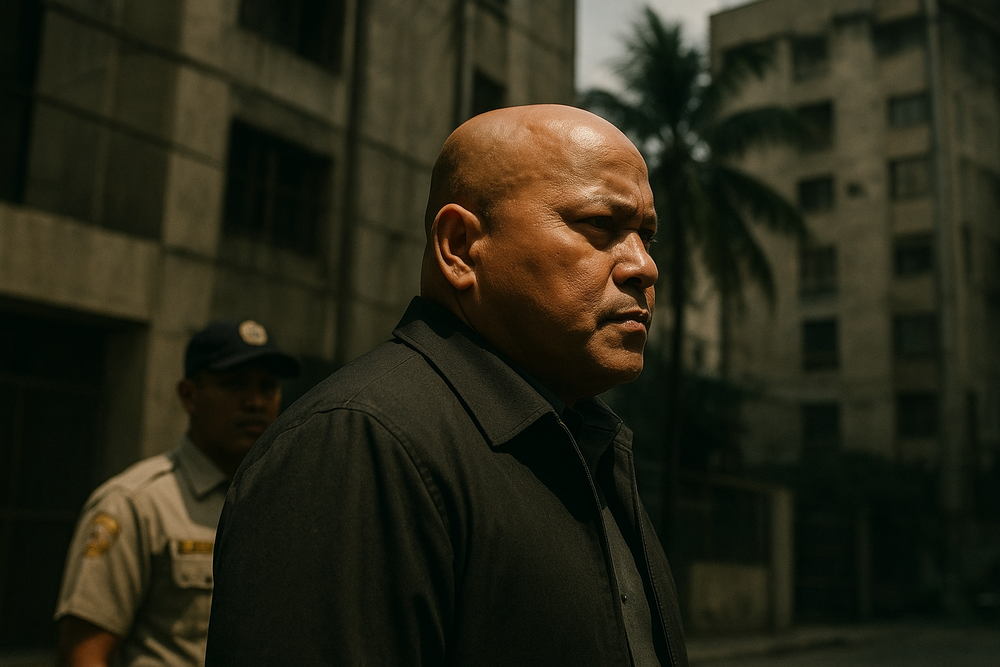
Senator Ronald “Bato” dela Rosa, absent from Senate sessions for more than two months, resurfaced publicly on Tuesday with a defiant birthday message that sought to still swirling speculation around his whereabouts and legal fate. Marking his 64th birthday on January 21, the former police chief said he was “alive and well,” waiting patiently and “with dignity” for what he called genuine justice to take its course in Philippine courts.
The statement, released through Senate channels and social media, ended nearly two months of silence that had only deepened rumours of a looming arrest by the International Criminal Court (ICC) over his role in the Duterte administration’s controversial war on drugs.
A Prolonged Absence and a Public Reappearance
Dela Rosa has not attended a Senate session since November 11, 2025, an absence that has stretched to roughly 71 days. During that period, unverified reports circulated that the ICC had issued an arrest warrant against him, following the high-profile arrest and transfer of former President Rodrigo Duterte to The Hague on charges of crimes against humanity.
In his birthday message, Dela Rosa acknowledged the speculation without addressing the warrant directly. “I am alive… I am waiting. I am waiting for genuine justice to arise and take charge,” he said, dismissing what he described as intimidation by “fake and foreign interference.” In another passage, he added: “Here I am, alive and thriving, gratefully marking 64 years of this life bestowed upon me by God.”
Rejecting Foreign Jurisdiction
At the heart of Dela Rosa’s remarks was a firm rejection of the ICC’s authority, a position he framed as a matter of national sovereignty and historical memory. He argued that submitting to foreign courts would diminish the sacrifices of Filipino heroes and soldiers.
“Kung papayag lamang ako na ako’y huhulihin at lilitisin ng mga tao at korteng banyaga, tila binalewala ko na rin ang pakikipaglaban ng ating mga bayani at sundalo para sa ating kasarinlan,” he said, according to the statement. He reiterated that justice, if pursued, should be served “right here, on our soil, within our courts.”
His language cast the ICC not as a neutral arbiter, but as an external force at odds with the country’s independence — a narrative long used by figures allied with the Duterte administration.
Under the Shadow of the Drug War
Dela Rosa’s legal peril is rooted in his past as chief of the Philippine National Police (PNP) at the start of Duterte’s presidency in 2016. In that role, he issued PNP Memorandum No. 2016-016, launching Project Double Barrel and Oplan Tokhang, the operational backbone of the government’s war on drugs.
Human rights organisations have linked the campaign to approximately 30,000 deaths, a figure that has become central to the ICC’s investigation into alleged crimes against humanity. While the Philippines formally withdrew from the ICC in 2019, the court has asserted jurisdiction over crimes allegedly committed while the country was still a member.
Political Crosscurrents and Competing Narratives
Dela Rosa’s message did not name his critics, but it took aim at those he accused of being too eager to see Filipinos tried abroad. “To those who are all-too-eager and impatient… why are you excited to surrender your fellow Filipino to foreigners?” he asked. “Where is your moral fiber? Why are you the first to applaud the collapse of our sovereignty?”
His remarks come amid heightened political tension triggered by Duterte’s detention in The Hague and comments by Ombudsman Jesus Crispin Remulla, who has publicly claimed that an ICC warrant exists against Dela Rosa—an assertion his legal camp has said remains unverified.
For supporters of the ICC process, accountability is long overdue for the bloodshed of the drug war. For Dela Rosa and his allies, the court represents an overreach that threatens national dignity. The debate has sharpened longstanding divisions over how Filipinos should judge the campaign that defined an era of governance.
Waiting as a Political Stance
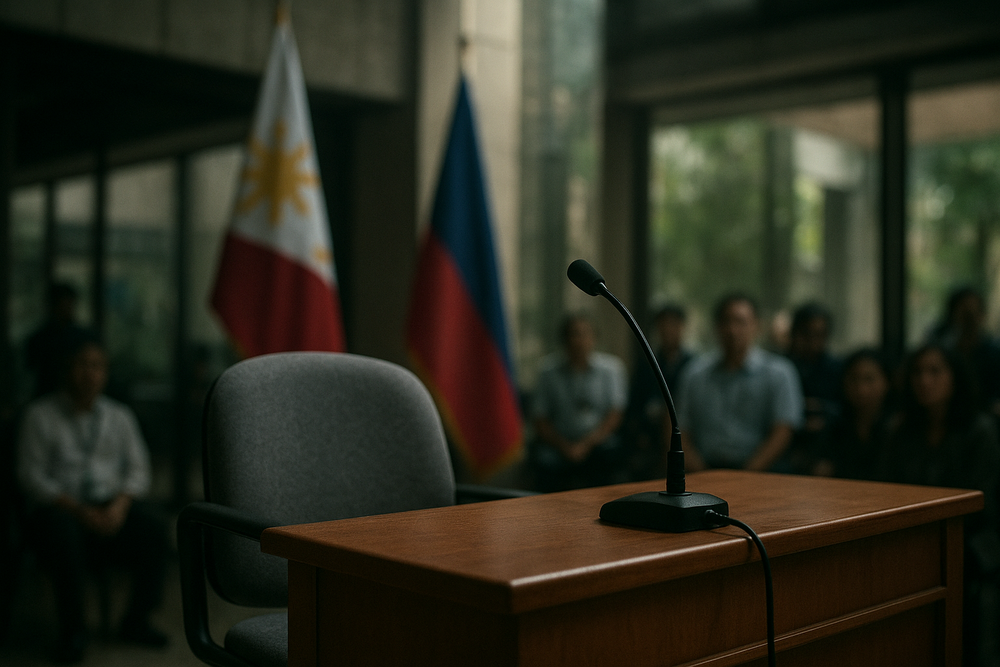
Notably absent from the senator’s birthday statement was any indication of when—or if—he plans to return to the Senate floor. Instead, he embraced waiting itself as a posture, almost a form of protest. “I remain patient and composed. I uphold my dignity,” he said.
In concluding his message, Dela Rosa voiced a wish not for personal reprieve but for the country at large: that the Philippines might be “restored to true nationhood,” one that insists on dispensing justice through its own institutions.
For now, the senator remains in political limbo—neither charged in domestic courts nor publicly apprehended by an international one. His birthday message, part reassurance and part challenge, has done little to resolve the legal questions hanging over him, but it has firmly reasserted how he wants his waiting to be understood: not as hiding, but as a stand.