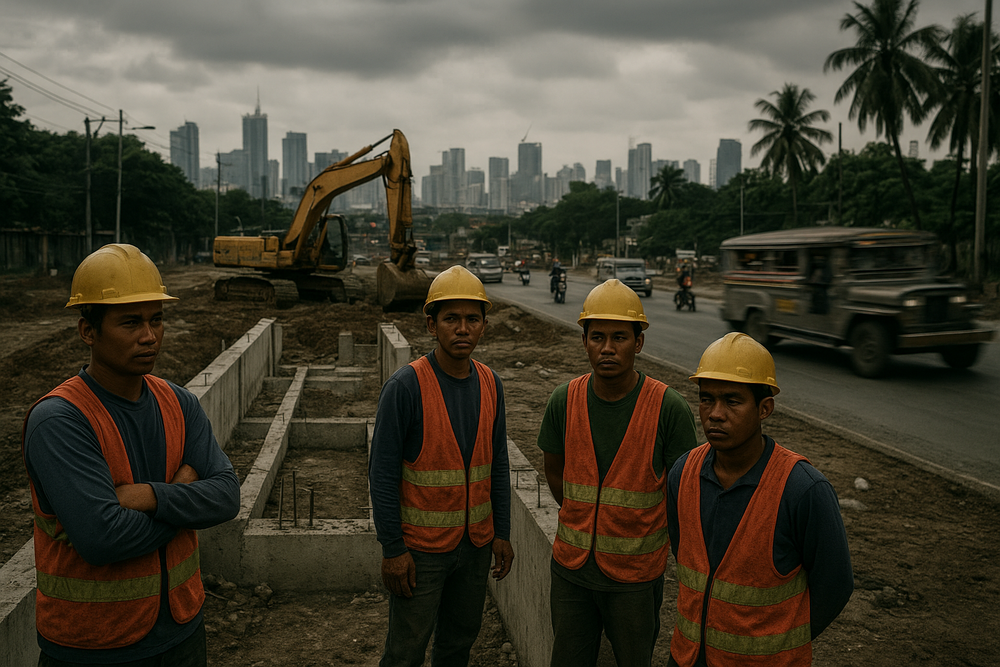
The Philippine economy could have expanded by 5.5% in 2025 were it not for a corruption scandal that froze billions of pesos in public infrastructure spending, according to the country’s top economic planner. Instead, growth slowed sharply to 4.4%, marking a third straight year in which the government missed its own economic targets.
Speaking at the end of January, Department of Economy, Planning and Development (DEPDev) Secretary Arsenio Balisacan said the drag came largely from the abrupt suspension of flood control and other construction projects under investigation for alleged corruption. The halt, he said, weighed heavily on output in the final quarter and rippled through consumer confidence, jobs, and related industries.
A Sudden Stop to Infrastructure Spending
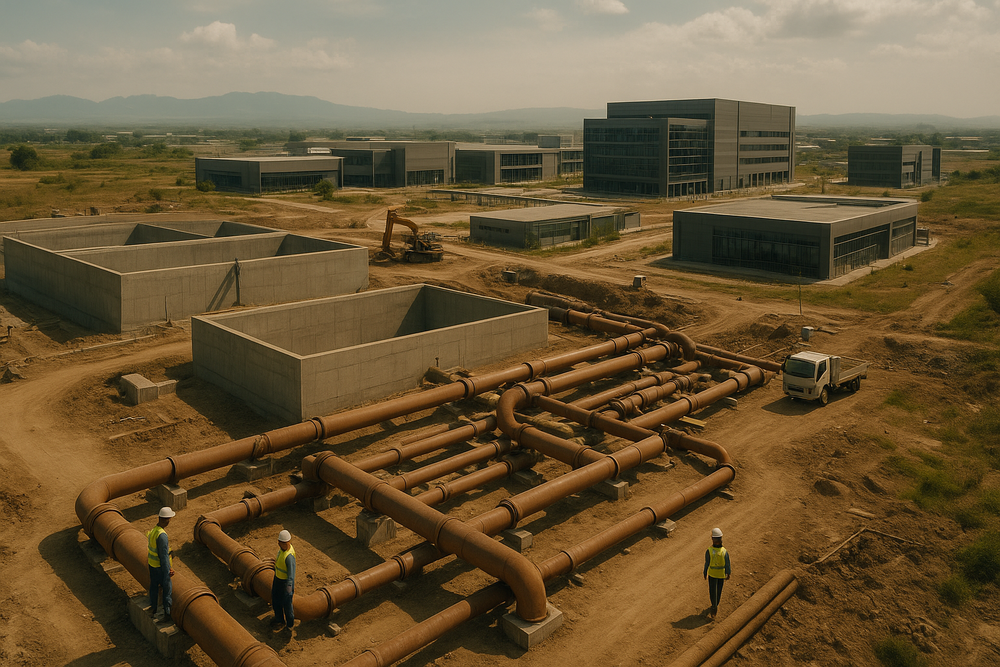
Official figures from the Philippine Statistics Authority showed that economic growth slowed to just 3% in the fourth quarter of 2025, the weakest non-pandemic performance since the global financial crisis in 2009. The slowdown followed a steep contraction in public construction after the Department of Public Works and Highways (DPWH) suspended locally funded projects linked to the flood control controversy.
Balisacan quantified the damage in unusually stark terms. “The sharp contraction of public construction in the fourth quarter contributed to 2.2 percentage points in the decline,” he said, adding that if construction activity had merely held steady, the economy would have reached 5.5% growth for the year. “In other words, the sharp contraction of public construction because of the corruption scandal contributed to something like 1.1 percentage points [in the decline].”
Government expenditure as a whole fell by more than a quarter year-on-year from July 2025, marking four consecutive months of declines as agencies pulled back on disbursements amid investigations.
Growth Target Missed for a Third Year
The 4.4% result placed growth well below the Marcos administration’s 5.5%–6.5% target for 2025 and extended a pattern of underperformance. The economy expanded by 5.5% in 2023 and 5.7% in 2024, also missing official goals in both years.
The industrial sector bore much of the brunt last year, shrinking by 0.9% in the fourth quarter and growing just 1.5% for the year. Balisacan linked the weakness directly to the stalled construction sector, which usually acts as a backbone for manufacturing and services.
Successive typhoons and a fragile global environment compounded the slowdown, but Balisacan acknowledged that the corruption scandal was the dominant, self-inflicted blow.
Confidence Shaken Beyond Construction
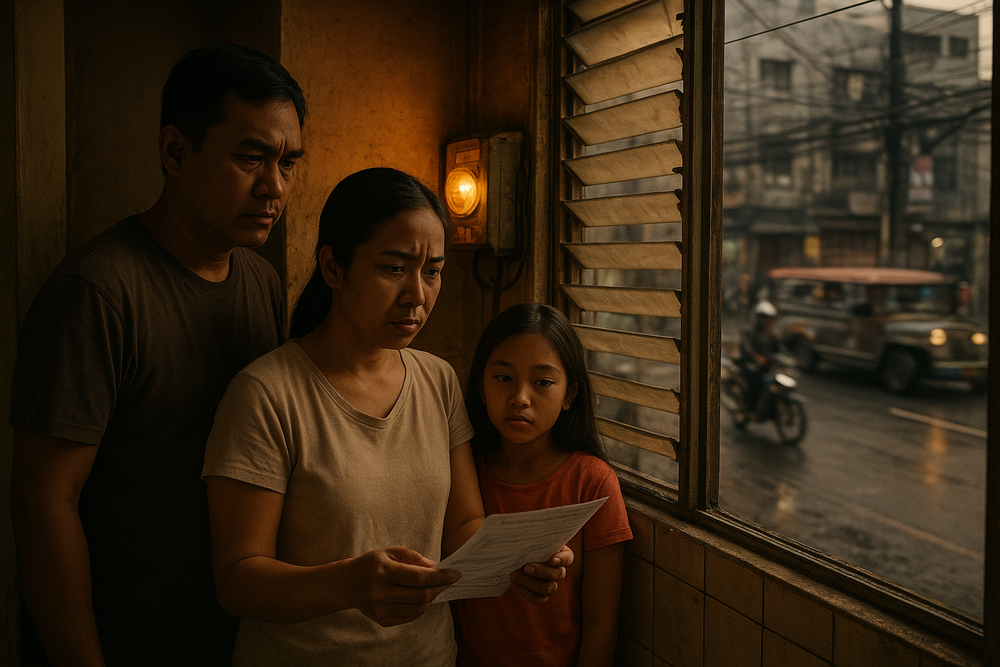
While the suspension of projects hit builders and suppliers first, the economic shock travelled further. “The source of the deceleration—the main one—is weakened consumer and business confidence resulting from this infrastructure corruption scandal,” Balisacan said.
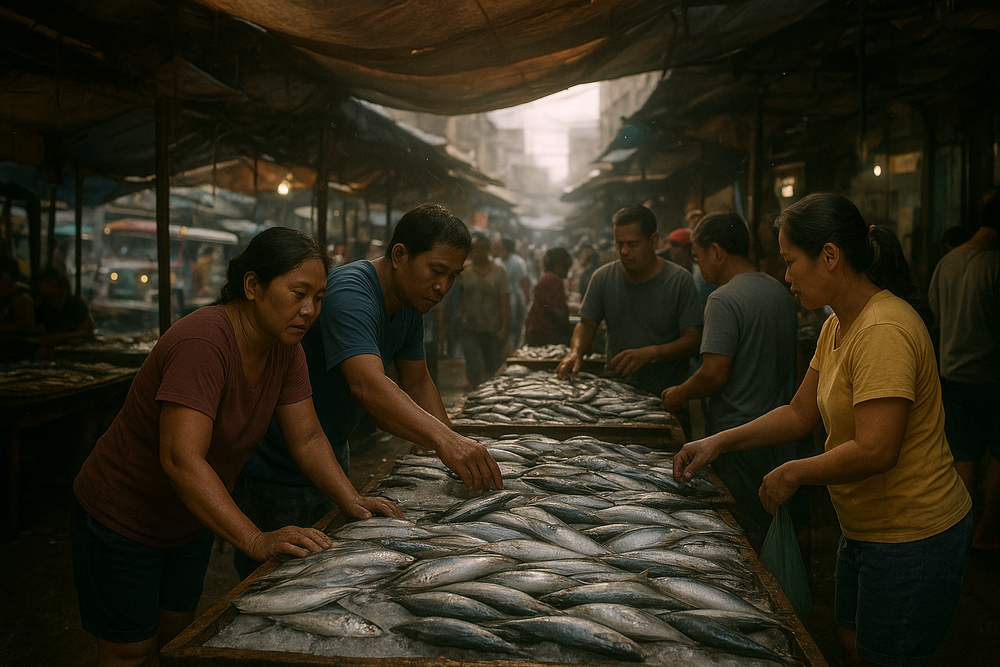
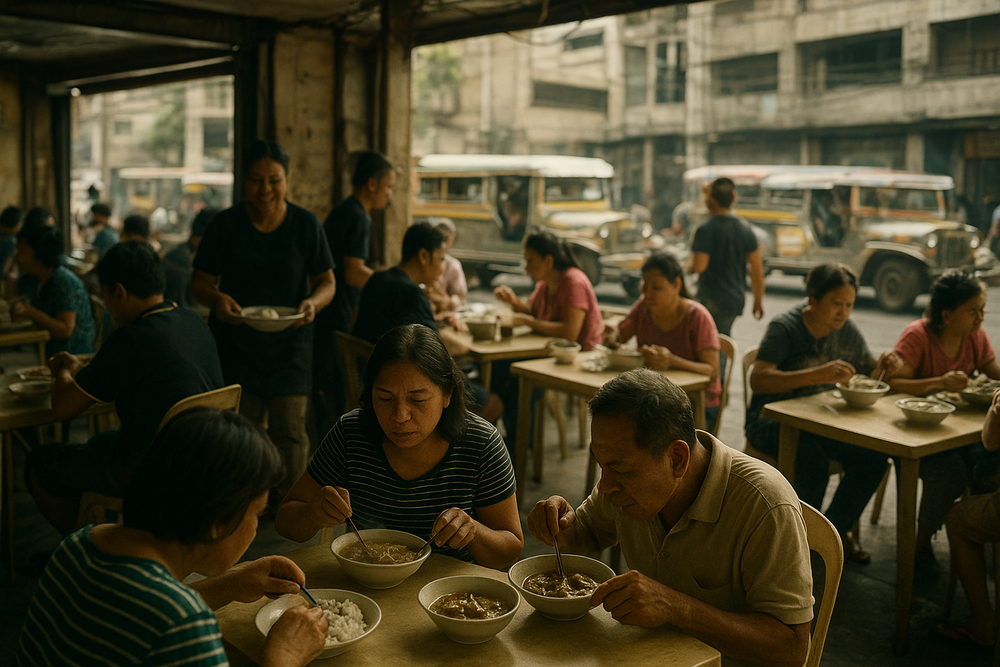
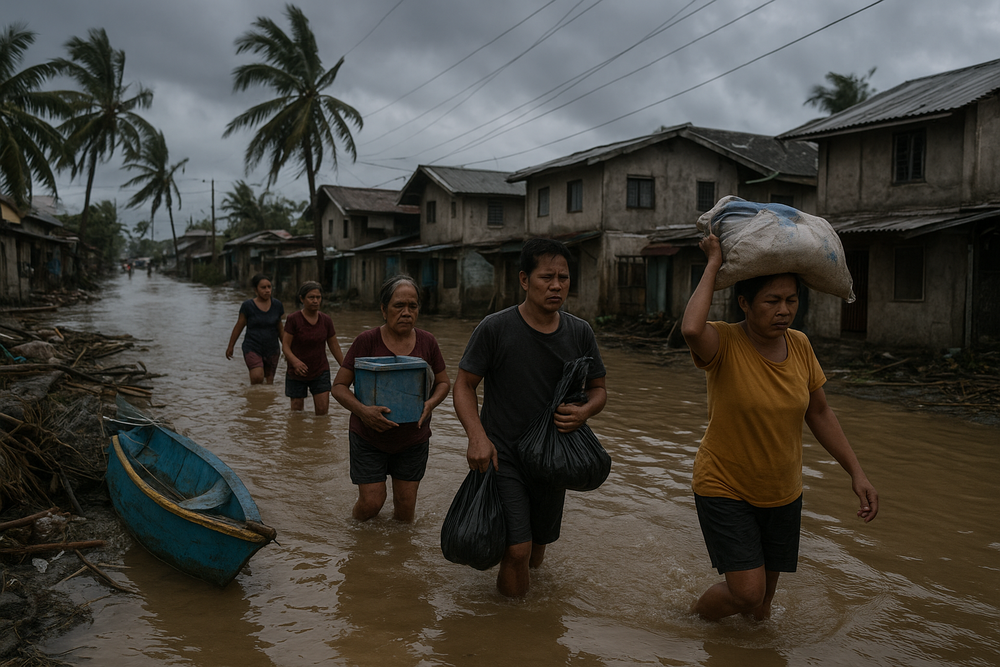
For ordinary Filipinos, the effects were felt in tangible ways. Delayed flood control works increased vulnerability to storms, disrupted transport, and damaged homes and crops. Fewer construction projects also meant fewer jobs for laborers, particularly in the provinces, squeezing household incomes and dampening spending in local economies.
It was, economists noted, a reminder that infrastructure acts like an economic circulatory system: once the flow is cut, the slowdown spreads quickly to other parts of the body.
‘A Slowdown That Had to Happen’
Despite the costs, Balisacan defended the government’s response, framing the slowdown as a necessary correction rather than a policy failure. “It is something that had to be done,” he said. “It cannot be business as usual. Otherwise, we can have growth… maybe higher, but with corruption all over the places in infrastructure that would not be expected to last.”
He added that the administration was willing to accept weaker short-term growth if it meant restoring public trust. “We’d better have a slowdown… to correct the problems, build the trust of our people in the institutions, in the government,” he said.
The DPWH suspensions, according to officials, were internal governance measures designed to allow investigations to proceed without interference. No specific legal cases have yet been detailed in public briefings.
Looking Ahead: Reform Before Rebound
Officials said reforms aimed at improving accountability in public works, alongside broader political and institutional measures floated by the administration, were critical to putting growth on a sounder footing. Balisacan said the government expected economic momentum to improve by the second half of 2026 once confidence returns and vetted projects resume.
For now, the 2025 figures stand as a cautionary tale. The economy, Balisacan suggested, did not slow because it lacked potential, but because corruption slammed on the brakes. The challenge for the Philippines is to ensure that when growth accelerates again, it does so on cleaner, more durable foundations.