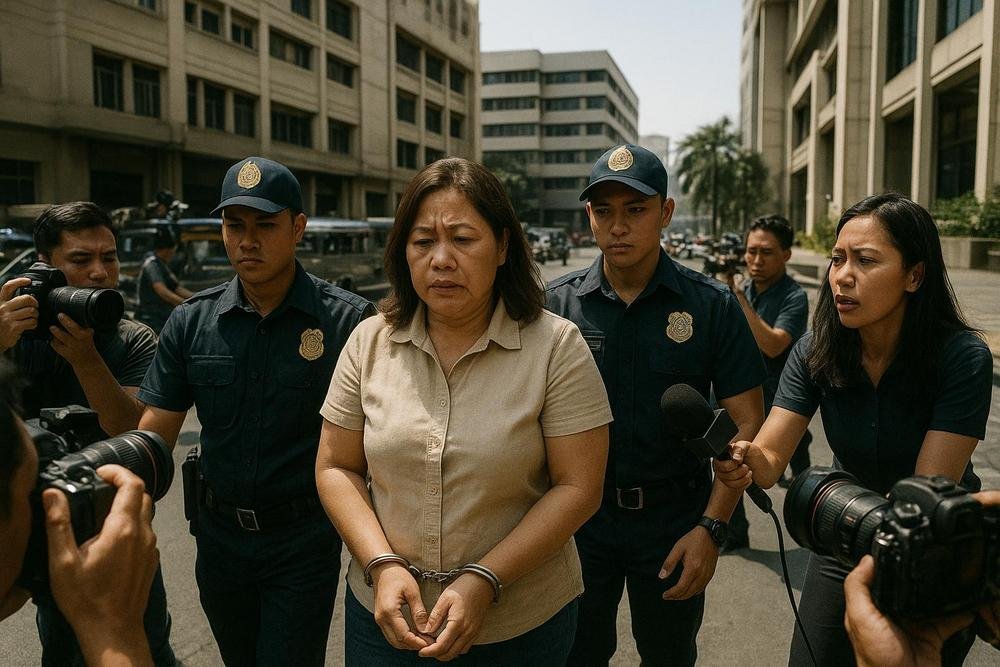
In a sweeping move against entrenched corruption in government infrastructure projects, contractor Cezarah Rowena “Sarah” Discaya was arrested on December 18, 2025, by the National Bureau of Investigation (NBI) on charges tied to a staggering ₱7.1 billion tax evasion case and alleged involvement in a series of irregularities in flood control projects nationwide. The crackdown also singled out her husband, Pacifico “Curlee” Discaya, who remains detained by the Senate’s Blue Ribbon Committee after being cited for contempt in the ongoing probes.
Massive Tax Evasion and Ghost Projects Behind the Arrest
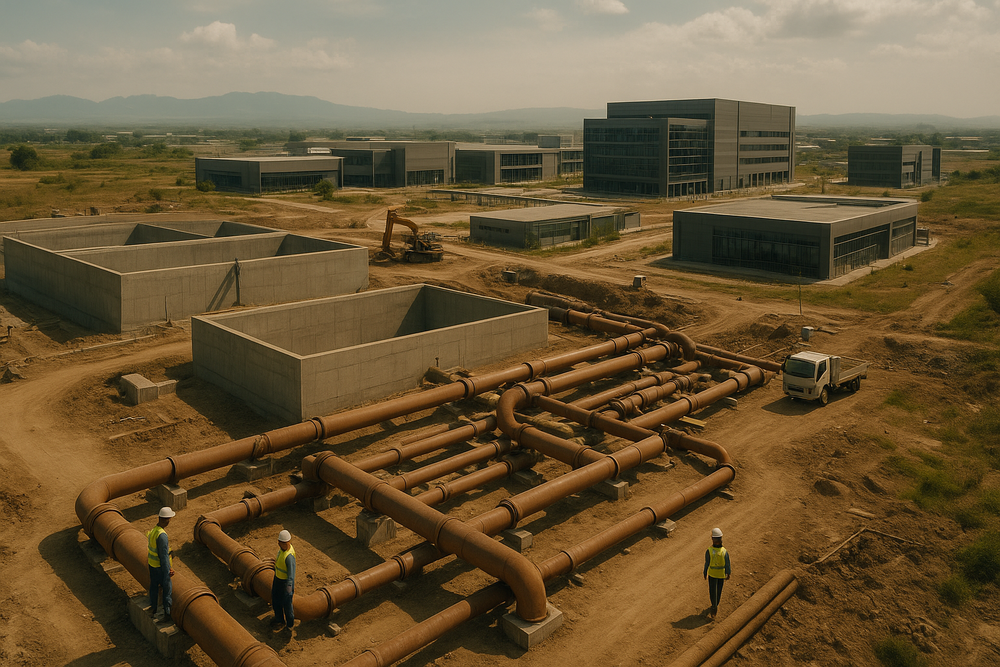
The Bureau of Internal Revenue (BIR) filed complaints against the Discayas, owners of multiple construction companies including Alpha and Omega General Contractor & Development Corporation and St. Timothy Construction Corporation, citing unpaid tax liabilities totaling ₱7,182,172,532.25 accumulated from 2018 to 2021. This financial irregularity coincides with a broader set of allegations involving malversation and graft in a nearly ₱96.5 million ghost flood control project in Jose Abad Santos, Davao Occidental, which was paid in full despite lacking verifiable on-site completion.
These charges, brought to bear by the Office of the Ombudsman, allege malversation through falsification and violations of the Anti-Graft and Corrupt Practices Act (R.A. 3019). The case has been elevated to the Department of Justice (DOJ), which is conducting a preliminary investigation alongside the ongoing Senate inquiries.
Flood Control Anomalies and National Scale Corruption
The Discayas’ firms are not a minor presence; they are among fifteen contractors responsible for approximately 20 percent of flood control projects nationwide, cumulatively worth a significant portion of the ₱545 billion budget disbursed for 9,855 flood control projects since 2022. The Philippine Contractors Accreditation Board (PCAB) has revoked the licenses of nine companies linked to the Discayas amid the revelations.
Flood control infrastructures in provinces such as Bulacan, Iloilo, Cebu, and Davao Occidental — areas repeatedly battered by seasonal flooding — have come under intense scrutiny. Investigations have exposed multiple cases of ghost projects, substandard workmanship, and inflated contracts, with significant consequences for local communities struggling with recurrent typhoon damage and inundations.
A Timeline of Legal Unfolding and Senate Investigations
- 2012: The Discaya companies began securing contracts with the Department of Public Works and Highways (DPWH), expanding into flood control projects from 2016 onward.
- February 2023: A ₱96.49-million river protection project in Calumpit, Bulacan, was declared completed and fully paid, though later revealed as largely unfinished and using substandard materials.
- August 15, 2025: President Ferdinand Marcos Jr. publicly labeled the Bulacan project a “ghost project,” noting unfinished 200 meters and thin cement undermining its integrity.
- September 1, 2025: Sarah Discaya testified at the Senate Blue Ribbon Committee, conceding that her nine firms frequently bid simultaneously on the same flood control contracts, raising red flags on bidding ethics.
- September 18, 2025: Curlee Discaya was cited in contempt by the Senate for providing false explanations regarding Sarah’s absenteeism in prior hearings.
- December 9-18, 2025: Sarah voluntarily surrendered to the NBI ahead of her arrest, which was executed on December 18 for corruption and malversation charges related to the Davao Occidental project.
- December 19, 2025: Both Discayas appeared at the DOJ for the tax evasion inquiry; Sarah was remanded back to NBI custody, with cases transferred to the Lapu-Lapu City Regional Trial Court under a Supreme Court order mandating special anti-corruption courts handle these matters.
Key Government Agencies Driving the Anti-Corruption Campaign
The case against the Discayas forms part of a broader anti-corruption drive launched by the Marcos administration targeting graft in infrastructure projects across the Philippine archipelago. Through extensive investigations orchestrated by the DPWH, Bureau of Internal Revenue, Office of the Ombudsman, and the Senate Blue Ribbon Committee, numerous irregularities have come to light. The sweep has already led to the recovery of about ₱150 million by former DPWH officials and the recommendation of charges against 87 individuals, including allegations of plunder and bribery.
The Senate hearings, chaired by Senator Rodante Marcoleta along with Senators Jinggoy Estrada and Erwin Tulfo, have heightened public awareness of widespread corruption. Curlee Discaya’s detention under Senate contempt rules, paired with asset freezes on bank accounts and properties by court order, underline the seriousness of the allegations.
Impact on Filipino Communities and Calls for Accountability
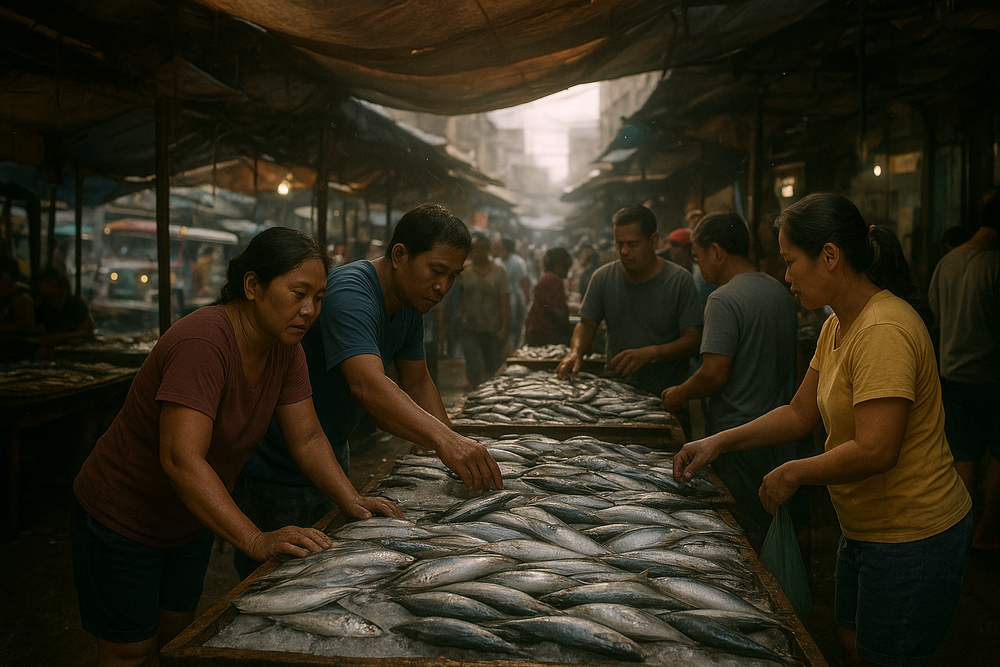
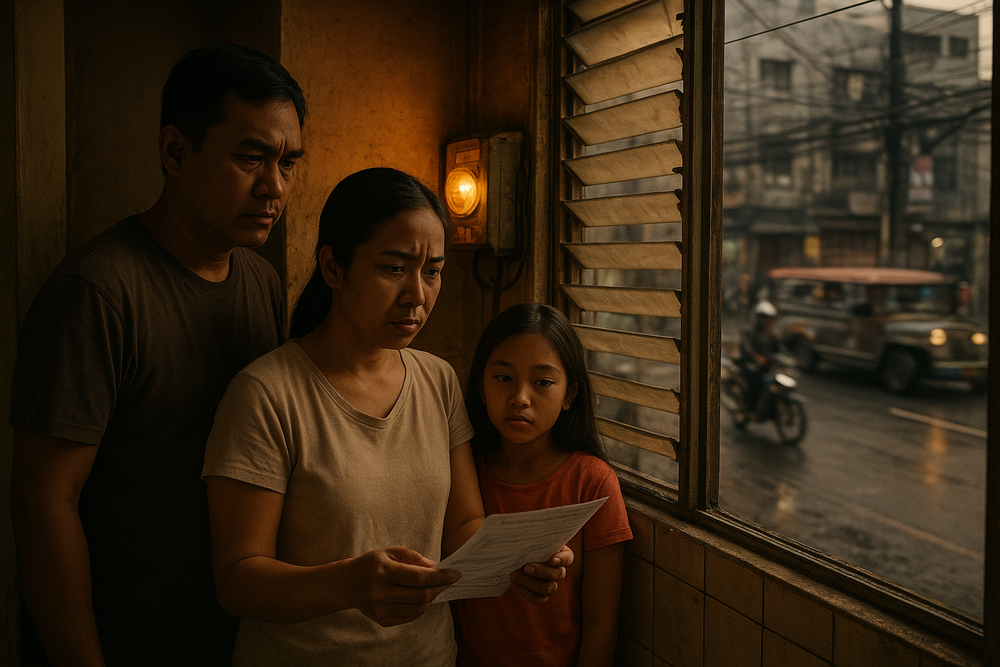
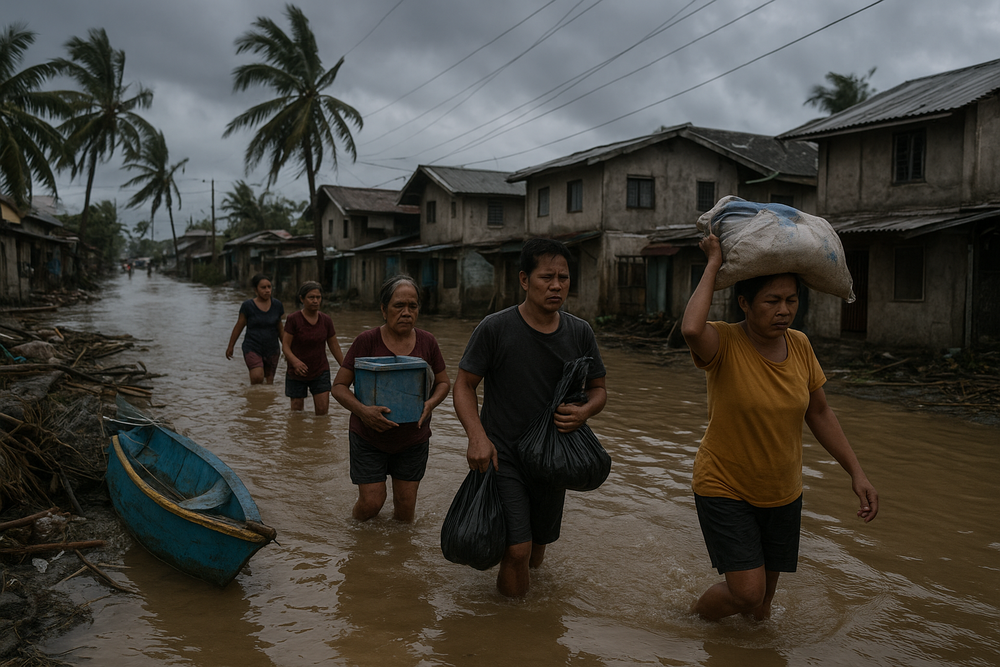
The flood control anomalies examined in this scandal have deep social repercussions, particularly among vulnerable Filipinos grappling with the annual habagat and typhoon seasons. Faulty or ghost flood projects — such as those exposed in Bulacan and Cebu — fail to protect communities from flooding, worsening commute difficulties, displacement, and business disruption. These infrastructure failures translate into higher costs for repair and livelihood preservation among fisherfolk, farmers, and informal settlers.
Public frustration grows as project funds, amounting to billions of pesos, are misallocated — with flood control budgets overtaking spending for essential services like school construction. This misdirection fuels broader economic reverberations, including inflation through broken supply chains and employment strain in affected local government units.
As Pasig Mayor Vico Sotto remarked regarding the Discayas’ conspicuous wealth amidst these investigations: “bad regardless of the source.” The critical tone reflects mounting public demand for transparency and reform in government contracting.
Perspectives from the Highest Levels
President Ferdinand Marcos Jr. has consistently prioritized these anti-corruption measures, underscoring the need to root out “big fish” in the construction sector, including the Discayas. The administration’s efforts encompass asset freezes, referrals to the Ombudsman, and legal action to dismantle entrenched corruption networks.
Opposition voices, such as Senator Imee Marcos, have underscored how stalled Metro Manila flood control projects and questionable contract awards disrupt national flood mitigation efforts. The Blue Ribbon Committee’s unrelenting probe has exposed systemic weaknesses in public sector governance and has called into question the effectiveness of current regulatory frameworks.
Meanwhile, sectors directly affected by these shortcomings—DPWH inspectors, civil society groups, and local government officials—continue advocating for rigorous oversight and institutional reforms to prevent future scandals.
The Road Ahead: Legal Battles and Institutional Reform
With cases now proceeding under special anti-corruption courts such as the Lapu-Lapu City Regional Trial Court, the Philippine justice system faces a pivotal test in delivering accountability for one of the largest contract-related corruption scandals in recent memory. The simultaneous unfolding of tax evasion, graft, and malversation charges against the Discayas—and the broader network of implicated contractors—signals a decisive moment in the government’s campaign to restore integrity in infrastructure development.
As the investigations deepen, public scrutiny will likely intensify over flood control policies, contract bidding processes, and budget allocations. These outcomes may not only shape the trajectories of the Discaya families and their companies but also serve as a bellwether for the nation’s commitment to combating corruption and protecting the Filipino people from recurring calamities exacerbated by infrastructural neglect.