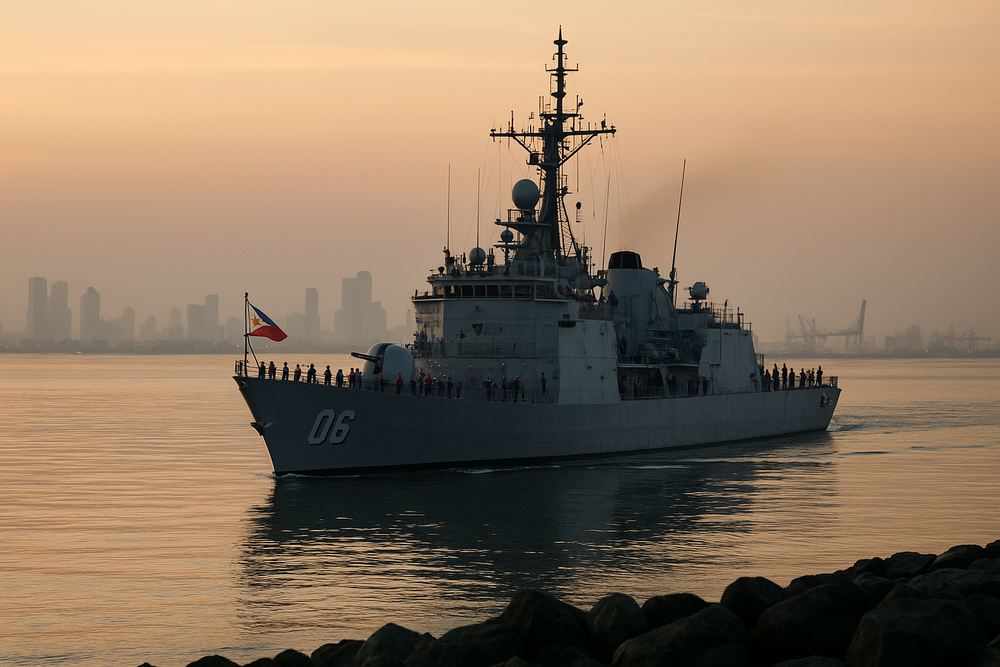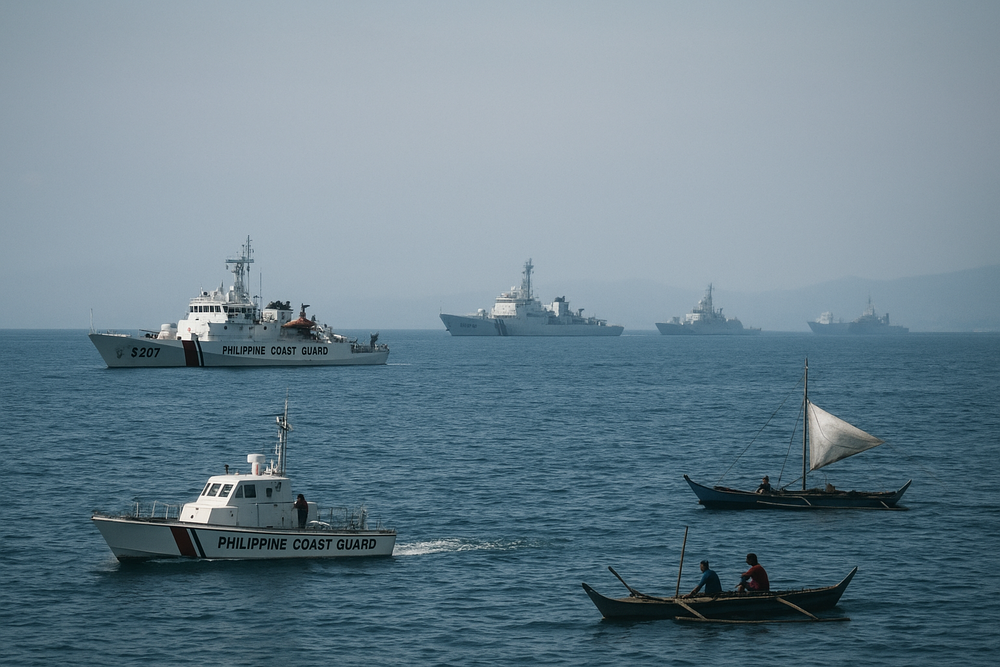
The number of Chinese vessels operating in the West Philippine Sea has risen sharply to 55 in the past week, according to the Philippine Navy, marking one of the most pronounced increases recorded at the start of the year and intensifying concerns over maritime security, fishing livelihoods and regional stability.
The spike, confirmed in reports issued in early January 2026, reflects an expanded presence of China Coast Guard (CCG) ships, People’s Liberation Army (PLA) Navy vessels and maritime militia units across key features of the contested waters. Philippine authorities say the development underscores a sustained strategy by Beijing to maintain near-constant patrols deep inside the Philippines’ exclusive economic zone (EEZ).
A Sudden Jump in Numbers
Data from the Philippine Navy and the Armed Forces of the Philippines show a rapid escalation in Chinese activity at the turn of the year. Forty-five Chinese vessels were logged during the first week of 2026. By the following week, that figure had climbed to 55 ships, spread across multiple maritime features in the West Philippine Sea.
The increase comes on top of already elevated levels of activity. In 2024 alone, the Philippine Navy monitored 278 Chinese vessels within its areas of responsibility—79 law-enforcement ships and 199 military vessels—a scale that security officials describe as unprecedented in peacetime operations.
Hotspots: Scarborough Shoal and Escoda Shoal
The latest figures show particular concentrations around contested and resource-rich areas. At Escoda Shoal, the AFP recorded 13 Chinese vessels in mid-January, including three PLA Navy ships, six CCG vessels and four maritime militia boats.
Scarborough Shoal, known locally as Bajo de Masinloc, remains the most heavily monitored flashpoint. In April 2025, the Philippine Coast Guard documented 39 Chinese government vessels in the area—the highest monthly count that year—highlighting how the shoal has become a focal point of China’s forward presence.
Officials liken the pattern to a slow tightening of a net: vessels appear, linger, rotate and return, ensuring almost uninterrupted coverage of strategic waters.
Patrols Push Closer to the Philippine Coast
Beyond the sheer number of ships, Philippine authorities are alarmed by how close some patrols now come to land. In 2025, Chinese vessels were tracked approaching within 23 nautical miles of the Philippine coastline. One incident on April 8, 2025 saw CCG ships operating off Dasol, Pangasinan, just 43 kilometres from shore.
The Philippine Coast Guard has described this as a “notable change” in China’s maritime posture, with patrols extending from Ilocos down to Mindoro. Despite the proximity, Manila has continued to emphasise continuous surveillance rather than escalation, maintaining an average of 27 days per month of patrol vessel presence near Scarborough Shoal.
Fishermen Caught in the Middle
The most immediate impact has been felt not in conference rooms or naval command centres, but at sea. Filipino fishermen report being increasingly driven away from traditional fishing grounds.
As Philippine Coast Guard spokesperson Jay Tarriela said on January 22, 2026: “Filipino fishermen have been pushed further away from Bajo de Masinloc, as CCG vessels have aggressively forced them towards the Luzon coast and away from their customary fishing areas.”
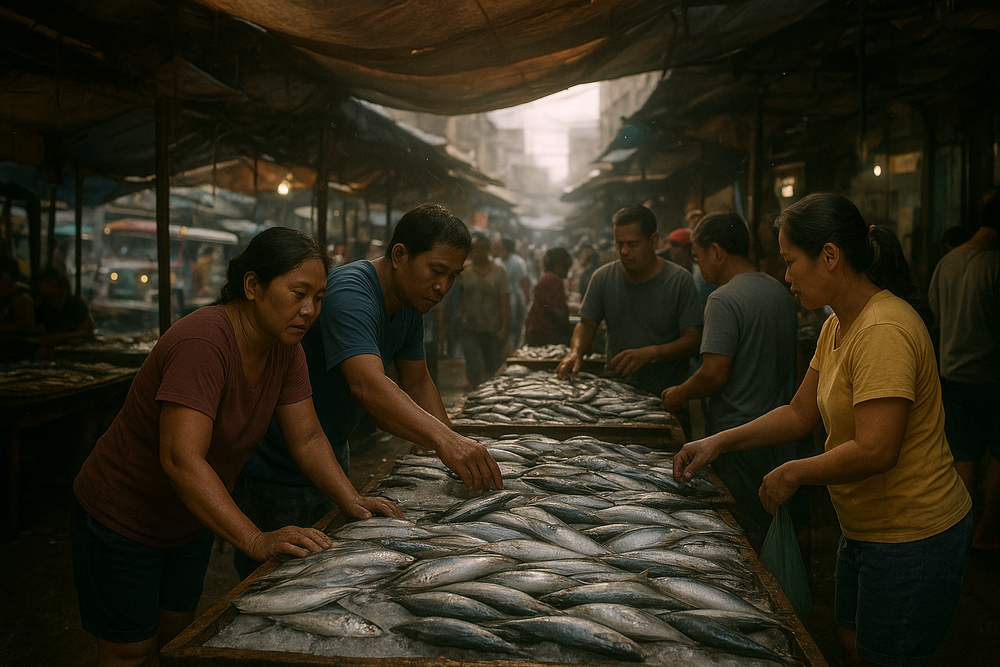
The displacement has practical consequences. Fishing closer to shore typically means smaller catches, higher fuel costs per kilogram of fish and increased competition among local boats. Traders report that reduced supply has begun to ripple through coastal markets, contributing to rising seafood prices that affect households far beyond fishing communities.
Legal Lines and Strategic Patience
Manila continues to anchor its response in international law. The West Philippine Sea forms part of the country’s 200-nautical-mile EEZ under the United Nations Convention on the Law of the Sea. A 2016 arbitral ruling invalidated China’s sweeping “nine-dash line” claims and affirmed Philippine rights over features such as Scarborough Shoal.
Chinese authorities reject that ruling, but Philippine officials stress that constant monitoring and documentation serve as a form of quiet assertion. Each logged vessel, they argue, is a record for future diplomatic and legal engagement.
A Test That Is Far From Over
Two weeks into 2026, the trajectory points to sustained pressure rather than a temporary surge. For the Philippine Navy and Coast Guard, the challenge is one of endurance—maintaining presence without provoking confrontation, while protecting fishermen whose livelihoods hinge on contested waters.
As Chinese ships continue to patrol like clockwork on the horizon, the West Philippine Sea remains a theatre where sovereignty is asserted not through dramatic clashes, but through numbers, persistence and time.