Chinese maritime authorities said they rescued 17 Filipino crew members from a capsized cargo vessel in the South China Sea early on Friday, after the ship went down near the highly disputed Scarborough Shoal. Two sailors were confirmed dead and four remain missing, according to Chinese and Philippine officials, in an incident that has reignited sensitivities over sovereignty and safety in one of the world’s most contested waterways.
The vessel, a Singapore-flagged cargo ship identified as the Devon Bay, was en route from the Philippines to China’s Guangdong province when contact was lost late Thursday night. A distress call was received at around 1.30am on January 23, triggering a multinational search-and-rescue operation involving China’s coast guard and military, alongside the Philippine Coast Guard.
A Midnight Distress Call in Disputed Waters
China’s Maritime Search and Rescue Centre in Sansha, on Hainan Island, said the ship capsized roughly 55 nautical miles northwest of Scarborough Shoal, an atoll claimed by both Beijing and Manila. The area lies well within the Philippines’ declared exclusive economic zone under international law, a point emphasised by Philippine officials.
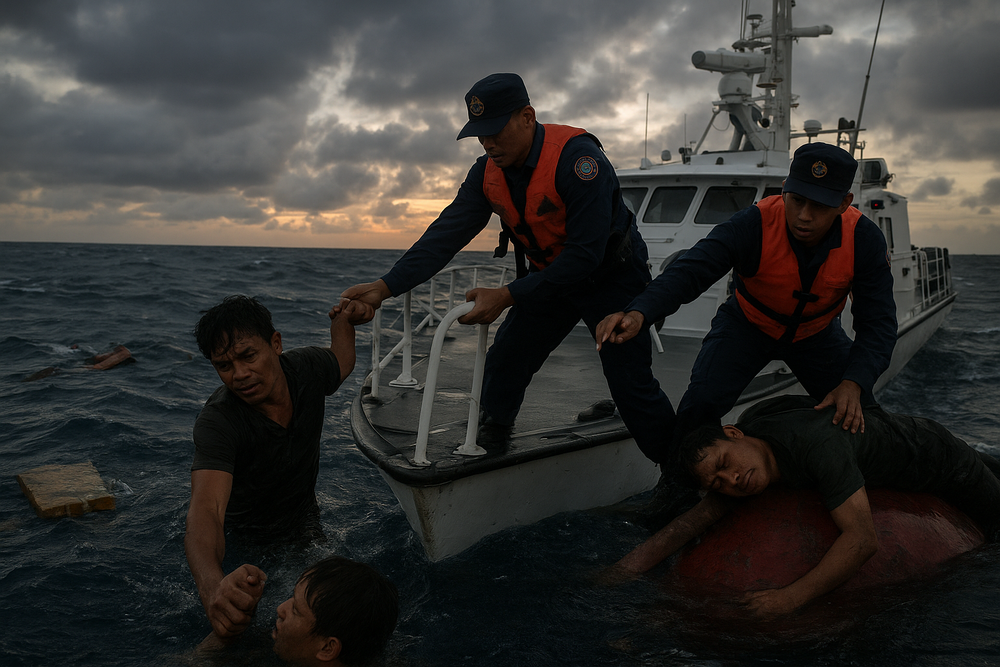
Responding within hours, the China Coast Guard dispatched two vessels, while the People’s Liberation Army’s Southern Theater Command deployed military aircraft to scan the surrounding seas. By midday, rescuers had pulled 17 crew members alive from the water. Fourteen were reported in stable condition, while one survivor remained in critical care.
Despite the rapid response, two Filipino sailors were pronounced dead, and hopes dimmed for the remaining four missing crew members as daylight search operations continued.
China and the Philippines Frame a Joint Rescue
Chinese authorities highlighted the humanitarian dimension of the operation. In a statement released via the Chinese embassy in Manila, the China Coast Guard said: “Rescue efforts are currently underway in full swing, and China’s maritime authorities are organizing additional rescue teams to rush to the accident site.”
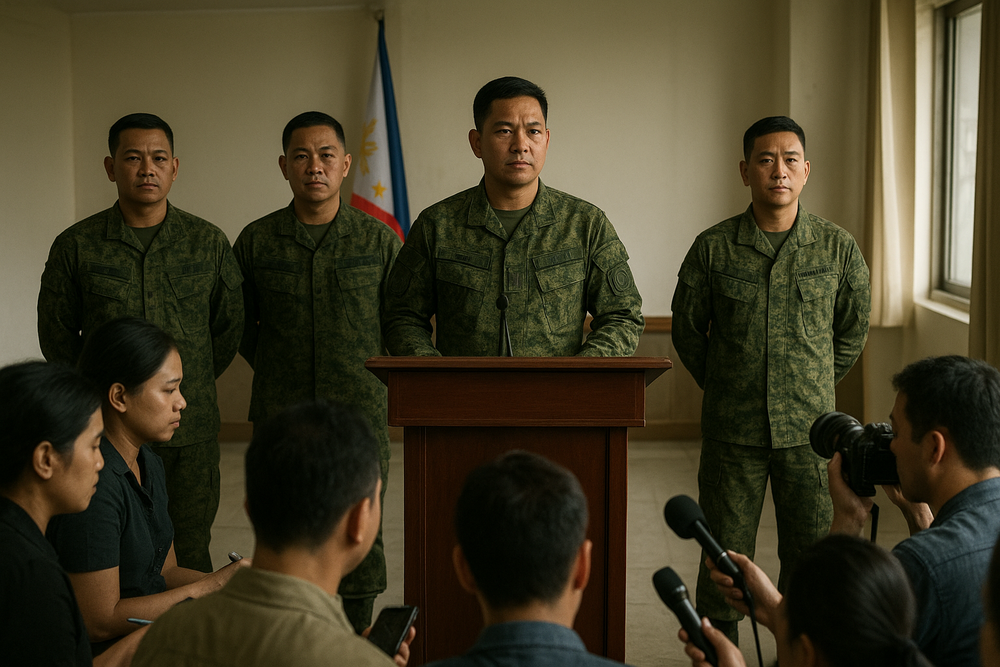
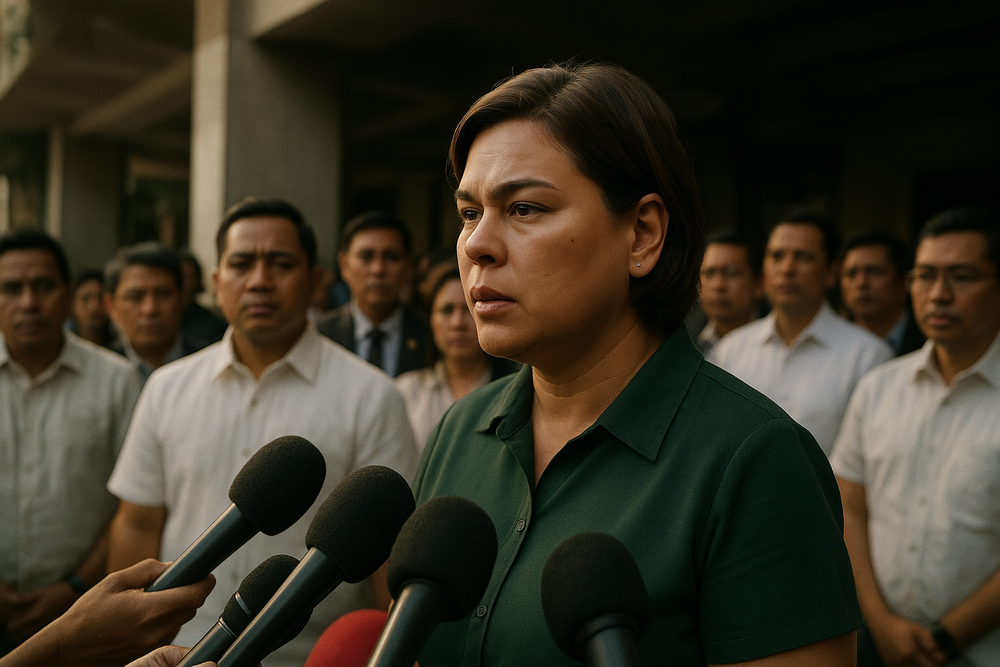
The Philippine Coast Guard confirmed it had deployed two vessels and two aircraft to assist, stressing that the incident occurred “within the Philippine Exclusive Economic Zone.” While both sides described the operation as coordinated, their statements subtly underscored long-standing differences over jurisdiction in the area.
Scarborough Shoal: A Familiar Flashpoint
The location of the sinking ensured the tragedy was swiftly enveloped by geopolitics. Scarborough Shoal—known as Huangyan Dao in China and Bajo de Masinloc in the Philippines—has been a symbol of regional tension since a 2012 standoff left China in effective control of the atoll.
In 2016, an international arbitration tribunal in The Hague ruled overwhelmingly in favour of the Philippines, finding that the shoal lies within its exclusive economic zone and that China had unlawfully blocked Filipino fishermen from traditional fishing grounds. Beijing rejected the ruling and maintains its historical claim over the area.
Against this backdrop, even a rescue operation carries diplomatic weight, illustrating how routine maritime incidents can quickly echo through unresolved territorial disputes.
Human Cost for Filipino Seafarers
Beyond the strategic implications, the sinking has brought renewed attention to the risks faced by Filipino seafarers, who make up a large share of the global maritime workforce. Working aboard foreign-flagged vessels and traversing busy trade routes, they often sail far from home in hazardous conditions.
Seafarers’ advocates have long warned that safety standards, training, and oversight vary widely across the shipping industry. Incidents like the Devon Bay sinking, they argue, highlight the need for stricter enforcement of international maritime safety rules and clearer accountability when disaster strikes.
Why This Matters Beyond Asia
For maritime nations such as Malta—whose economy is closely tied to shipping, flag registration, and seafarer employment—the incident is a reminder of how interconnected global sea lanes have become. Disruptions in the South China Sea affect not only regional actors but also international trade, insurance costs, and the safety frameworks governing vessels worldwide.
As with the Mediterranean, the South China Sea serves as a crowded highway for global commerce. When an accident occurs in disputed waters, the rescue effort can resemble a lifeboat launched amid a storm of competing claims—saving lives first, while legal and political questions swirl unresolved.
An Uncertain Search Continues
By Friday evening, search teams were still scanning the area for the four missing sailors, as authorities prepared for the possibility that not all would be found. Investigations into what caused the ship to capsize are expected once rescue operations conclude.
For now, the tragedy stands as a stark intersection of human vulnerability, maritime risk, and geopolitical tension—a sobering reminder that, in contested seas, even acts of rescue cannot be separated from the larger currents shaping the region.