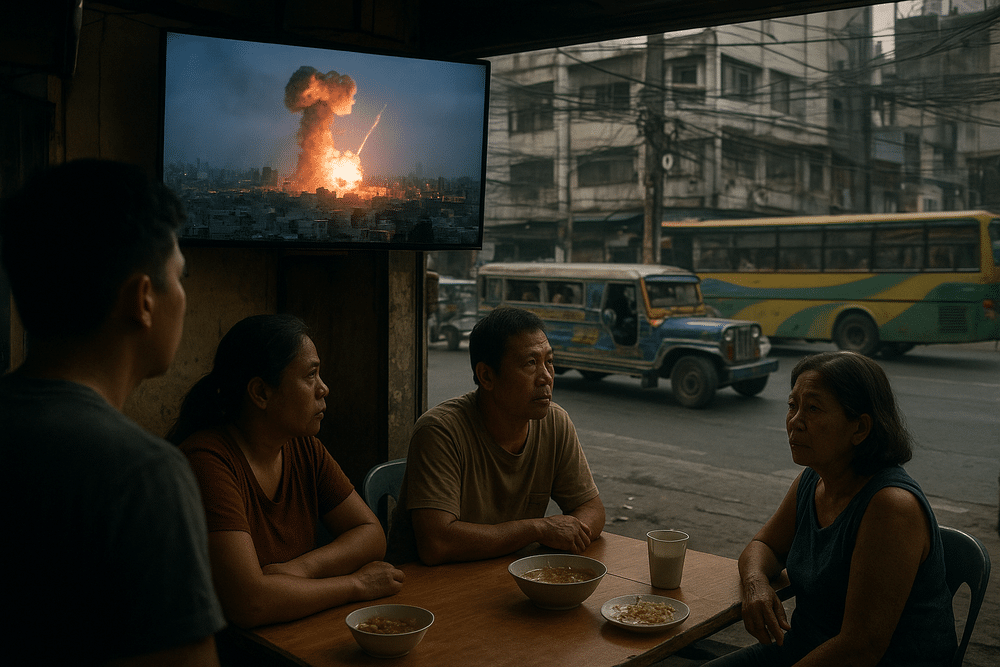
China on Sunday called for an immediate ceasefire following sweeping joint military strikes by the United States and Israel on Iran, an operation that has dramatically escalated tensions in the Middle East and raised fears of a broader regional war.
The strikes, launched on 28 February 2026 and described by Washington as a “massive and ongoing” campaign dubbed “Operation Epic Fury”, targeted Iran’s nuclear facilities, ballistic missile infrastructure and senior leadership. Iran’s state media confirmed early Sunday that Supreme Leader Ayatollah Ali Khamenei was killed in the attacks, with Tehran declaring 40 days of mourning and a seven-day national holiday.
Beijing swiftly condemned the attacks as a violation of sovereignty and warned of “potential serious consequences,” urging all parties to return to dialogue before the conflict spirals beyond control.
Beijing Warns of “Serious Consequences”
In a statement issued late Saturday, China’s Foreign Ministry said it was “highly concerned” about the developments.
“China is highly concerned about Israel’s attacks on Iran and deeply worried about the potential serious consequences,” the ministry said. “China opposes any violation of Iran’s sovereignty, security, and territorial integrity, and opposes actions that escalate tensions and expand the conflict.”
Beijing called for an immediate ceasefire and stressed the need for renewed negotiations, invoking principles under the United Nations Charter and the broader framework of international law. Chinese officials have repeatedly positioned diplomacy as the only viable path to resolving disputes over Iran’s nuclear programme.
Washington and Tel Aviv Defend Strikes
U.S. President Donald Trump defended the operation in a video message posted Saturday, saying the strikes were necessary to prevent Iran from posing what he described as a grave threat.
“The U.S. [is] undertaking a massive and ongoing operation to prevent this very wicked, radical dictatorship from threatening America and our core national security interests,” Mr. Trump said.
Israeli Prime Minister Benjamin Netanyahu echoed that assertion, framing the action as existential.
“This murderous terrorist regime must not be armed with nuclear weapons that would allow it to threaten all of humanity,” Mr. Netanyahu said in a video statement.
According to reports from the region, the coordinated air and missile campaign hit facilities linked to Iran’s nuclear development and missile programmes, as well as key military sites in Tehran and elsewhere. Approximately 40 Iranian officials were reported killed.
Iran retaliated by launching missiles toward Israeli territory and U.S. targets in the region, intensifying fears that tit-for-tat exchanges could widen into sustained conflict.
A Rapid Descent Into Crisis
The strikes followed weeks of mounting tension. In late January, Washington signaled possible military action, deploying warships and carrier groups to the Middle East. On 19 February, the White House warned that strikes could come within days if negotiations over Iran’s nuclear programme remained stalled.
China, on 24 February, had already called on all parties to exercise restraint. Four days later, explosions rocked Tehran.
The reported death of Iran’s supreme leader adds a volatile new dimension. Political analysts warn that a leadership vacuum in Tehran could either open a path to recalibration or ignite sharper internal and external confrontation. The situation remains fluid.
Global Ripple Effects
Beyond the immediate military confrontation, the crisis threatens to rattle global energy markets. The Gulf region serves as a critical artery for the world’s oil supply. Even a brief disruption can ripple across economies like a stone cast into still water.
Rising global oil prices could indirectly affect fuel costs in import-dependent countries. Energy analysts caution that a PHP 5 to PHP 10 per litre increase in global benchmarks could translate into higher transport fares and household expenses in Asia.
Financial markets are also watching key shipping lanes, including routes that connect major Asian trading hubs through the Middle East. Broader instability could disrupt supply chains already strained by geopolitical tensions elsewhere.
No Direct Involvement From Manila, But Risks Loom
As of 1 March 2026, there has been no direct involvement or formal statement from Philippine authorities regarding the strikes. However, the Department of Foreign Affairs is expected to monitor developments closely, particularly given the significant number of overseas Filipinos working across the Middle East.
An escalation could affect remittance flows and commercial routes. While there is no immediate indication of disruption, the region’s security environment has become markedly more fragile.
Calls for De-escalation Grow Louder
China’s appeal for a ceasefire aligns with broader calls from several governments urging restraint. Beijing has framed its response around adherence to international law and opposition to actions that undermine territorial integrity.
Whether diplomacy can gain traction depends on how both sides interpret the latest strikes — as a decisive blow or the opening chapter of a prolonged confrontation. The coming days will likely determine whether the region steps back from the brink or edges closer to a wider war.
For now, the Middle East stands at a precarious crossroads, with global powers watching closely — and urging that the guns fall silent before the conflict hardens into something far more enduring.