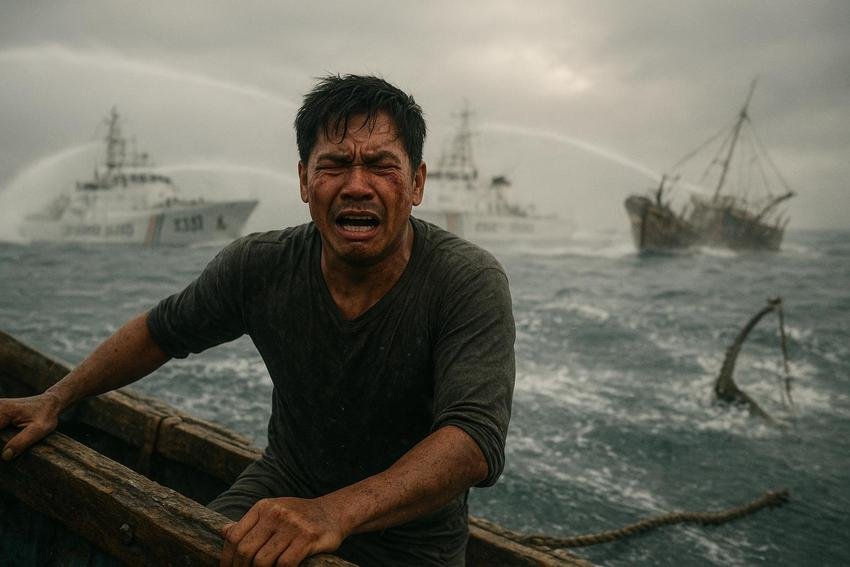
Three Filipino fishermen were injured and two fishing vessels damaged after China Coast Guard (CCG) ships used water cannons and severed anchor lines near Escoda Shoal in the contested West Philippine Sea. The December 12, 2025, encounter marks another escalation in persistent maritime tensions, drawing sharp condemnation from Philippine officials who denounced the dangerous maneuvers as threats to civilian safety and violations of international maritime norms.
Water Cannon Assault and Dangerous Interference Near Escoda Shoal
The incident unfolded amid a flotilla of around 20 Filipino fishing boats operating near Escoda Shoal, known also as Sabina Shoal or Xianbin Jiao. Two Chinese Coast Guard vessels identified by bow numbers 21559 and 21562, accompanied by maritime militia boats, unleashed high-pressure water cannons against Filipino fishing craft, injuring three fishermen with bruises and open wounds. The water cannon blasts severely damaged two boats, while smaller Chinese rigid hull inflatable boats cut the anchor cables of several vessels, leaving them vulnerable to strong currents and turbulent seas.
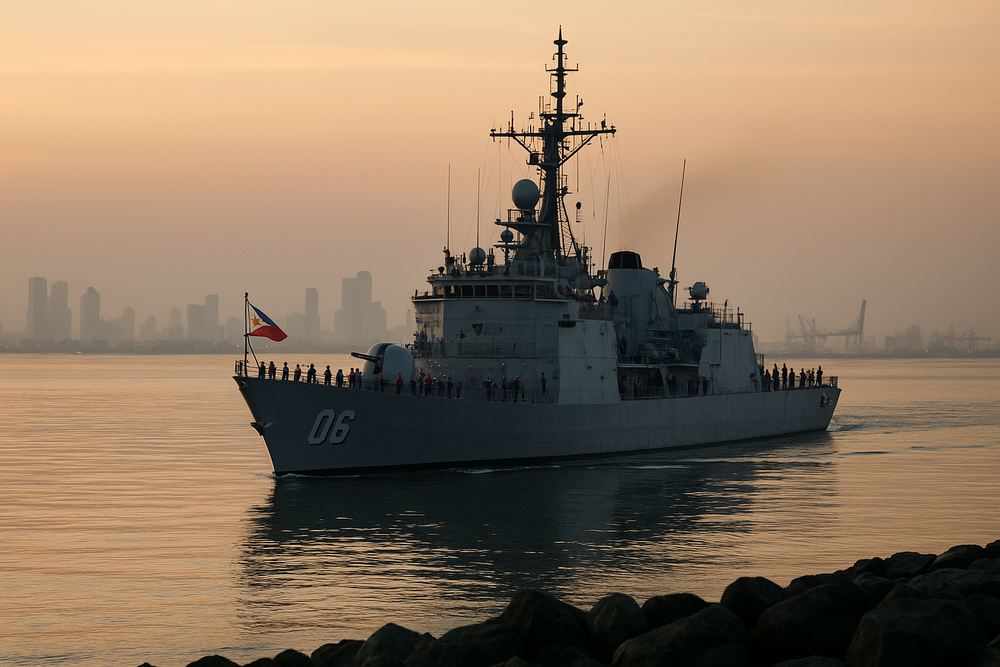
The Philippine Coast Guard swiftly dispatched its multi-role response ships, BRP Malapascua (MRRV-4403) and BRP Cape Engaño (MRRV-4411), to assist the fishermen. However, these Philippine vessels encountered repetitive close-range blocking tactics by CCG ships including 21559, 21562, and 5204. In one alarming instance in darkness, a CCG vessel, 23519, approached within 35 yards of a Philippine Coast Guard ship, heightening the risk of collision.
Philippine Authorities Demand Adherence to Maritime Safety Standards
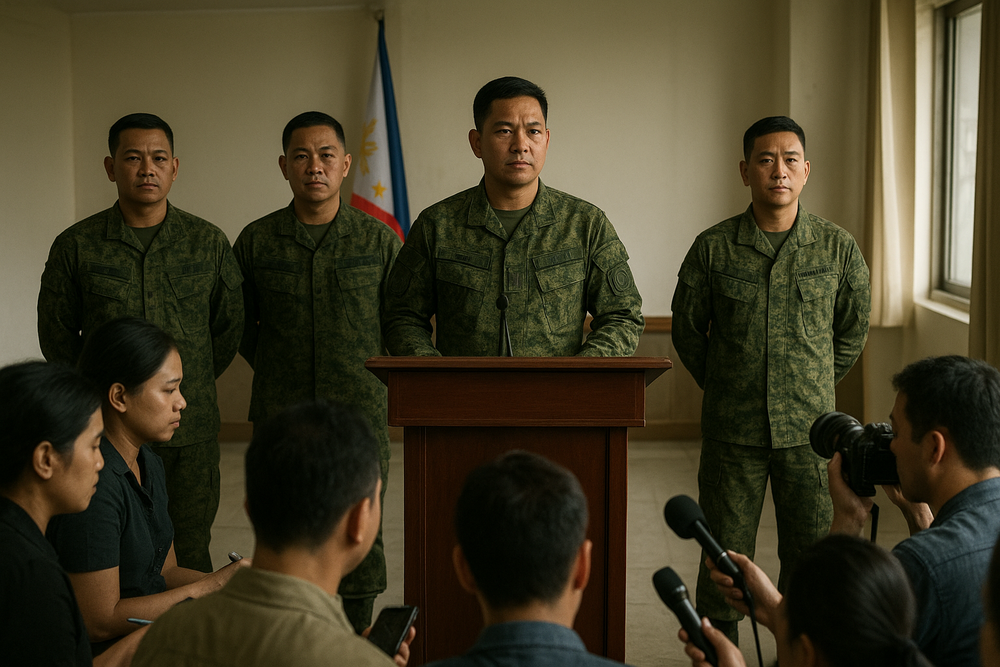
PCG spokesperson Commodore Jay Tarriela condemned the Chinese actions as reckless. He urged the China Coast Guard to respect internationally recognized standards of conduct, stressing the need to prioritize human life over aggressive displays of regulatory enforcement. Tarriela highlighted that the presence of the Philippine Coast Guard played a critical role in protecting fishermen, noting that Chinese vessels withdrew only after PCG ships arrived on the scene.
China Confirms Use of “Control Measures” and Claims Provocation
In an official response, Chinese authorities acknowledged employing “control measures” against the Filipino vessels but characterized the Filipino presence as provocations meant to “create disturbances and incidents.” The China Coast Guard insisted that warnings were issued before driving the boats away from what Beijing regards as its sovereign waters around Escoda Shoal.
Strategic Importance of Escoda Shoal in the West Philippine Sea
Escoda Shoal is a low-tide elevation located at coordinates 09°45’N 116°28’E in the Spratly Islands, situated about 75 nautical miles west of Palawan. The atoll covers approximately 115 square kilometers, featuring reefs partially submerged at high tide and a lagoon enclosed by deeper banks. It lies within the Philippines’ 200-nautical-mile exclusive economic zone (EEZ) and serves as a critical rendezvous point for resupply missions to nearby contested areas such as Ayungin Shoal and the resource-rich Reed Bank.
The shoal’s proximity to key fishing grounds and potential energy reserves underscores its strategic value. Maritime security expert Chester Cabalza described Escoda Shoal as the “missing link” in China’s efforts to establish dominance over the West Philippine Sea, potentially allowing Beijing to exert control over adjacent strategic features much like its takeover of Panatag (Scarborough) Shoal in 2012. Command over these waters could also threaten critical trade routes responsible for 21 percent of global shipping trade, valued at trillions of dollars annually.
Escalating Tensions Trace Back Over a Year of Maritime Confrontations
The Escoda Shoal dispute has evolved into a flashpoint over the past two years. In April 2024, the PCG deployed its largest multirole response vessel, BRP Teresa Magbanua, to monitor alleged Chinese reclamation efforts, including the dumping of crushed corals. During its deployment through September 2024, the vessel faced repeated harassment, including multiple ramming incidents by Chinese Navy ships—a pattern of aggression culminating in its eventual withdrawal due to supply blockades.
Since then, China has continued to assert its claims aggressively in the area, with the recent December 2025 incident representing one of the most violent confrontations to date. Observers highlight the incident as part of a broader campaign to prevent Filipino access and extend Chinese maritime control within contested waters.
Complex Legal and Geopolitical Backdrop
The disputes around Escoda Shoal fall within larger tensions in the South China Sea, where overlapping claims involve the Philippines, China, and several other Southeast Asian nations. In 2016, an arbitral tribunal under the United Nations Convention on the Law of the Sea invalidated China’s sweeping nine-dash line claim, affirming Philippine sovereign rights over its EEZ. Despite ruling in favor of the Philippines, China has continued expanding artificial islands and militarizing maritime features within the disputed zone.
China’s expansive activities—including the establishment of militarized bases on reclaimed reefs—reflect its strategic goal of controlling trade chokepoints and securing potentially lucrative undersea energy resources. Philippine officials, backed by international law, maintain that actions such as aggressive interference with Filipino fishermen violate both sovereign rights and humanitarian principles governing the safety of maritime civilians.
Outlook: A Lingering Focal Point for Regional Security
Experts warn that Escoda Shoal will remain a hotbed of maritime friction amid shifting regional dynamics. Analyst Ray Powell noted the shoal’s emergence as a “surprise development” on the map of South China Sea disputes, while Cabalza anticipates intensified encounters fueled by evolving U.S. policies and deepening Sino-Philippine rivalry.
For the many Filipino fishing communities dependent on these waters for livelihood, the stakes are immediate and tangible. The December 12 incident not only highlights the human cost of geopolitical rivalry but also casts a spotlight on the fragile balance of law, sovereignty, and safety in one of the world’s most contested seas.