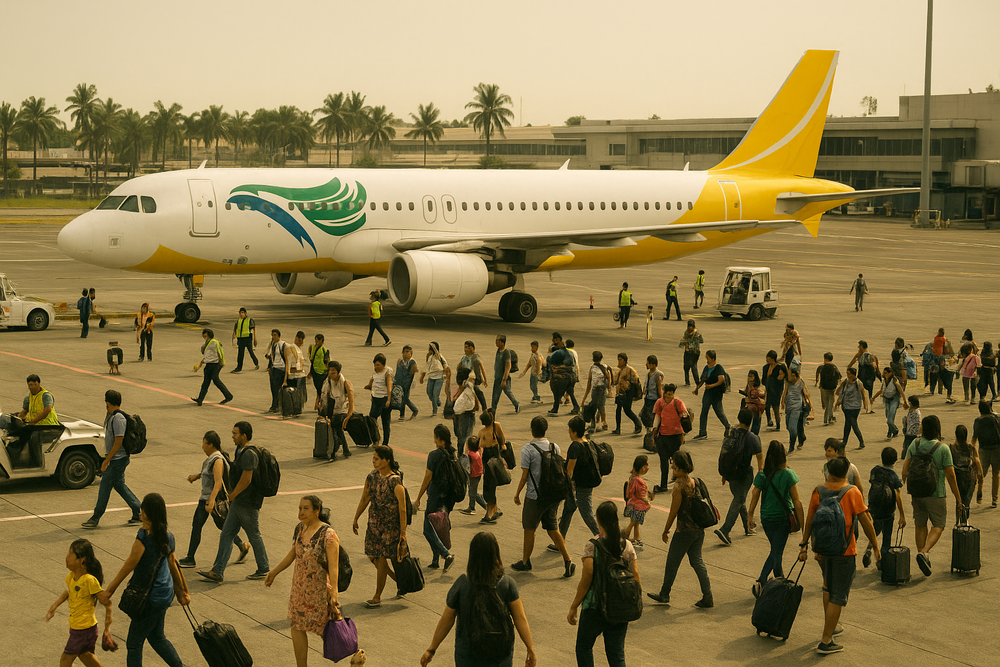
Cebu Pacific Air carried a record 26.88 million passengers in 2025, cementing its position as the Philippines’ dominant budget airline and underscoring the sustained appetite for low-cost air travel across the archipelago. The figure represents a 9.5 percent increase from the previous year and marks the highest annual passenger volume in the carrier’s three-decade history.
The milestone, announced in January, was achieved against a backdrop of aircraft delivery delays, supply chain disruptions and persistent geopolitical tensions that have disrupted aviation markets worldwide. While growth fell short of the airline’s own ambitious 20 percent target, the results point to operational resilience and steady demand in both domestic and international markets.
Steady Growth Despite Headwinds
Cebu Pacific transported around 20 million domestic passengers in 2025, up 8.1 percent from the year before, while international traffic rose 14 percent to 6.9 million passengers. Seat capacity increased by 10 percent to 32 million, slightly outpacing demand and leading to a marginal dip in the airline’s overall seat load factor to 84 percent.
December, traditionally the airline’s busiest month, capped the year with 2.71 million passengers, the highest monthly tally ever recorded by the carrier. Domestic flights remained heavily patronised, posting a load factor of 85.5 percent. International load factors, however, eased to 79.4 percent, reflecting softer demand on some overseas routes as capacity expanded.
“Achieving these record figures despite obstacles such as fleet reliability issues, disruptions in the supply chain, and global geopolitical tensions highlights the resilience of our low-cost business model,” chief executive Michael Szucs said in a statement. He added that the airline expects similar growth in 2026 as new aircraft enter service.
Low-Cost Model Drives Mass Travel
The numbers tell a broader story of how budget aviation has reshaped mobility in the Philippines. For millions of Filipinos—students, provincial workers, and families split between islands—affordable airfares have become a bridge rather than a barrier. Cebu Pacific’s growth mirrors the shift from long, overland journeys to short flights linking provincial cities to Manila and major tourist destinations.
Tourism-dependent regions such as Palawan, Boracay and Cebu continue to benefit from higher passenger volumes, which ripple through local economies in the form of hotel bookings, restaurant trade and transport services. The airline’s expanding international network, particularly routes catering to Filipino migrant workers, has also widened access for overseas travel once reserved for higher-income households.
Fleet Expansion and Network Ambitions
As of early 2026, Cebu Pacific operates a fleet of 100 aircraft, serving 37 domestic and 26 international destinations across Asia, Australia and the Middle East. The airline is positioning itself as one of Asia’s leading operators of wide-body Airbus A330 aircraft, a strategy that has allowed it to enter longer-haul markets while keeping costs low.
Growth is set to continue. Cebu Pacific expects to take delivery of seven Airbus A330neo aircraft during 2026, each configured with 459 seats. In March, it is scheduled to launch direct flights between Manila and Riyadh, expanding its international network to 27 cities and tapping demand from the large community of overseas Filipino workers in Saudi Arabia.
A short-term damp-lease arrangement for two Airbus A320 aircraft, concluded in January, helped cushion capacity constraints while the airline awaited new deliveries.
Competitive Pressures and Infrastructure Strain
Cebu Pacific’s scale gives it a commanding share of the Philippine aviation market, a dominance that rivals have long viewed with unease. While passengers benefit from lower fares and more frequent flights, critics argue that market concentration could limit competition and choice over time.
There are also mounting operational pressures. Airports such as Manila’s Ninoy Aquino International Airport and Mactan-Cebu International Airport have struggled to keep pace with rising traffic, raising concerns over congestion, service quality and ground handling capacity. Rapid fleet and passenger growth, analysts warn, will test whether infrastructure upgrades can keep up.
Environmental Questions Linger
The airline’s relentless expansion has drawn quieter but persistent scrutiny from environmental groups, who point to the rising carbon footprint associated with higher passenger volumes and a growing fleet. Unlike in Europe, where emissions reporting and carbon pricing are more mature, the Philippine aviation sector operates with limited environmental regulation, leaving sustainability largely to voluntary initiatives.
A Record Year, With Cautious Optimism Ahead
As Cebu Pacific celebrates its 30th anniversary, the record 26.88 million passengers carried in 2025 stand as a testament to the endurance of the low-cost model in a price-sensitive market. Yet the figures also hint at the delicate balance ahead: matching capacity with demand, maintaining service standards, and navigating infrastructure and environmental constraints.
For now, the skies remain busy. And for millions of travellers across the Philippines and beyond, Cebu Pacific’s growth continues to make flight a routine part of everyday life rather than a rare luxury.