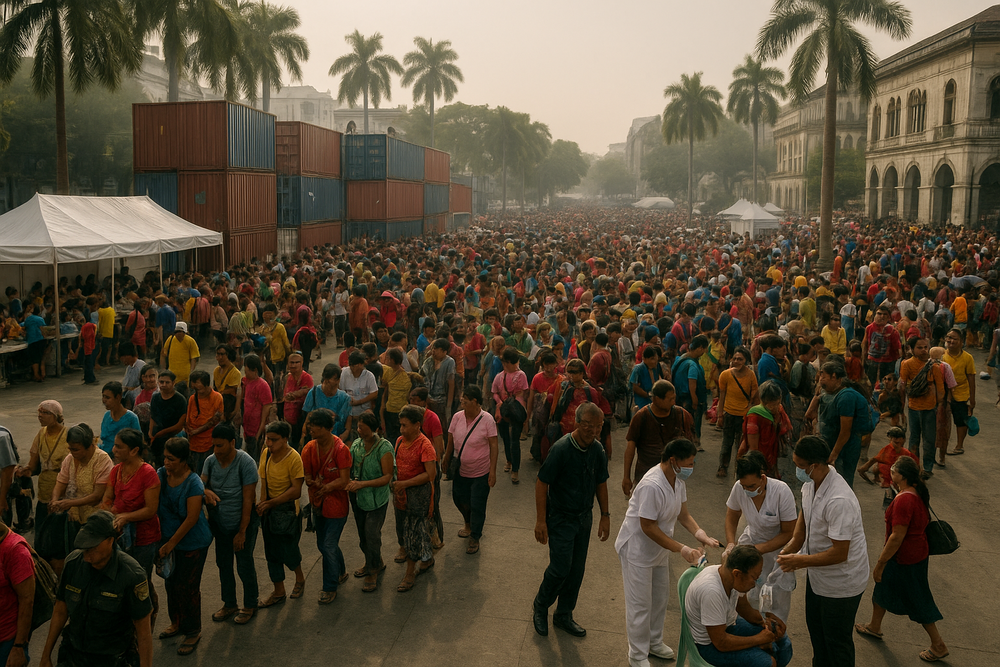
CEBU CITY, Philippines — As nearly two million pilgrims flooded Cebu’s streets for Fiesta Señor 2026, local authorities unveiled a carefully planned stopgap: Devotee City, a temporary hub offering free shelter, meals, water, health care and transport to worshippers converging on the city’s historic core.
Opened on January 16 at Plaza Independencia, the initiative was designed to ease the strain on devotees arriving from across Cebu and neighbouring provinces for the festival’s peak events — among them the fluvial procession on January 17 and the sprawling solemn foot procession the same day.
A Temporary City for a Moving Sea of Faith
Devotee City functions like a small, regulated township dropped into downtown Cebu. At its heart are 30 container vans, converted into clean sleeping quarters that can accommodate about 1,000 people.
“The area has at least 30 container vans that can accommodate about a thousand individuals,” said Cebu City Councillor Nice Archival, who oversees the site’s operations.
Beyond shelter, the amenities include free food and drinking water, comfort and shower rooms, waste disposal points and on-site security. Health teams from the Cebu City Health Office provide check-ups, medicines and vitamins — an essential service as pilgrims endure long walks under tropical heat.
Keeping the City Moving
Transport is often the invisible pressure point during large religious gatherings. To prevent congestion and exhaustion, the city deployed two electronic shuttle vehicles, each capable of carrying up to 35 passengers.
Operating daily between 8 a.m. and 9 p.m., the shuttles ferry devotees between Devotee City and key locations, including City Hall, the Basilica Minore del Santo Niño, the North Reclamation Area and a major mall at the South Road Properties. The aim, officials said, was to shorten walking distances and limit traffic bottlenecks during the festival’s busiest hours.
Processions by Sea and Street
The opening of Devotee City coincided with the festival’s most visually striking events. Before dawn on January 17, the fluvial procession set sail with at least 420 boats — including 275 motorised bancas and 145 larger vessels — tracing a route through the Mactan Channel to Pier 1 in Cebu City.
Later that day, the solemn foot procession followed a 5.5-kilometre route, drawing an estimated two million devotees. According to the Cebu City Disaster Risk Reduction and Management Council, that figure surpassed last year’s estimate of 1.4 million.
Dave Tumulak, a city councillor and head of the council, said post-event evaluations confirmed that turnout exceeded expectations, but no major incidents were reported despite the heat and density of the crowd.
Support for the Masa
For many participants — particularly those travelling on limited means — Devotee City has become a practical lifeline. By offering free accommodation and meals, the site reduces the need for street sleeping and lowers the cost of attending a multi-day religious event.
The setup also benefits micro-entrepreneurs, such as candle and souvenir vendors, who rely on fiesta crowds for income but often lack affordable lodging. The Cebu provincial government supplemented the city’s efforts by providing food and sleeping kits, underscoring a joint approach to crowd welfare.
Security teams composed of police officers and barangay tanods patrol the area, supported by CCTV monitoring — a preventative measure to protect families and vendors alike.
Operating Until the Last Devotee Leaves
Devotee City will remain operational until January 19, with free food and water available until that morning. City officials say the model reflects lessons learned from previous fiestas, where sheer numbers overwhelmed traditional support systems.
In Cebu, faith moves not only hearts but entire populations. For a few crucial days each January, Devotee City stands as a buffer between devotion and disorder — a reminder that even the largest acts of faith rely on careful logistics, steady hands and, above all, planning grounded in the needs of the people.