Speculation is resurfacing over whether former Philippine vice president Leni Robredo could once again carry the banner of a fractured opposition in the 2028 presidential race, after Senator Bam Aquino acknowledged that “many” within political and civic circles want her to run.
Aquino, speaking in an ambush interview on Sunday, said the calls have grown louder following a recent, highly publicised gathering of opposition figures — a reunion that rekindled discussion not only of electoral strategy, but of shared concerns over the country’s direction.
A Quiet Meeting, a Loud Message
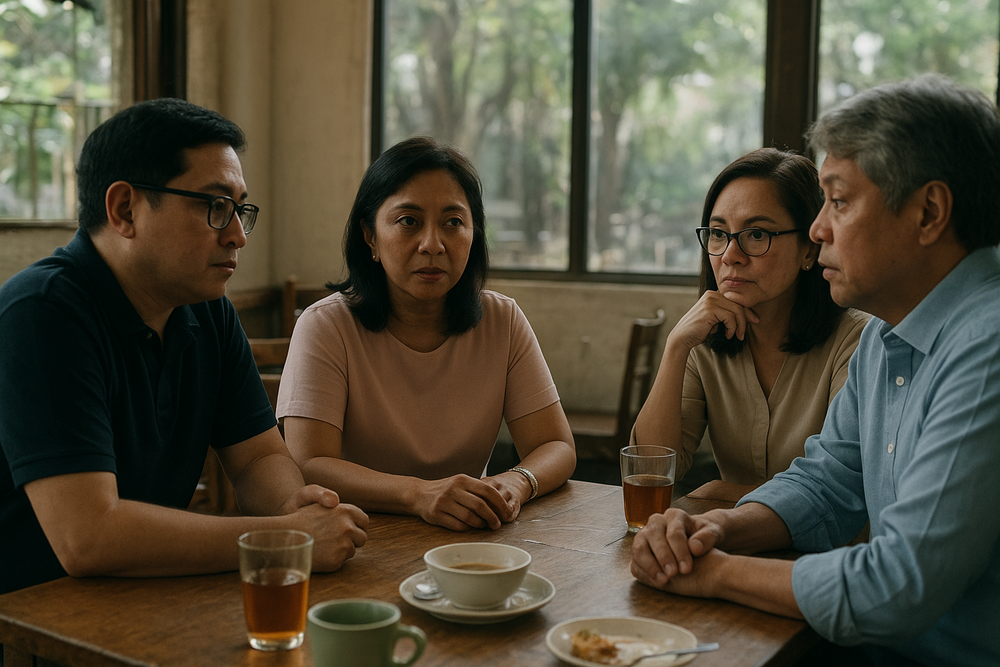
The renewed attention follows a social media post by Robredo on February 5, showing what she described as a “rare lunch” with long-time allies, including Senators Bam Aquino, Risa Hontiveros, Kiko Pangilinan, Leila de Lima, Chel Diokno, and veteran Liberal Party figures Franklin Drilon and Butch Abad.
The image, understated in tone but heavy with symbolism, quickly prompted questions over whether the opposition was beginning to coalesce ahead of the May 2028 polls.
Aquino did little to dampen the speculation, while stopping short of any announcement.
“Siyempre maraming nagnanais na tumakbo siya, but you have to ask her also kung anong plano niya,” he said, stressing that the decision ultimately rests with Robredo herself.
Robredo’s Reluctance and a Loyal Base
Robredo, now serving her second term as mayor of Naga City, has previously said she has no plans to run for president again. She made that clear in October 2024, nearly two years after her defeat in the 2022 race.
Yet political analysts note that her electoral loss did not erase a formidable base. In 2022, Robredo secured an estimated 17 to 18 million votes — roughly a fifth to a quarter of the electorate — powered by what became known as the “pink movement”, a volunteer-driven campaign that mobilised millions without the machinery of traditional alliances.
That base, while insufficient for victory then, remains one of the opposition’s few nationwide structures, giving Robredo a gravitational pull in any conversation about 2028.
Opposition Unity Still Elusive
The lunch meeting highlighted both the strength and the weakness of the opposition: familiar faces bound by shared battles, but no settled plan on who should lead next.
Aquino said the gathering was not about coronating a candidate, but about confronting urgent national issues.
“Mahalaga na merong mga ganyang moves for 2028. Mahalaga na nagsasama-sama ang iba’t ibang mga grupo,” he said, adding that “’yung mga problema ng bayan ngayon napakatindi.”
Leila de Lima echoed that caution, noting that while the 2028 election inevitably came up, discussions focused on broader concerns rather than personalities.
Within opposition ranks, opinions remain divided. Some view Senator Risa Hontiveros — the only senator from the 2022 opposition slate to win re-election — as the natural standard-bearer. Others see Aquino himself as a potential compromise candidate. Former senator Antonio Trillanes IV has publicly argued that confronting the Duterte political machine requires a figure with Hontiveros’s sharp anti-Duterte stance.
The Duterte Shadow Over 2028
Hovering over all calculations is the likelihood of Vice President Sara Duterte entering the race. Surveys conducted in late 2025 placed her at around 30 to 33 per cent support, making her the early frontrunner if she decides to run.
For the opposition, Duterte’s numbers sharpen the pressure to unify — quickly and decisively. Without a single candidate, analysts warn, anti-administration votes could splinter once again.
Political scientist Julio Teehankee has noted that while Robredo retains a solid following, time is not a neutral factor. Organising a national campaign, he argues, requires clarity well before the official filing period opens in late 2027.
No Declarations, Only Signals
For now, there are no formal declarations and no campaign machinery in motion. Under Philippine law, campaigning before the filing of certificates of candidacy remains illegal, and opposition figures appear careful to frame their actions as consultations rather than mobilisation.
Still, in politics, symbols often speak louder than statements. In a climate where inflation, governance concerns, and political accountability dominate public debate, even a shared lunch can function like a flare — brief, bright, and open to interpretation.
Whether Robredo will once again step into the national arena remains uncertain. What is clear is that, six years after her defeat, she continues to shape the opposition’s conversation — not from a podium, but from the centre of its unresolved question: who can unite them, and how soon.