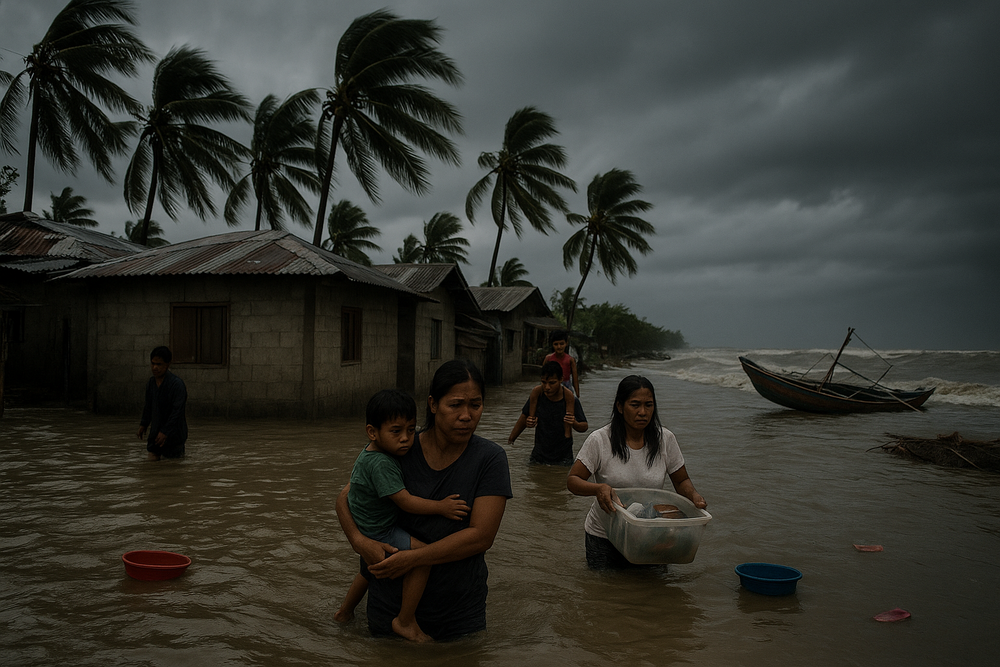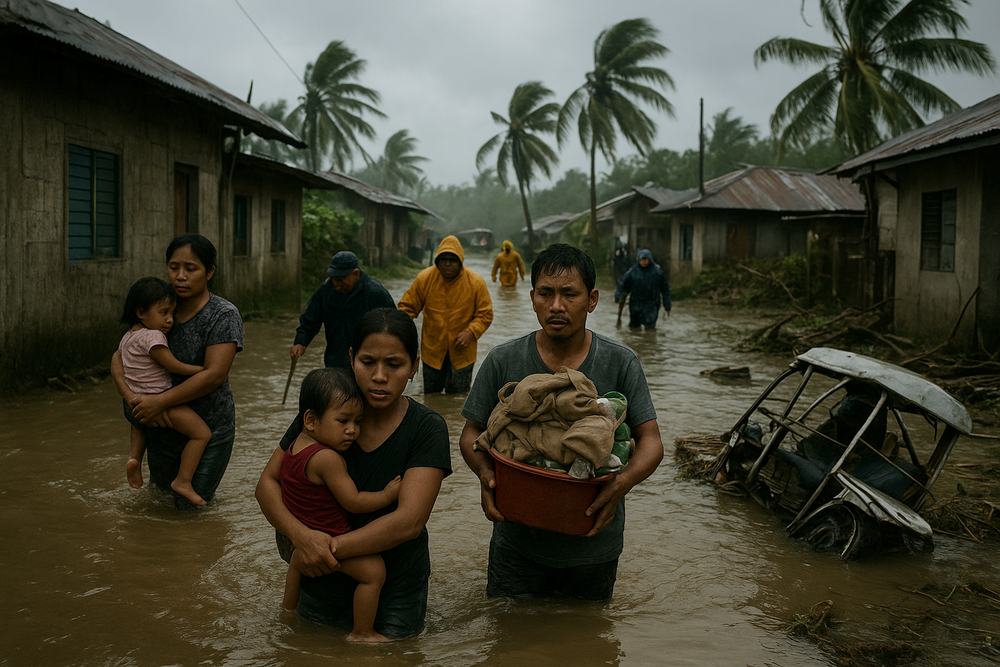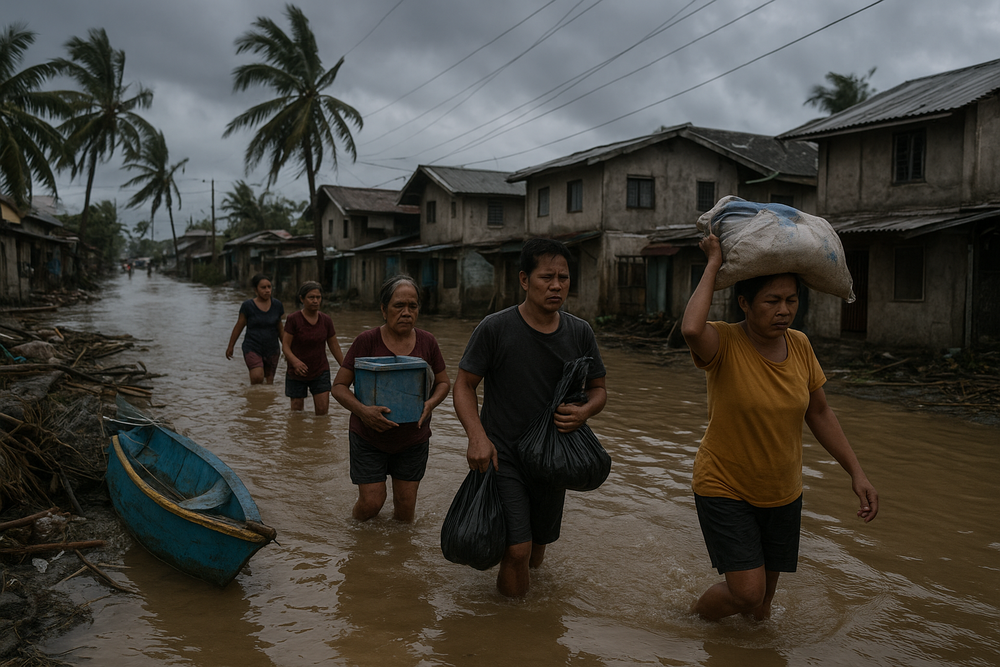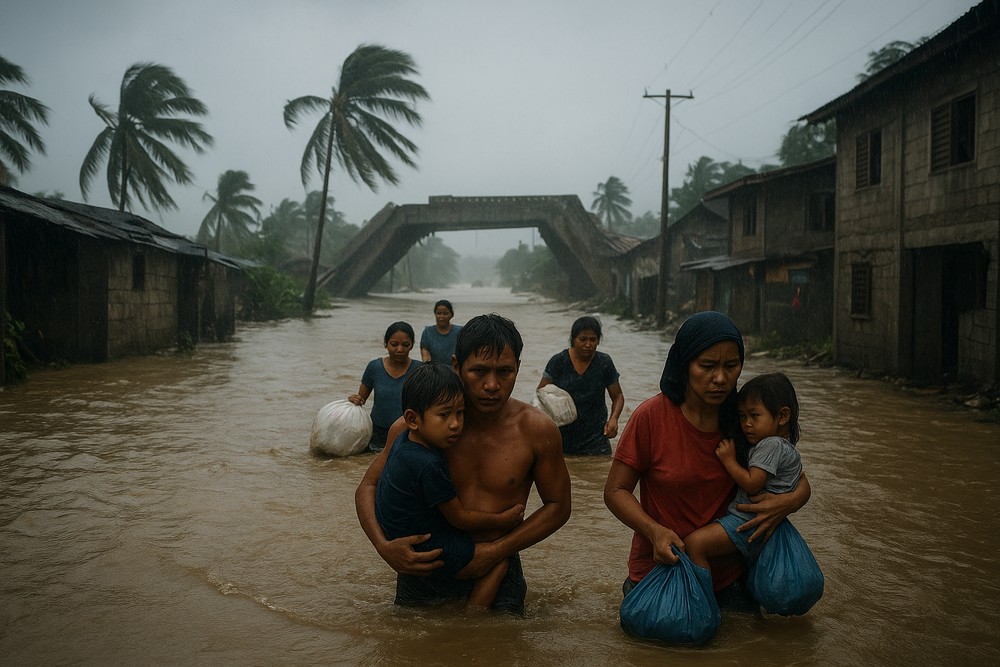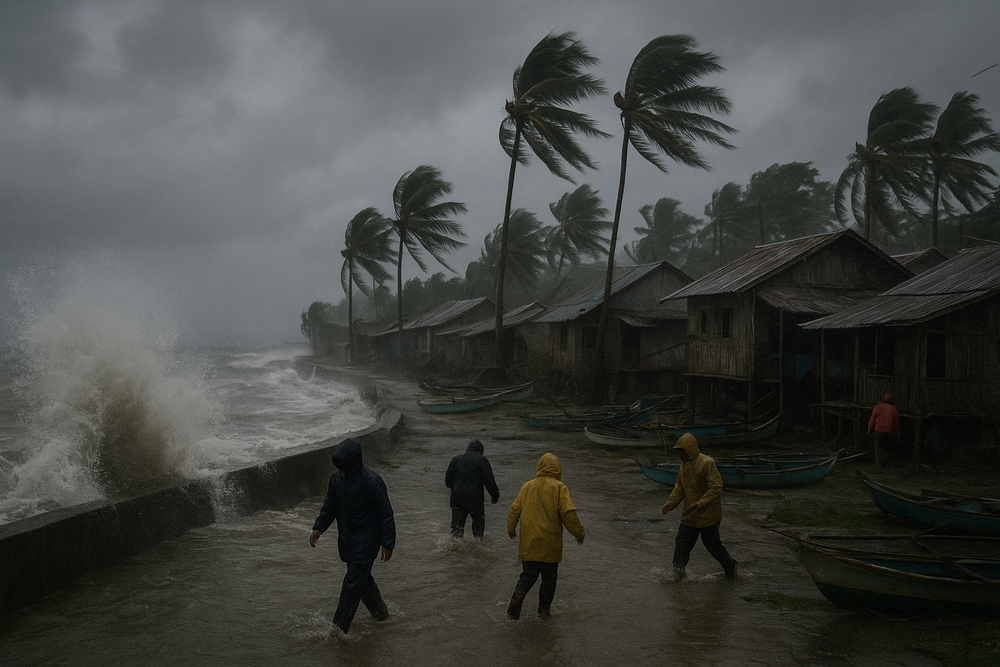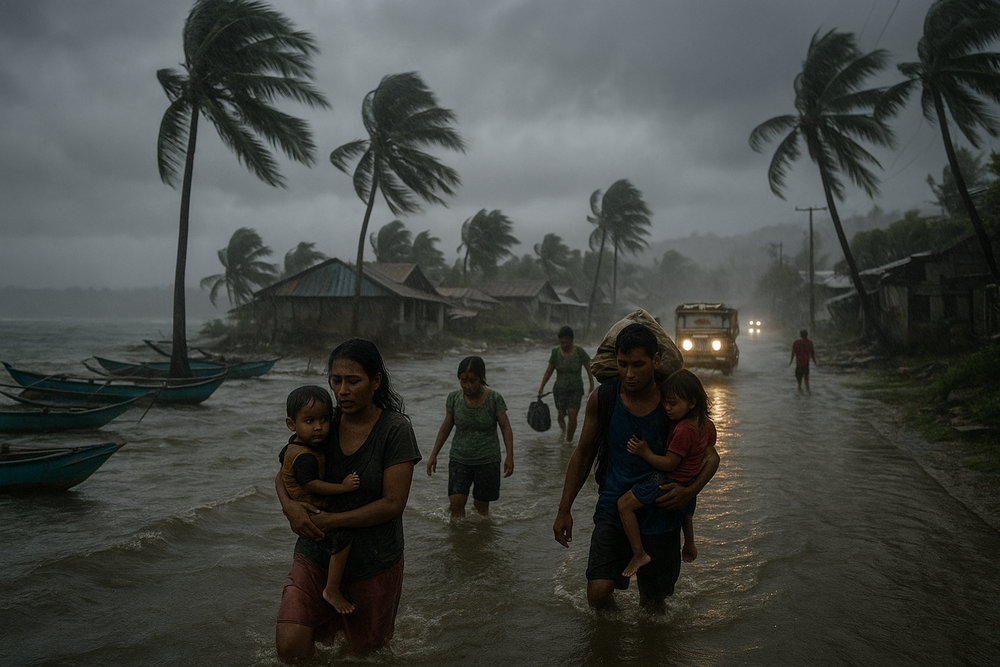
Tropical Storm Basyang unleashed rainfall levels exceeding a 100-year return period in Northern Mindanao on February 6, overwhelming rivers and drainage systems and triggering severe floods that left at least 12 people dead nationwide, according to Philippine authorities. The state weather bureau, PAGASA, described the deluge as a statistically rare event — one with only a one percent chance of occurring in any given year.
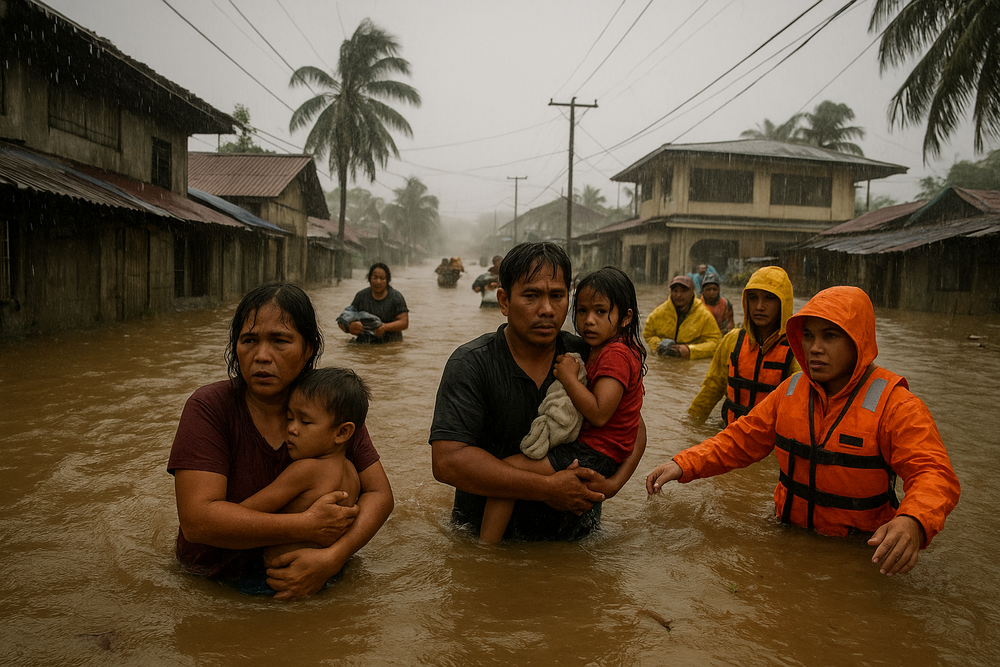
The worst impacts were concentrated in Iligan City and Marawi City, where swollen waterways submerged communities, displaced thousands of families and forced local officials to declare a state of calamity.
Rainfall Beyond Historical Thresholds
Data from PAGASA’s ground stations in and around Iligan City recorded extraordinary 24-hour rainfall totals on February 6:
- Doroteo D. Lloren ARG: 383 mm (Heavy)
- Juan Tabal ARG: 361 mm (Heavy)
- Hindang ARG: 354.5 mm (Heavy)
- Dulag ARG: 253 mm (Heavy)
- Rogongan ARG: 145.5 mm (Moderate)
- Iligan ARG: 144.5 mm (Moderate)
- Agus 6 Hydroelectric Power Plant ARG: 130.5 mm (Moderate)
In Marawi City, the Banggolo Bridge monitoring station logged 280.5 mm of heavy rainfall within the same period.
PAGASA said the rainfall amounts “exceeded the 100-year return period in the Northern Mindanao area. This means that in any given year, there is a one percent chance that this kind of extreme rainfall event—or worse—could occur.”
In practical terms, experts explain, a 100-year event does not happen only once a century. Rather, it reflects probability. As the Global Facility for Disaster Reduction and Recovery notes, such a flood has a one-in-100 chance of occurring in any year — a statistical threshold indicating extreme severity.
A Trail of Landfalls Across the Central Philippines
Basyang, internationally named Penha, carved an erratic path across parts of Mindanao and the Visayas, making five landfalls in less than 24 hours:
- Bayabas, Surigao del Sur — 11:50 p.m., February 5
- Jagna, Bohol — 11 a.m., February 6
- Dauis, Bohol — 4 p.m., February 6
- Alcoy, Cebu — 7:50 p.m., February 6
- Ayungon, Negros Oriental — 9 p.m., February 6
Satellite imagery showed vast rain bands stretching across Mindanao and parts of the Visayas. “Satellite images show that Tropical Storm Basyang produced a significant amount of rainfall over Mindanao and the Visayas. Rainfall warnings and weather and flood advisories were issued over these areas due to the storm,” PAGASA said.
Despite the warnings, the intensity of the rainfall rapidly overwhelmed local waterways, particularly in low-lying urban zones.
Rivers Spill Over, Cities Submerged
In Iligan City, floodwaters overtook riverbanks and inundated residential districts, prompting officials to declare a state of calamity on February 6. At least 3,800 families were displaced as evacuees sought shelter in schools and community centers.
Across Northern Mindanao, the Office of Civil Defense reported nine of the 12 confirmed deaths occurred in the region. Authorities continued validation of damage reports as floodwaters receded.
Entire neighborhoods were cut off at the height of the flooding. Roads became impassable, bridges dangerous to cross, and small businesses shuttered as muddy water seeped into homes and shops. For many residents, the storm disrupted not only shelter but livelihoods — from farming and fishing to market vending and small retail operations.
Strain on Infrastructure and Services
The deluge exposed structural vulnerabilities long familiar to disaster officials: undersized drainage systems, silted rivers and expanding settlements along flood-prone corridors. When more than 350 mm of rain falls within 24 hours, even reinforced infrastructure struggles to cope.
Power generation sites such as the Agus 6 Hydroelectric Power Plant recorded moderate yet significant rainfall totals, underscoring the broader strain on essential services. Agricultural losses and spoiled goods added to economic pressure in affected communities.
The event unfolded under the framework of the Philippine Disaster Risk Reduction and Management Act of 2010 (Republic Act No. 10121), which mandates coordinated response through national and local authorities. Local government units led evacuations and relief distribution as PAGASA maintained weather bulletins and advisories.
Lingering Effects and a Changing Risk Profile
Although Basyang has moved on, PAGASA’s weekly outlook indicated lingering rain effects over Northern Mindanao, compounded in the following days by shear line activity. Saturated ground conditions increased the risk of further flooding and landslides.
The storm’s intensity in Northern Mindanao — and its classification as a 100-year rainfall event — raises broader questions about preparedness in regions historically vulnerable to heavy rainfall. While statistically rare, such events are not impossible, and climate variability may amplify their frequency and impact.
For thousands of families in Iligan and Marawi, the arithmetic of probability offers little comfort. What remains are water-stained homes, disrupted incomes and the daunting task of rebuilding — until, as history suggests, the rains return again.