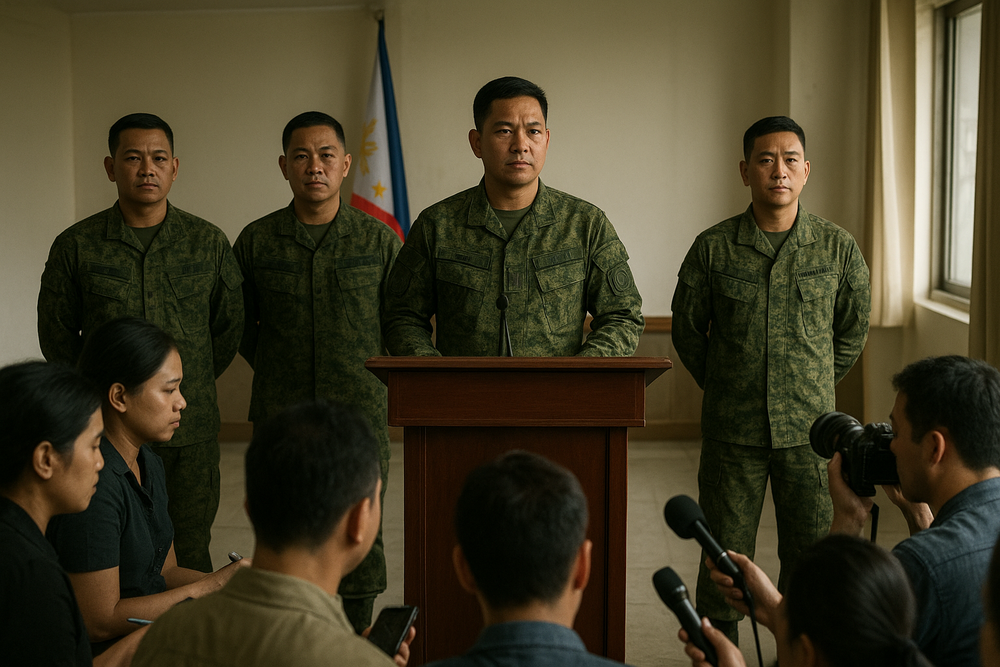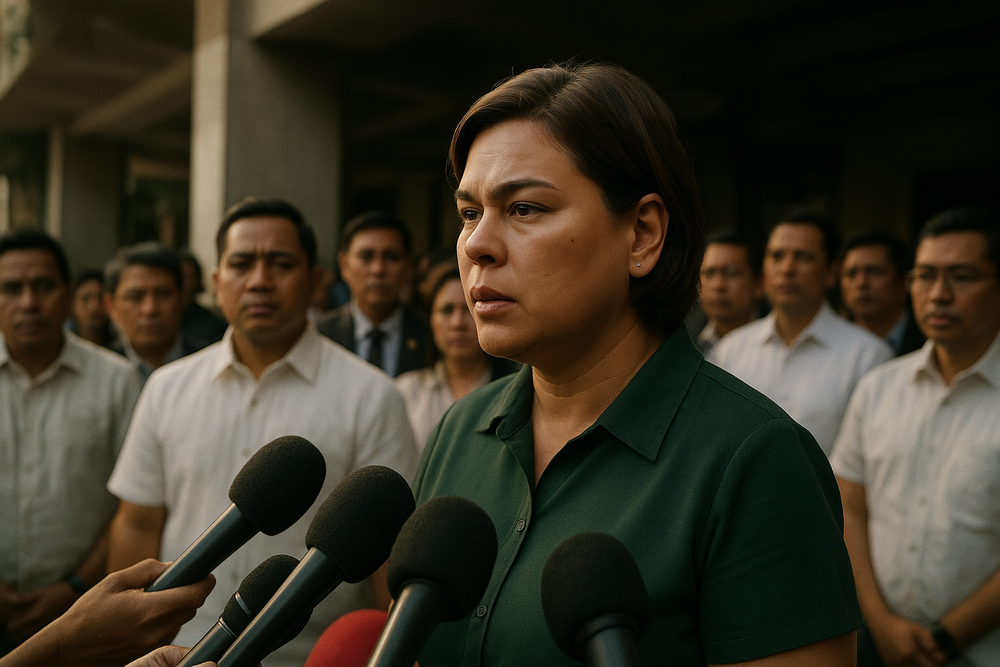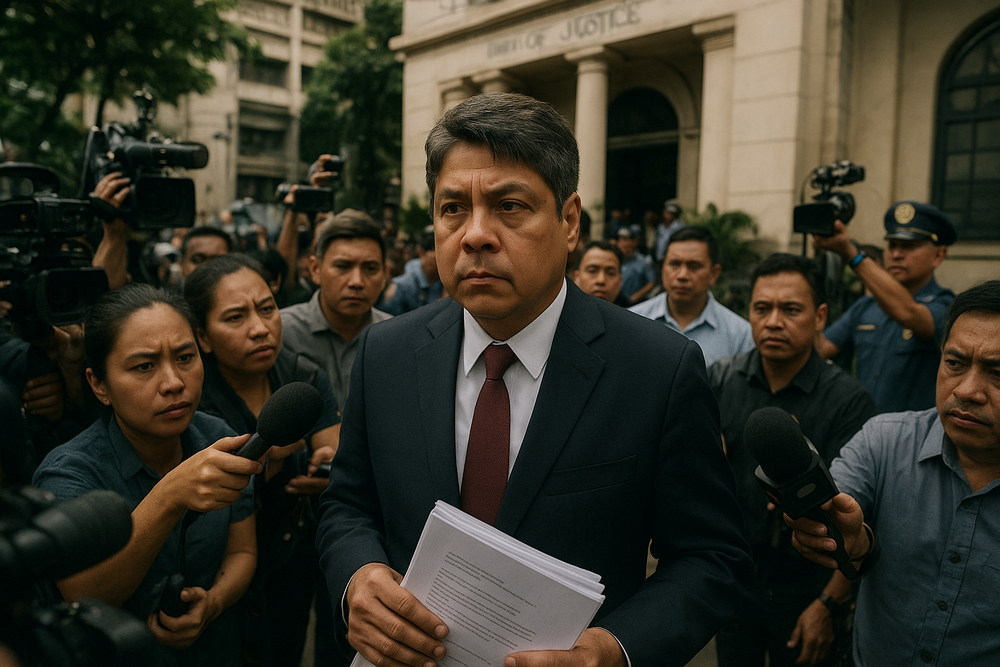
Cavite 4th District Representative Francisco “Kiko” Barzaga personally appeared before the Department of Justice on Wednesday, January 22, 2026, to file counter-affidavits contesting two criminal complaints lodged against him by the Philippine National Police–Criminal Investigation and Detection Group (PNP-CIDG). The cases stem from his public remarks on Mindanao secession and from his participation in an opposition protest held in Makati City late last year.
Barzaga, who is currently serving a 60-day suspension from the House of Representatives for separate ethics violations, argues that both cases strike at the heart of constitutionally protected free speech rather than any criminal act.
Two Complaints, One Core Defense
Speaking after his submission, Barzaga confirmed that the counter-affidavits address two separate DOJ complaints filed by the CIDG.
“I filed counter-affidavits to two separate cases. One is relating to my statements on Mindanao secession and the second is about the Forbes Park October 12 protest,” he said.
The first complaint accuses Barzaga of inciting to sedition over a Facebook video he posted in October 2025, where he discussed—and appeared to support—calls for Mindanao’s secession from the Philippines. The police argue that the remarks could undermine public order by encouraging resistance to the government.
The second complaint arises from an anti-administration rally on October 12, 2025, held near the Buendia Gate of Forbes Park in Makati City. Authorities say the protest lacked the required permit and may have violated provisions of the Revised Penal Code on public disorder, as well as Batas Pambansa Blg. 880, the Public Assembly Act of 1985.
Barzaga summarized the accusations in Taglish, saying they involve “’yung sa Mindanao secession statements ko, and then ‘yung protesting without a permit, and… ‘yung sa public protest regarding sa October 12.”
Emphasis on Free Speech and Lack of Criminal Intent
In his filings, Barzaga grounded his defense on Article III, Section 4 of the 1987 Constitution, which protects freedom of speech, expression, and assembly.
“Which means there’s no reason to believe that there’s criminal intent or anything of the sort,” he said, adding that both the online remarks and the rally constituted political expression rather than unlawful conduct.
He stressed that the October 12 protest was peaceful, with no reported violence or damage to property. “Beyond the legal details, it is an exercise of free speech in both instances,” Barzaga said, noting that the absence of unrest undermines allegations of sedition or public disorder.
Supporters of Barzaga’s position argue that penal provisions on sedition and public alarm, when applied to political speech, can function like a blunt instrument—less a scalpel for public safety and more a net that risks catching dissent itself.
Cases Move Forward Amid House Suspension
The DOJ cases unfold against the backdrop of Barzaga’s ongoing 60-day suspension from Congress, approved in December 2025 after the House of Representatives adopted the recommendation of its Ethics Committee. The committee found him guilty of disorderly behavior linked to social media posts critical of the administration.
The suspension carries no salary or allowances, though Barzaga has downplayed its impact on his routine. When asked how he has been spending his time away from Congress, he replied with characteristic levity: “Mga pusa. I still take care of my cats, my pets. And then recently we had a Christmas break… mostly chill lang ngayon.”
Despite the informal tone, the implications of the disciplinary action are serious. Together with the DOJ cases, the suspension places Barzaga under legal and political pressure from multiple fronts.
Additional Legal Troubles on the Horizon
Beyond the two CIDG complaints, Barzaga is also facing separate cyber libel complaints filed by House Deputy Speaker Ronaldo “Ronnie” Puno and businessman Enrique K. Razon Jr. These cases, however, are not covered by the counter-affidavits filed on Wednesday.
The clustering of cases underscores how rapidly political speech—especially when amplified online—can translate into legal exposure, particularly for high-profile figures.
Limited Immediate Impact, Broader Political Questions
For ordinary Filipinos, the controversy has had little direct effect. The October protest did not lead to reported disruptions in traffic, commerce, or public safety, and the alleged offenses are confined to political expression rather than day-to-day concerns such as prices, jobs, or services.
Still, the case raises broader questions about the boundaries of dissent in a polarized political climate. At its core lies a familiar tension: where the state draws the line between maintaining public order and safeguarding the noisy, uncomfortable freedoms that define a democracy.
The DOJ is expected to continue its preliminary investigation in the coming weeks. For now, Barzaga maintains that the law, when read alongside the Constitution, is on his side.