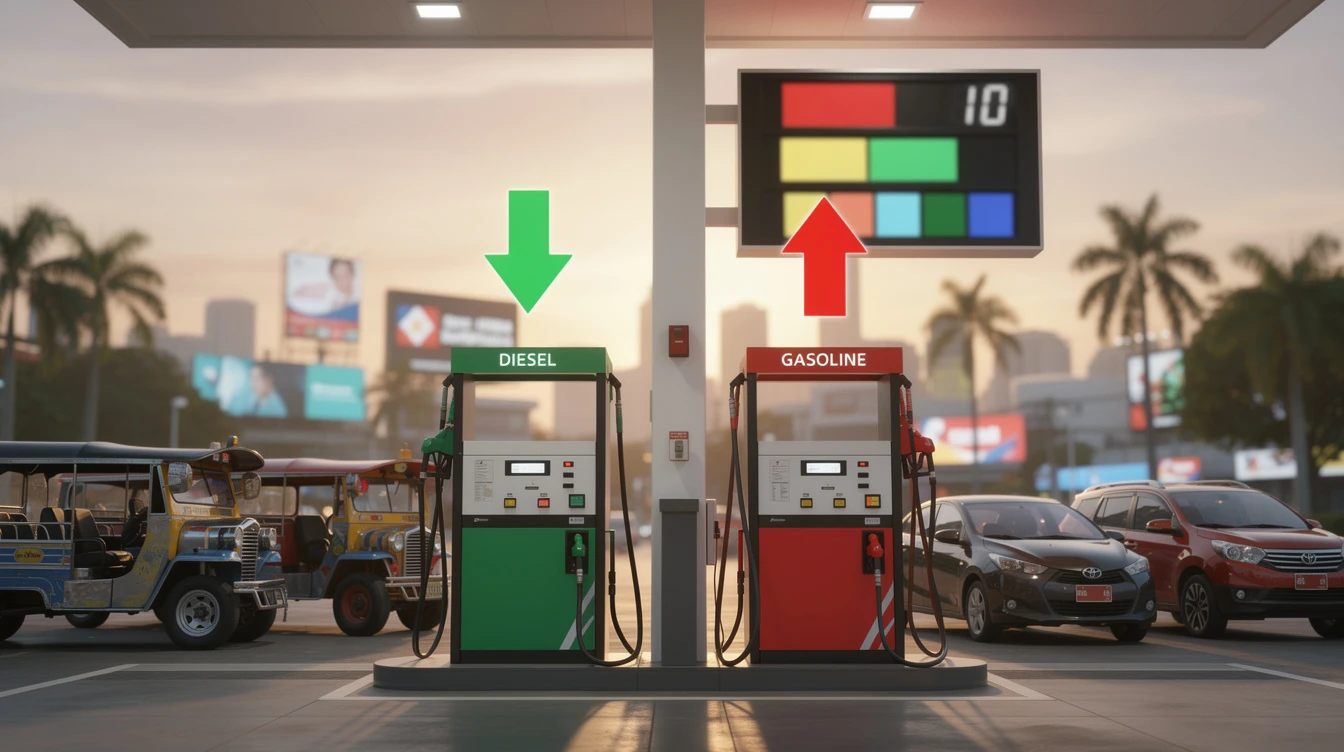
Motorists in the Philippines could see a mixed fuel price adjustment next week, with diesel expected to roll back by as much as P11 per liter while gasoline prices may increase by up to P1.20 per liter, according to industry estimates released over the weekend.
In a "24 Oras Weekend" report on Saturday, oil industry sources projected a decrease of up to P11 per liter for diesel. This would mark a third consecutive weekly rollback for diesel, offering significant relief to transport groups and consumers.
Diesel
Jetti Petroleum, in its own advisory, estimated diesel will increase by 40 to 60 centavos per liter — though this may be an error in direction — while gasoline may rise by P1 to P1.20 per liter. Unioil echoed mixed movement for fuel prices.
An industry source, as cited by Turismo Central Luzon, indicated a possible rollback of 8 to 10 pesos per liter for diesel, with gasoline possibly rising slightly. The exact adjustments will be announced by oil firms on Monday and take effect on Tuesday.
The Philippine Tribune reported that diesel is likely to see a third consecutive rollback, while gasoline may remain steady or inch up. This mixed trend reflects divergent global market forces affecting crude oil and refined product prices.
Rollback
Diesel prices have been on a downward trend due to weakening demand in key economies and ample supply from non-OPEC producers. Gasoline, however, is being pushed higher by seasonal demand in the United States and Europe ahead of summer driving months.
For Filipino consumers, the potential P11 diesel rollback is a welcome development. It directly lowers costs for public transport operators, trucking firms, and agricultural haulers, which could help stabilize food and commodity prices.
According to the Department of Energy, current diesel prices in Metro Manila range from P53 to P55 per liter for unblended products. A rollback of up to P11 would bring prices closer to the P42 to P44 per liter range, levels last seen in early 2023.
Gasoline prices, meanwhile, have been more volatile. A P1.20 per liter increase would push premium gasoline above P60 per liter in some stations, adding to costs for private vehicle owners and delivery services.
The mixed forecast underscores the complexity of global oil markets. Brent crude futures have been trading near $85 per barrel, while diesel cracks — the premium for diesel over crude — have narrowed significantly in recent weeks.
For more detailed analysis, see ourBusiness section for updates on fuel price trends and their impact on the Philippine economy.
The Department of Energy is monitoring the situation and has assured the public that supply remains adequate. The agency has urged oil companies to reflect global price movements accurately in local pump prices.
Transport groups have welcomed the potential rollback, with the Pinagkaisang Samahan ng mga Tsuper at Operators Nationwide (PISTON) calling for even larger reductions. They argue that diesel prices still remain high compared to pre-pandemic levels.
On the other hand, gasoline users face higher costs. Commuters who rely on gas-powered vehicles or tricycles may feel the pinch, especially in areas where public transport options are limited.
The mixed price movement also affects inflation. A sustained diesel rollback could ease transport costs, which account for a significant portion of the consumer price index. Higher gasoline prices, however, may offset some of these gains.
For more on how fuel prices affect the broader economy, visit ourPolitics section for policy updates and regulatory developments.
Industry analysts point to several factors driving the divergence. The diesel market is being pressured by weak industrial demand in China and Europe, while gasoline is benefiting from strong U.S. gasoline demand ahead of the summer travel season.
Geopolitical tensions in the Middle East have added uncertainty, but so far have not disrupted supply significantly. The potential easing of sanctions on Venezuela could also increase heavy crude supply, which benefits diesel production.
For Filipino overseas workers and businesses, the mixed fuel price outlook means careful budgeting. Remittances may not stretch as far if gasoline costs rise, but lower diesel prices could reduce overall logistics expenses.
The energy department has reminded consumers to practice fuel efficiency and consider using public transport to mitigate the impact of price hikes. The government is also exploring long-term solutions to reduce dependence on imported oil.
For technological innovations in the energy sector, check ourTechnology section for updates on renewable energy and electric vehicles.
Oil companies will announce the final price adjustments on Monday morning. The new prices will take effect at 6 a.m. on Tuesday, affecting thousands of gas stations nationwide.
Liter
This mixed forecast highlights the importance of staying informed. Filipino consumers should monitor price announcements and adjust their fuel purchases accordingly to maximize savings.
For Filipino readers, the significance of this mixed fuel price movement cannot be overstated. With diesel being the lifeblood of the Philippine transport and logistics sector, a major rollback like P11 per liter can directly reduce the cost of goods, from vegetables in wet markets to construction materials in hardware stores. It also provides much-needed relief to jeepney and bus operators who have been grappling with high operating costs. Conversely, a gasoline price hike of up to P1.20 per liter may strain household budgets, especially for families with private vehicles. As the Philippines remains a net importer of oil, global trends will continue to shape local pump prices, making energy independence and alternative fuel adoption key national priorities. Stay updated with the latest developments through ourLocal news section.