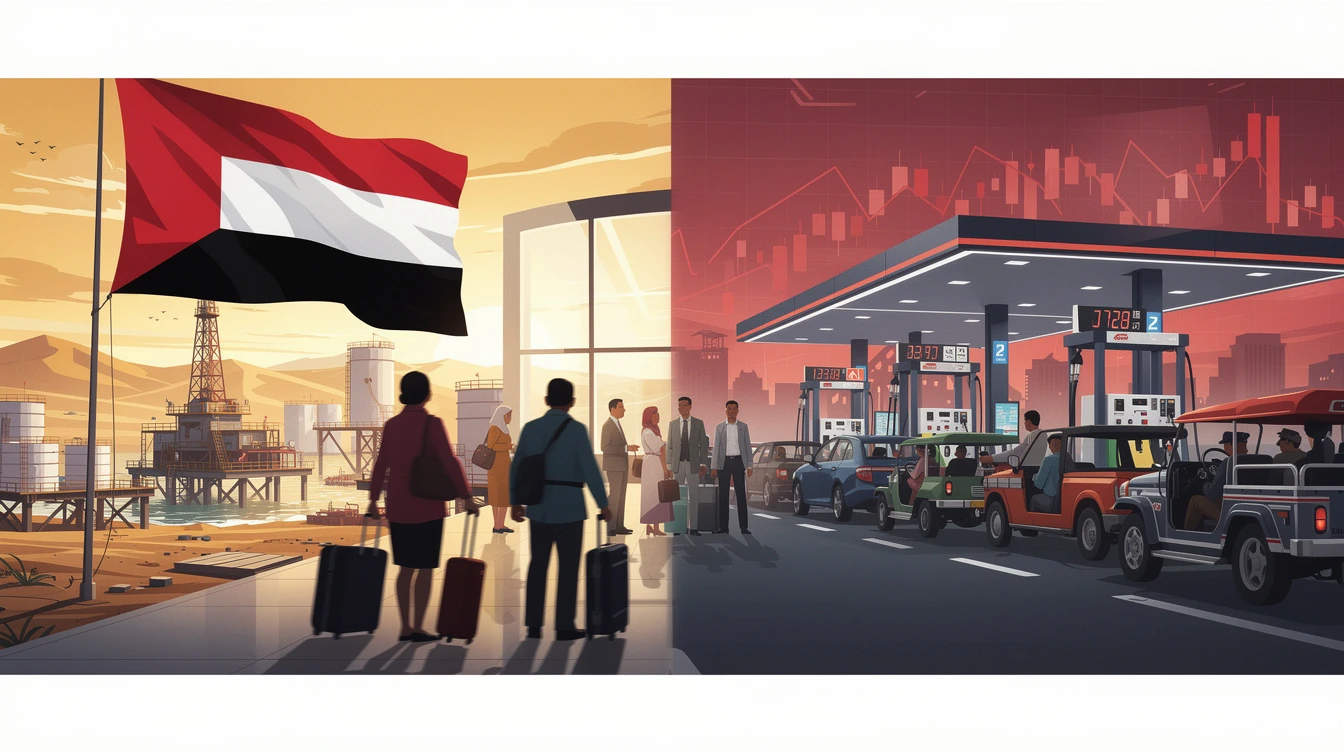
The United Arab Emirates (UAE) is reportedly debating a potential exit from OPEC, the powerful oil alliance that controls nearly 38% of the world's crude production. This news sent shockwaves through global energy markets and raised urgent questions for the Philippines.
As a nation heavily dependent on imported oil, the Philippines spends billions of pesos yearly on crude. Any major shift in OPEC dynamics directly impacts the price of gasoline, diesel, and LPG that Filipino families and businesses rely on daily.
Two senior officials told CNBC that the UAE has no immediate plans to leave. But the very fact that such a discussion is happening signals deepening fractures within the cartel. The UAE is OPEC's third-largest producer and a critical voice in setting production quotas.
What Sparked the UAE-OPEC Tension?
The rift between the UAE and Saudi Arabia, OPEC's de facto leader, has been brewing for years. The immediate trigger was a production quota dispute in July 2021, when the UAE blocked a deal to extend output cuts.
According to a Bloomberg report, the UAE demanded an adjustment to its baseline—the reference point used to calculate production cuts. This would have allowed the UAE to pump up to 700,000 additional barrels per day.
Underneath this technical fight is a deeper strategic divergence. The UAE has invested billions in boosting its production capacity to 5 million barrels per day. But OPEC+ quotas have kept much of that capacity idle.
Energy Minister Suhail al-Mazrouei publicly voiced frustration with Saudi-led production restraints, calling them "unfair" in a CNBC interview. The war in Yemen, where both nations are involved but have differing priorities, has further strained ties.
Could the UAE Really Leave OPEC?
The immediate answer is: probably not yet. CNBC sources said there is no current plan for departure. But the situation remains fluid, especially after Qatar and Ecuador left OPEC in recent years citing similar frustrations.
An actual UAE exit would remove a key moderate voice within the cartel. It would also reduce OPEC's overall market influence and signal that internal unity is crumbling.
For the Philippines, the key question is how oil prices would react. Historically, any speculation about OPEC losing a major member triggers volatility in crude markets.
How Philippine Gas Prices Could React
The Philippines imports roughly 100% of its crude oil requirements. Global oil price movements translate directly to local pump prices within two to three weeks.
If the UAE exits OPEC and boosts its output, increased global supply could push oil prices down. A Brent crude drop of $5 per barrel could translate to a reduction of around PHP 2-3 per liter of gasoline in Metro Manila.
But the picture is complicated. The UAE and Saudi Arabia combined hold most of the world's spare production capacity. Any disruption to their cooperation could paradoxically raise uncertainty premiums, keeping prices elevated.
A Philippine energy economist, speaking on condition of anonymity, told PinoyPulse: "The UAE's potential departure creates a dual-edged sword. Lower supply coordination could mean cheaper oil, but only if new production actually enters the market."
OFWs in the UAE: A Direct Stake
Beyond gas prices, there is a human dimension. Over 600,000 overseas Filipino workers (OFWs) live and work in the UAE, many in oil-related industries like construction, logistics, and services.
Any economic disruption in the UAE—whether from lower oil revenues or geopolitical tensions—could affect OFW employment and remittances. The Philippines received over $3 billion in remittances from the UAE in 2022 alone, a significant source of foreign exchange.
Stability in the Gulf remains critical for the livelihood of millions of Filipino families. A UAE-OPEC split could trigger a broader realignment of energy alliances, potentially reshaping the job market for expatriates.
Global Energy Market Fallout
The OPEC+ alliance, which includes Russia and other non-OPEC producers, has been the main force managing global oil supply. A UAE exit would remove a key producer and could encourage others to demand higher quotas.
Analysts at Oilprice.com noted that the uncertainty alone weakens OPEC's price-setting power. "The UAE has been one of the few members with actual spare capacity. Losing them would diminish the group's ability to control markets," the report stated.
For oil-importing nations like the Philippines, weaker OPEC cohesion could be a net positive—if it leads to more competitive pricing. But the transition period is likely to be volatile.
Historical Precedents: Qatar and Ecuador
The UAE is not the first to consider quitting OPEC.Qatar left in 2019 after a diplomatic rift with Saudi Arabia, and Ecuador exited in 2020, citing financial and political reasons. Neither departure caused lasting market disruption.
However, the UAE is far more significant. It produces roughly 3 million barrels per day, versus Qatar's 600,000 and Ecuador's 500,000. Its exit would have a much larger market impact.
For the Philippines, the lesson is clear: the era of a unified, predictable OPEC is ending. The country must diversify its energy sources and strengthen strategic petroleum reserves to weather future shocks.
What Should Filipino Consumers Expect?
In the short term, expect continued oil price volatility. Global benchmarks like Brent crude could swing $5-10 per barrel on any news about the UAE's OPEC status.
For Filipino motorists, this means pump prices could rise or fall by up to PHP 4 per liter in the coming weeks. The Department of Energy advises consumers to monitor weekly price advisories and plan fuel purchases accordingly.
Businesses reliant on diesel generators or transport, like logistics firms and factories, should hedge exposure by locking in fuel contracts where possible.
Longer-Term Implications for PH Energy Policy
The Philippines is already pushing for more domestic energy production, including Malampaya gas and renewable sources. A less stable OPEC could accelerate this transition.
Senator Sherwin Gatchalian, chair of the Senate energy committee, has called for "greater energy independence" through investments in solar, wind, and geothermal. The UAE situation underscores the urgency of that goal.
For OFWs and their families, the best strategy is diversification. The Philippine government should engage actively with Gulf states to ensure OFW rights and job stability regardless of OPEC membership changes.
Conclusion: A Changing Global Order
The UAE's internal debate over leaving OPEC is more than a diplomatic squabble. It reflects a fundamental shift where national interests are overtaking cartel discipline.
For the Philippines, this carries both risks and opportunities. Cheaper oil could ease inflationary pressures, but volatility could also disrupt budgets. The smart play: prepare for multiple scenarios.
As global energy alliances realign, Filipino consumers and policymakers must stay informed, adaptable, and ready for change. The only certainty is that the era of predictable oil prices is over.