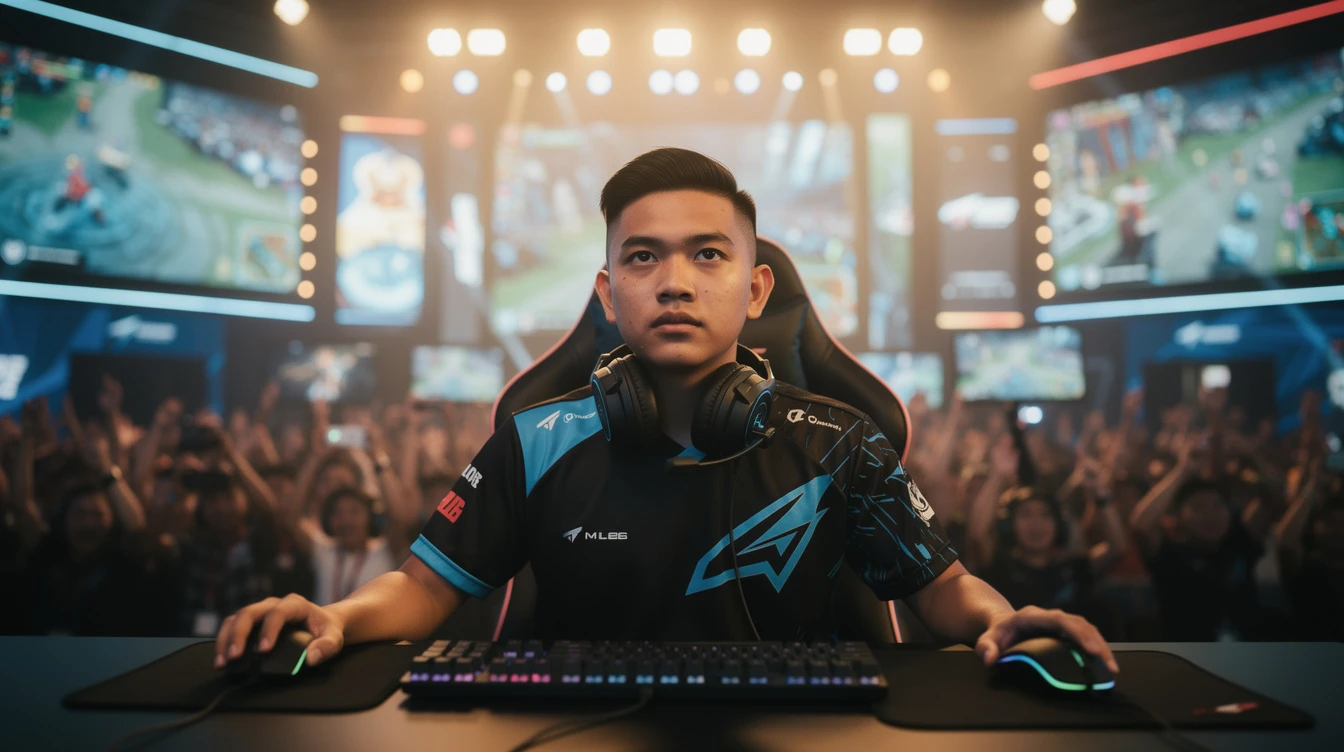
Dave "Teddy" Viaña, a 20-year-old Filipino esports athlete, has found a second home in Mobile Legends: Bang Bang , but he is more than just settling in. Teddy's journey from uncertainty to professional gaming highlights the growing importance of Philippine esports on the global stage.
Somewhere in the middle of uncertainty, Teddy discovered MLBB, which turned into his second home when opportunities seemed scarce. According to a report from GMA News, the game has not only provided stability but has sharpened his hunger for competitive success.
Filipino
For Filipino gamers, Teddy's story is a beacon of hope. The Philippines has become a powerhouse in MLBB, producing world champions like Blacklist International and ECHO. Teddy's rise reflects how esports can offer a viable career path amid limited traditional job opportunities.
However, the road ahead is not without obstacles. Recently, discussions on social media have highlighted the potential ban of MLBB in the USA, with players on Facebook groups like "Mobile Legends: Bang Bang — NA" exploring workarounds. A post on the group noted, "Come back soon homies !!" discussing the game's ban and possible solutions.
For Filipino professionals like Teddy, any disruption in the US market could affect the global scene. The Philippines, being a major hub for MLBB esports, relies on international tournaments for exposure and prize money. A US ban could limit growth, but Teddy's determination remains unshaken.
Teddy
Teddy's personal journey is also one of resilience. In a related Instagram post from GMA News, a different story about Tobby, another Filipino, showed that finding refuge in esports is a common theme. Tobby, who found himself in a shelter through no fault of his own, was ready for his next chapter, much like Teddy.
These narratives underscore how mobile gaming can serve as an escape and a platform for success. The Philippine esports community is tight-knit, with players supporting each other through challenges. Teddy's story resonates with many young Filipinos who see gaming as more than just a hobby.
The global esports industry has grown exponentially, with the Philippines ranking as one of the top countries in MLBB viewership and participation. According to data from Esports Charts, Philippine tournaments attract millions of live viewers, and Filipino teams have won multiple world championships.
Teddy's hunger for success is evident. At only 20, he has already made a name for himself, but he aims for more. "It has only sharpened his hunger," per the GMA report, indicating that he is not content with just being in the scene; he wants to dominate.
This ambition is critical for Philippine esports. The country needs role models like Teddy to inspire the next generation. With the rise of local leagues like MPL Philippines, opportunities for Filipinos are expanding, but international stability is key.
The US ban on MLBB, if it proceeds, could create a ripple effect. However, the Philippine market remains strong, with local tournaments continuing to thrive. Developers like Moonton have shown commitment to the region, ensuring that Filipino players remain a priority.
For more insights on the local esports landscape, see our coverage on Philippine Sports. The growth of competitive gaming in the country is a testament to the talent and passion of Filipino youth.
Teddy's story is also a reminder that esports is not just about playing games; it is about building a support system. The term "second home" is literal for many players who find community and purpose in MLBB. This is especially true in the Philippines, where gaming often brings families and friends together.
The technology behind mobile gaming has made it accessible to millions. With smartphones being ubiquitous, MLBB has become a unifying force. Teddy's success shows that a stable internet connection and a dream can lead to professional play.
However, challenges remain. Issues like toxic gaming environments, financial instability for semi-pro players, and the need for better infrastructure are still hurdles. The Philippine government has started recognizing esports as a legitimate sport, but more support is needed.
To understand how the technology sector is shaping this industry, read our article on Philippine Technology. The intersection of gaming, internet connectivity, and mobile devices is crucial for sustained growth.
Finds
Teddy's journey is far from over. As he continues to compete, he represents the resilience of the Filipino spirit. The MLBB community, both locally and abroad, watches as he aims for greater heights.
For Filipino readers, Teddy's story is significant because it embodies the potential of esports as a career path. With the right support and determination, many more can find their second home in games like MLBB. The key is to keep pushing boundaries, just as Teddy does.