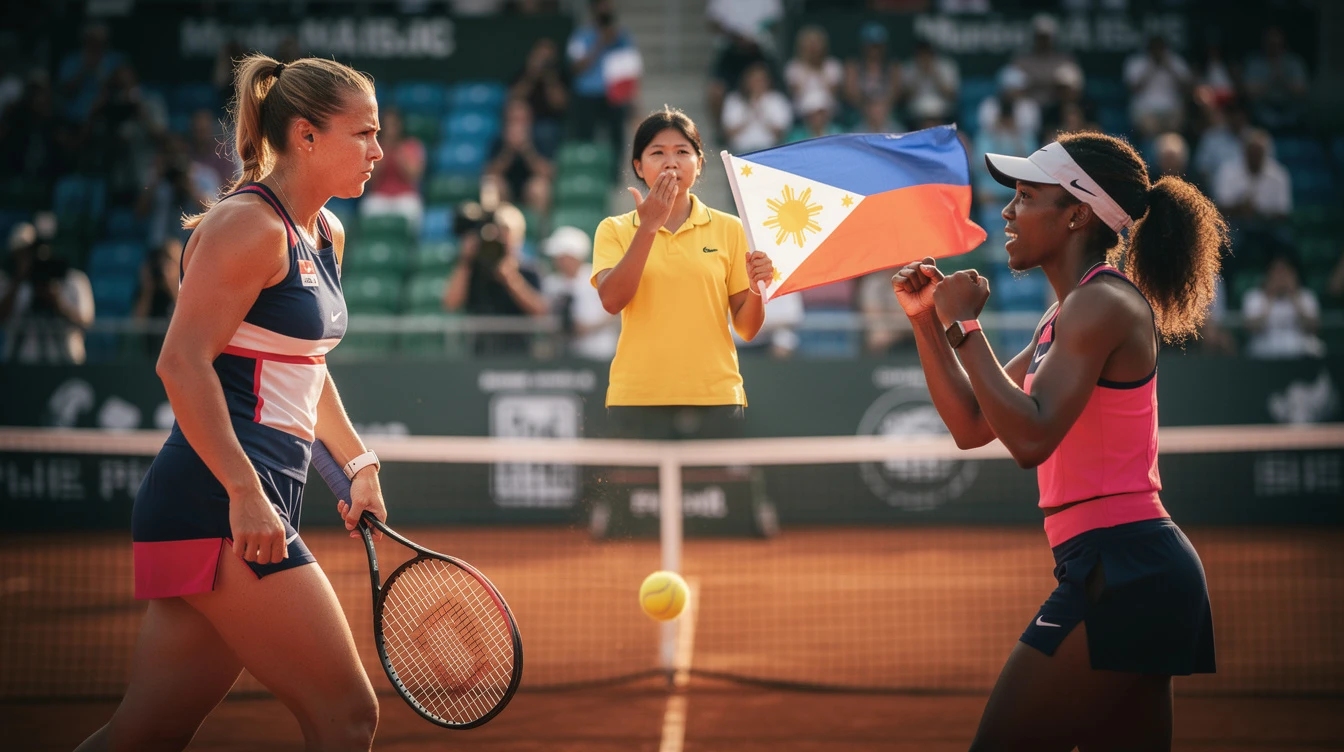
Aryna Sabalenka, the world No. 1 and defending champion, was stunned by unseeded American Hailey Baptiste in the quarterfinals of the Mutua Madrid Open on Tuesday, losing 6-3, 6-3 in a match that lasted just 75 minutes. Baptiste, ranked No. 124, produced the biggest win of her career, breaking Sabalenka's serve four times and never facing a break point herself. The result sends shockwaves through the tennis world and offers a gripping narrative for Filipino tennis fans who follow international tournaments closely.
For Philippine sports enthusiasts, Sabalenka's upset underscores the unpredictability of elite tennis and the importance of mental resilience—a lesson that resonates with local players like Alex Eala, who is making waves on the WTA tour. Eala, the 19-year-old Filipino sensation, has cited Sabalenka's power game as an inspiration. This upset shows that even the mightiest can fall, a reminder that any player can triumph on a given day, as discussed in Philippine Sports coverage.
Sabalenka
Baptiste, 24, had never beaten a top-10 player before Tuesday. She entered the quarterfinal after a routine win over Cristina Bucsa, but few predicted she would dismantle Sabalenka's game so comprehensively. The American's aggressive baseline play and precise serving neutralized Sabalenka's trademark power, forcing the Belarusian into 28 unforced errors. Baptiste's victory marks the first time an American qualifier has reached the Madrid Open semifinals since 2020.
Sabalenka, who had survived a three-set marathon against Naomi Osaka in the previous round, appeared fatigued from the start. She lost her serve in the opening game and struggled to find rhythm on the clay court. Trailing 3-0 in the first set, Sabalenka fought back to 3-2, but Baptiste held firm, breaking again to seal the set. The second set followed a similar pattern, with Baptiste breaking in the fourth game and closing out the match on her first match point.
The quarterfinal loss ends Sabalenka's bid for a third consecutive Madrid title. She had been the overwhelming favorite after winning the tournament in 2024 and 2025. Her early exit reshuffles the draw, opening the path for Iga Swiatek or Coco Gauff to claim the title. For Filipino bettors and fantasy tennis players, this result is a harsh reminder of the volatility in women's tennis, as highlighted in Sports News updates.
Stunned
Baptiste's win is a testament to her recent form. After struggling with injuries in 2024, she has climbed back into the top 200 this year. Her Madrid run includes wins over Elise Mertens and Veronika Kudermetova. In her on-court interview, Baptiste said, "I just believed in my game today. I knew I had to be aggressive and take my chances against a champion like Aryna." Her composure under pressure impressed analysts, who noted that Sabalenka's powerful groundstrokes were neutralized by Baptiste's court coverage.
For the Philippines, Sabalenka's defeat is more than just a tennis story. It mirrors the challenges faced by Filipino athletes in international competitions—where grit and strategy often trump raw talent.Alex Eala, who reached the quarterfinals of the WTA 250 in Bogota last month, will study this match closely. Eala's own game relies on precision and adaptability, traits Baptiste displayed in abundance. Local tennis academies in Manila and Cebu can use this upset as a teaching moment for young players to never underestimate any opponent.
The Madrid Open, a premier clay-court event, is a key tune-up for the French Open starting in May. Sabalenka's early exit means she will lose valuable ranking points, potentially ceding the No. 1 spot to Swiatek next week. Baptiste, meanwhile, will face Ons Jabeur in the semifinals, a matchup that pits Baptiste's newfound confidence against Jabeur's crafty shot-making.
Baptiste's victory also highlights the depth of American women's tennis. With Jessica Pegula and Danielle Collins also in contention, the United States has multiple players capable of winning the title. For the Philippines, where tennis popularity is growing thanks to Eala's success, this upset serves as a narrative of underdog triumph—a story that resonates deeply in a country that values resilience and determination. Philippine tennis officials are likely to reference Baptiste's rise in their grassroots programs, emphasizing that hard work and belief can overcome any ranking gap.
In the broader context, Sabalenka's loss is a reminder of the physical toll of the clay-court season. The Belarusian had played 10 hours of tennis in Madrid before Tuesday, including a three-hour battle with Osaka. Her serve, usually a weapon, was broken five times by Baptiste. Schedules and fatigue management will now be a hot topic for top players, a lesson relevant to Filipino athletes balancing international travel and training.
Baptiste
For Filipino fans following the Madrid Open via livestreams and sports TV, Sabalenka's disaster is a must-discuss moment. It shows that even world No. 1s are human—and that every match in elite tennis is a fight.Philippine Sports enthusiasts who bet on Sabalenka are now counting losses, while those who believed in the underdog are celebrating. This unpredictability is what makes tennis compelling for Filipinos, who follow the global tour with passion.
In summary, the Sabalenka-Baptiste quarterfinal will be remembered as one of the biggest upsets of the 2026 season. For the Philippines, it reinforces the value of perseverance and tactical intelligence in sports. As Alex Eala continues her own journey on the WTA tour, she and other Filipino athletes can draw inspiration from Baptiste's fearless performance. The Madrid Open continues, but Sabalenka's reign is over—a powerful lesson in humility for champions everywhere.