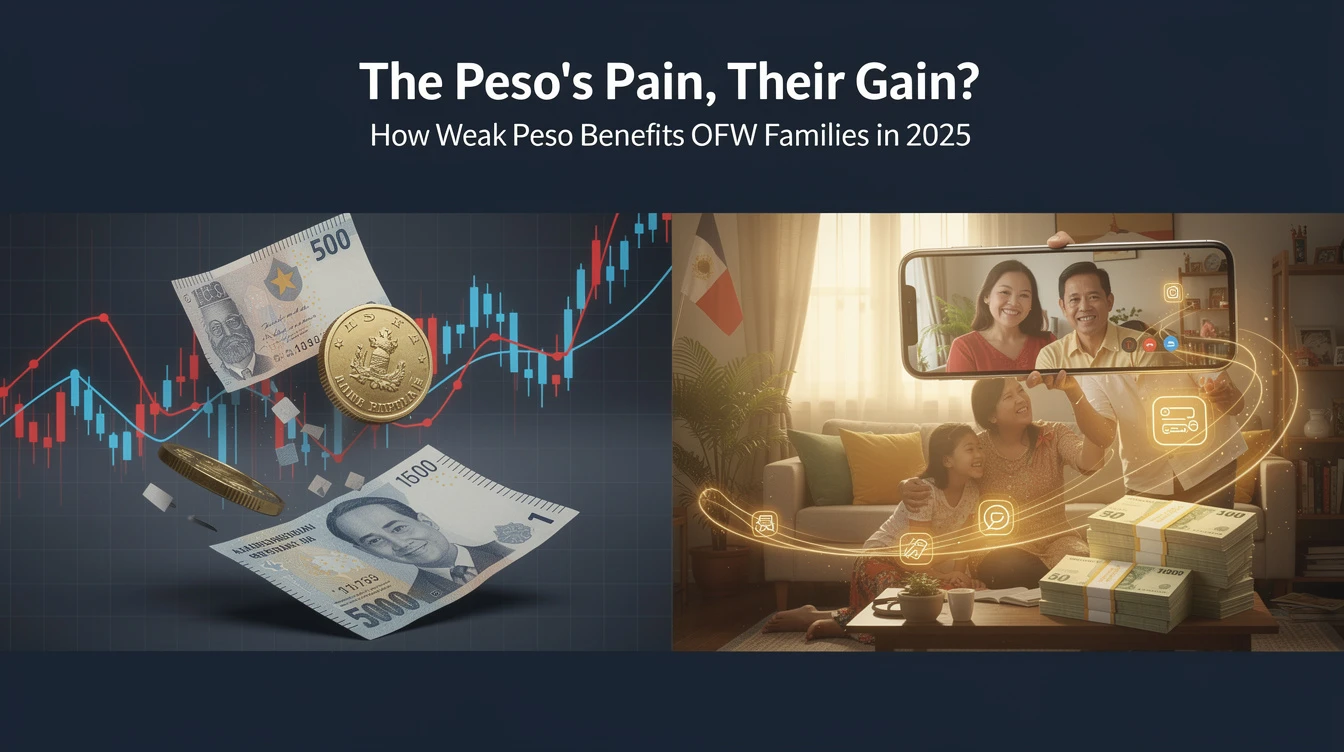
In 2025, the Philippine peso remains at historic lows against the US dollar. From a peak monthly average of ₱58.695 per dollar in November 2024 to ₱56.345 in July 2025, the peso has weakened significantly. For Overseas Filipino Workers (OFWs) who send money home, this sounds like good news. More pesos per dollar means more money for their families.
But is it that simple? The data suggests a more complicated picture. While remittance values rise in peso terms, the cost of living in the Philippines has also soared. The question is: do OFW families really come out ahead?
The Numbers Behind the Peso Slide
The Philippine peso has been under pressure for over a year. A "perfect storm" of global factors—sharp US Federal Reserve rate hikes, a strong US dollar, and local trade deficits—has driven the exchange rate steadily higher. Source data from Gulf News shows the peso dropped 3.5% against the dollar from May to June 2024 alone. By July 2025, the rate settles around ₱56 per greenback, still significantly weaker than the ₱53 average seen in early 2023.
For an OFW sending home $1,000 monthly, the difference is stark. At ₱56, that’s ₱56,000. At the old ₱53 rate, it would be only ₱53,000—a gain of ₱3,000 per month, or ₱36,000 a year. That’s real money for a Filipino family. But the story doesn’t end there.
What OFWs and Families Actually Say
According to an ABS-CBN report, a family of an OFW in the UAE saw their remittance increase by ₱1,800 after the peso weakened. But they quickly added: "P1,800 can only go so far in local Philippine markets now." The problem is that the peso’s weakness also drives up the price of imported goods — from rice to fuel to medicines. Families are caught in a double squeeze: more pesos come in, but those pesos buy less.
A Rappler investigation echoed this. One OFW wife from Batangas told reporters: "Our peso goes up on paper, but it’s gone in a snap at the grocery." Inflation in the Philippines averaged around 4.5% in the first half of 2025, with food inflation even higher. The remittance gain is quickly eroded by rising everyday costs.
The Macro View: Who Really Wins?
President Ferdinand Marcos Jr. himself acknowledged the paradox. In a 2024 statement shared by BitPinas, he said that a weak peso is good because OFWs send more money home. But he admitted that "no one actually wins" in a prolonged peso slump. The country remains a high importer of goods, meaning the benefits for OFW families are often offset by the wider economic drag.
Economists from the Bangko Sentral ng Pilipinas (BSP) explain that while remittances provide a crucial lifeline, the weakening peso reflects deeper problems: a widening trade deficit, low foreign investment, and reliance on volatile global capital flows. If the peso continues to slide, inflation could accelerate, wiping out the nominal gains for OFW households.
Chart Idea: A line graph showing the monthly peso-dollar exchange rate from Jan 2024 to July 2025, overlaid with the average cost of a basic food basket in Manila. This would visually illustrate how the two trends mirror each other.
Real-Life Impact: A Family in Manila
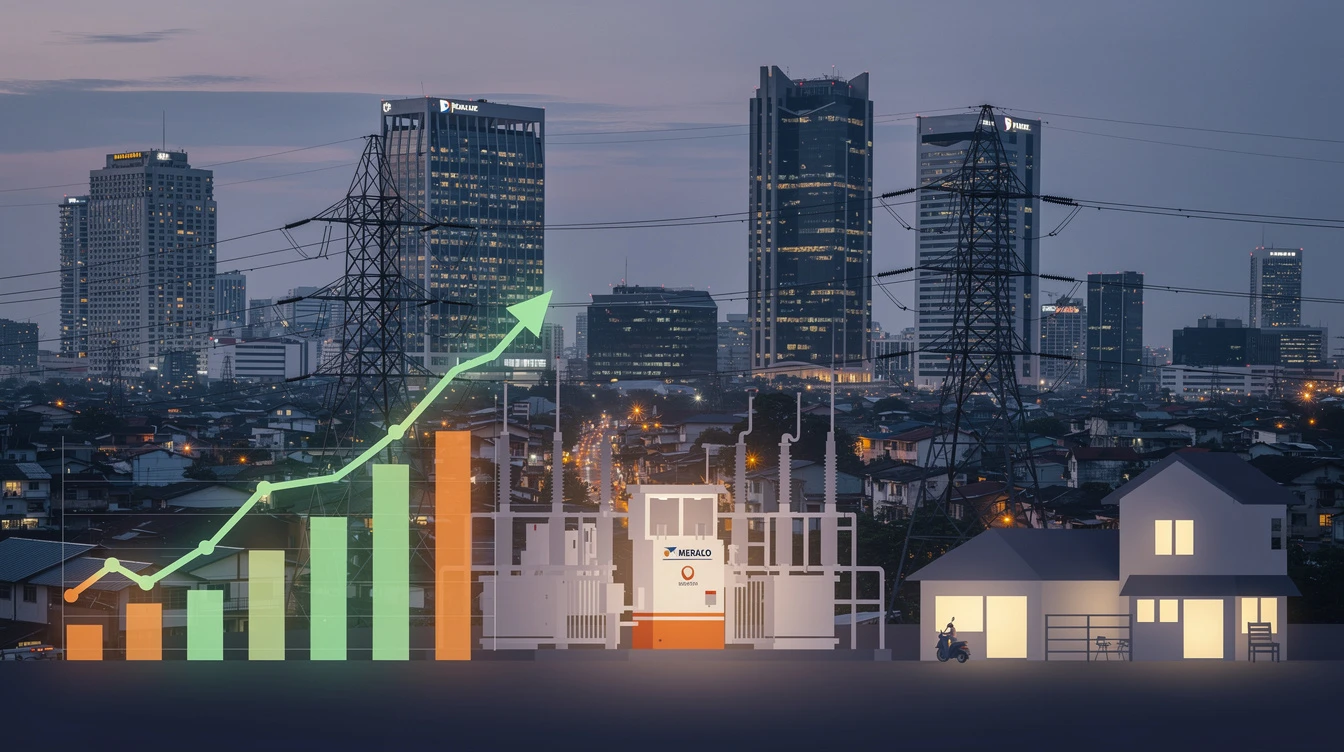
Consider the case of the Dela Cruz family from Quezon City. The father works as a driver in Dubai, sending $1,200 home every month. At the July 2025 rate of ₱56.345, that’s ₱67,614. A year earlier, at ₱55, it would have been ₱66,000. That’s a gain of just ₱1,614 per month. But their electricity bill rose by ₱500, rice went up by ₱200 per sack, and LPG gas costs ₱100 more. The net benefit shrinks to almost nothing.
This is the reality for millions. The weak peso is not a windfall; it’s a partial compensation for a broader economic malaise. The OFW families are not getting richer; they are just seeing their losses partially mitigated.
Expert Take: Economist’s View on Peso Weakness
Dr. John Paul Rivera, an economist at the University of the Philippines, notes: "A weaker peso is a double-edged sword. For OFW families, it’s a lifeline, but it also fuels import-driven inflation. The real test is whether the government can control domestic prices even as the peso remains weak." He suggests that OFW families should not assume the weaker peso is a permanent benefit—budgeting should account for both currency fluctuations and inflation.
Meanwhile, Gulf News quotes exchange analysts who say the peso may fall further to ₱58 by end of 2025, driven by continued US rate hikes and geopolitical tensions. This could mean even bigger nominal remittance gains—but also higher prices for basic goods.
Key Takeaways from the Data
The evidence is clear: the weak peso does provide a nominal boost to OFW remittances. But the gains are often swallowed by inflation, eroding the real purchasing power of families. For a family in Manila, the extra ₱1,500-₱3,000 per month is welcome, but it does not solve the systemic problem of rising living costs.
The Philippine government must focus on stabilizing the peso through structural reforms—boosting exports, attracting foreign investment, and reducing dependence on imports. Only then can OFW families truly benefit from a weaker currency without being stung by inflation.
In the meantime, OFW families can protect their budgets by locking in exchange rates through forward contracts or choosing remittance channels with lower fees. It’s a small proactive step in a volatile economic landscape.
Looking Ahead: Will the Weak Peso Last?
Market forecasts remain divided. Some expect the peso to recover to ₱55 by late 2026 if the Fed cuts rates. Others warn of a further slide to ₱60. What is certain is that OFW families should not rely on a weak peso as a permanent income boost. Instead, they should plan for inflation and diversify their income sources when possible.
The weak peso is a fleeting benefit, not a long-term solution. For the 10 million Filipino families dependent on remittances, the real win comes when the Philippine economy grows strong enough to make the peso both stable and affordable.