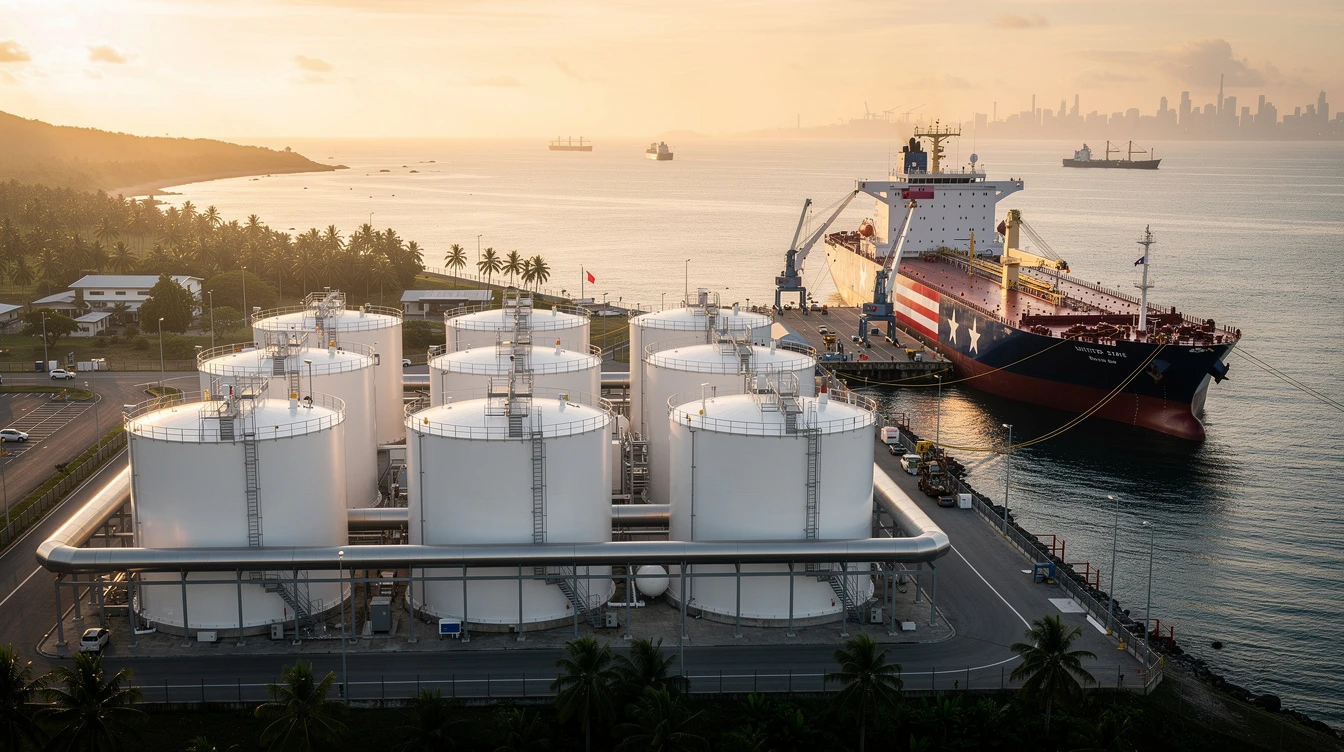
MANILA, Philippines — The Department of Energy (DOE) and the Philippine National Oil Company (PNOC) have secured 21,000 metric tons of liquefied petroleum gas (LPG) sourced from the United States, a move aimed at shoring up supply stability amid global market volatility and tensions in the Middle East.
The LPG cargo is scheduled for delivery from May 20 to May 31, according to an announcement from the DOE on Friday, April 25, 2026. This shipment is expected to boost available supply and help mitigate potential price spikes for Filipino consumers.
Philippines
Under Executive Order No. 114, signed by President Ferdinand Marcos Jr. on April 16, excise taxes on LPG and kerosene were temporarily suspended for three months. The suspension is subject to monthly review based on global oil price movements.
For more on this initiative, see Philippine Politics. The DOE and PNOC acquisition is part of a broader strategy to ensure energy security for the Philippines, which heavily relies on imported fuel.
The Philippines is a net importer of LPG , with most supply coming from the Middle East. Recent tensions in the region have disrupted shipping routes and driven up prices, prompting the government to seek alternative sources.
Secures
According to a statement from the DOE, "Ensuring a stable and reliable supply of LPG is central to our energy security agenda." The agency emphasized that the US-sourced cargo diversifies supply chains and reduces reliance on volatile markets.
PNOC will handle the logistics and distribution of the LPG shipment, coordinating with major LPG players in the country to ensure efficient rollout. The cargo will be stored in PNOC facilities and deployed to regions with high demand.
The temporary excise tax suspension under EO 114 is expected to lower the price of LPG by around PHP 2 to PHP 3 per kilogram , based on current excise rates. This relief is crucial for Filipino households, many of which rely on LPG for cooking and heating.
For the latest updates on fuel prices, visit Local News. The suspension covers excise taxes on LPG and kerosene, excluding other petroleum products, to target the most essential fuels.
Global oil prices have fluctuated in recent weeks due to uncertainty over OPEC+ production cuts and tensions in the Middle East. The DOE has been monitoring these trends closely, adjusting domestic prices accordingly.
The 21,000 metric ton LPG shipment is equivalent to about 10% of the Philippines' monthly LPG consumption, according to industry estimates. This injection is intended to buffer against any supply disruptions.
In addition to the US cargo, the DOE is exploring other supply sources from Asia and the Middle East to ensure long-term stability. The agency is also promoting the use of alternative fuels like natural gas.
For insights on energy policy, read Business Section. The PNOC is also ramping up its import capacity to handle larger shipments in the future.
The delivery schedule from May 20 to May 31 aligns with the planting season, when agricultural demand for LPG for drying and processing increases. This timing is strategic to support the agricultural sector.
Critics have raised questions about the government's response to past supply crises. However, Energy Secretary Raphael Lotilla stated that the current investment in US-sourced LPG is a proactive measure.
"We are not waiting for a crisis to happen. This is preemptive action to protect Filipino consumers from price shocks," he said in a press briefing. The DOE is also working with the Department of Trade and Industry to enforce fair pricing.
The excise tax suspension under EO 114 will be reviewed monthly by the DOF and DOE. If global oil prices drop significantly, the suspension may be lifted earlier.
For more about executive orders, see World News. The Philippine economy, which relies heavily on imports, must navigate these global uncertainties carefully.
The LPG shipment from the US is part of a broader energy partnership between the Philippines and the United States, which includes cooperation on renewable energy and nuclear power. This strengthens bilateral ties amid regional tensions.
PNOC President Pedro Aquino Jr. noted that the cargo was purchased at competitive prices, taking advantage of the current global oil market dynamics. The company expects profit margins to remain stable.
21,000
For Filipino consumers, these measures mean that LPG prices are unlikely to spike in the coming months, providing much-needed relief for households. The government is also monitoring domestic distribution to prevent hoarding.
The significance of this development for Filipino readers is clear: stable LPG supply ensures that cooking and transportation costs remain manageable , especially for low-income families. The diversification of supply sources protects the country from geopolitical shocks. By acting now, the DOE and PNOC are helping build a more resilient energy future for the Philippines.