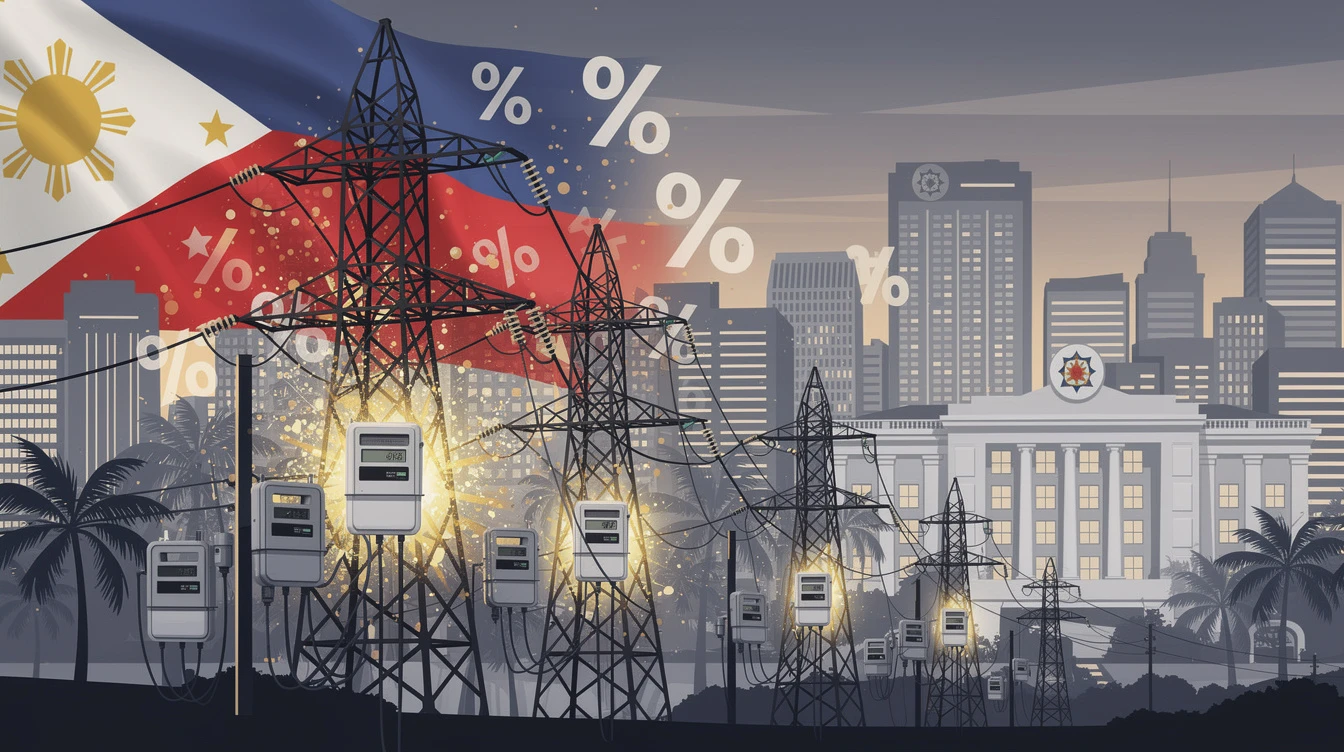
The Department of Energy has expressed conditional support for a bill seeking to remove the 12% value-added tax on system loss charges in electricity bills, a move that could lower costs for millions of Filipino consumers.
Energy Secretary Sharon Garin confirmed the DOE's backing of Senate Bill No. 2076, filed by Senator Risa Hontiveros on Monday. The measure directly targets the VAT applied to costs passed on to consumers for power lost during transmission and distribution.
"We support the intent of the bill to lower electricity costs for Filipino consumers," Garin said in a statement. "However, we defer our final position to the Department of Finance, which must conduct a thorough study on the measure's fiscal impact."
Bill Seeks Relief for Consumers
Senate Bill 2076 aims to exempt system loss charges from the 12% VAT currently imposed under the Tax Reform for Acceleration and Inclusion (TRAIN) Law. System loss charges represent the cost of electricity lost during transmission through power grids and distribution through local lines to consumers' homes and establishments.
Hontiveros argued that taxing these losses is unjust, as consumers effectively pay for electricity they do not actually receive.
"We believe this measure will provide immediate relief to Filipino families struggling with high electricity costs," Hontiveros said.
The senator highlighted that Filipino consumers already face some of the highest electricity rates in Southeast Asia. Data from the International Monetary Fund shows the Philippines ranks among the top countries in the region for residential electricity prices.
Understanding System Loss Charges
System loss charges typically account for 5% to 10% of a typical electricity bill, depending on the distribution utility and location. These charges cover technical losses from heat and resistance in power lines, as well as non-technical losses including theft and metering errors.
The Energy Regulatory Commission sets the allowable system loss percentage for distribution utilities. Currently, the national average system loss hovers around 8%, meaning consumers pay for approximately 92 kilowatt-hours out of every 100 kilowatt-hours generated.
For a household consuming 300 kilowatt-hours monthly with a system loss allocation of 8%, this translates to paying for 24 kilowatt-hours that never reach the home. The proposed bill would remove the VAT component on these charges.
Impact on Monthly Bills
A consumer organization estimate suggests removing the 12% VAT on system loss charges could reduce monthly electricity bills by approximately P50 to P150 for average residential users, depending on consumption levels and distribution utility.
Commercial and industrial consumers, which typically have higher system loss allocations, could see more significant savings. Business groups have expressed support for the measure, citing the competitive disadvantage posed by high electricity costs in the Philippines.
Fiscal Concerns
The Department of Finance has yet to release its assessment of the bill's impact on government revenue. The VAT on system loss charges generates an estimated P5 billion to P8 billion annually for the national government, based on industry estimates.
Finance Secretary Benjamin Diokno previously indicated that any tax exemption proposals must be carefully evaluated to avoid jeopardizing the government's fiscal sustainability and debt reduction goals. The Philippines continues to manage its debt-to-gross domestic product ratio, which stood at 60.4% as of 2023.
The Bureau of Internal Revenue would need to issue implementing rules should the bill become law, clarifying how distribution utilities should compute and remit the adjusted VAT.
Support from Consumer Groups
Consumer advocacy groups have welcomed the proposed legislation, noting that electricity costs disproportionately affect low-income households. The Philippines has some of the highest residential electricity rates in the region, with costs averaging P10 to P12 per kilowatt-hour compared to regional peers at P5 to P8 per kilowatt-hour.
The Philippine Consumer Foundation has been advocating for greater transparency in electricity billing, including clearer breakdowns of system loss charges. Studies have shown that the Philippines ranks third in Southeast Asia for residential electricity prices, behind only Singapore and Brunei.
Regulatory Framework
The Energy Regulatory Commission currently allows distribution utilities to pass on system losses to consumers, subject to caps and monitoring. The ERC conducts annual validation of system loss percentages claimed by utility companies.
The proposed legislation would require coordination between the ERC, Bureau of Internal Revenue, and distribution utilities to implement the VAT exemption properly. Industry stakeholders estimate implementation could take six months to a year after the bill's passage.
The bill will undergo committee hearings at the Senate, where legislators will evaluate stakeholder inputs, fiscal impact assessments, and potential implementation challenges before any plenary debates.
The measure aligns with broader government efforts to reduce the cost of doing business and improve household purchasing power amid ongoing inflationary pressures. Lawmakers expect robust debate on the bill's fiscal implications as it moves through the legislative process.