Imagine biting into a Big Mac, knowing the fries were cooked with power from renewable sources. That future is now a reality for Filipino McDonald's fans.
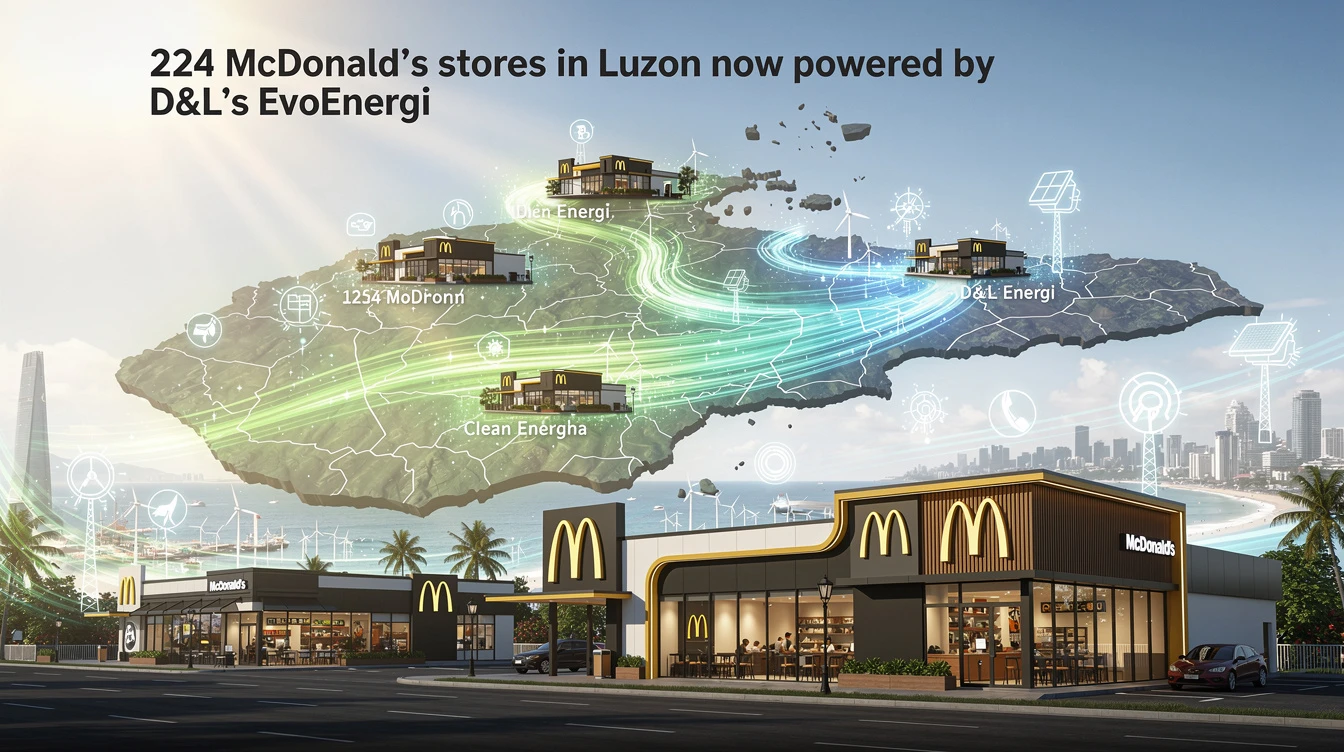
EvoEnergi, an affiliate of D&L Industries, has inked a landmark agreement to supply electricity to 224 McDonald's stores across Luzon. This deal, announced in April 2026, transforms fast-food energy consumption.
Golden Arches Development Corp. (GADC), McDonald's Philippines operator, selected EvoEnergi as its partner. The contract covers both conventional and renewable energy under the government's Retail Aggregation Program.
This positions EvoEnergi as a key player in the Philippines' push for energy efficiency and sustainability in the food service industry.
What the Deal Means for McDonald's and Filipino Consumers
Emanette C., a GADC executive, emphasized the deal's significance. "This for us is a significant step forward and contributes to our ability to sustain and provide affordable and value meals to our Filipino customers," she said.
For McDonald's, consistent electricity is critical. The fast-food giant operates round-the-clock kitchens, digital payment systems, and drive-thru services that demand uninterrupted power.
By partnering with EvoEnergi, McDonald's ensures reliable energy supply while tapping into renewable sources. This supports the brand's global sustainability goals local to the Philippines.
Consumers might not see a price drop immediately, but stable energy costs help McDonald's maintain its value meal prices. In an era of rising inflation, that's a win for Filipino families.
The Role of the Retail Aggregation Program
The deal is structured under the government's Retail Aggregation Program. This allows multiple businesses to pool their electricity demand for better rates and terms.
This program is part of the Electric Power Industry Reform Act (EPIRA) in the Philippines, designed to promote competition and lower power costs.
For McDonald's, aggregating 224 stores gives them leverage to negotiate favorable rates with EvoEnergi, potentially reducing operational expenses across Luzon.
This model can be replicated by other fast-food chains, malls, or retail groups to achieve similar savings and sustainability gains.
EvoEnergi's Expanding Footprint in the Philippines
Beyond McDonald's, EvoEnergi is already making waves. The company also signed partnerships with Boracay hotels, serving as their aggregated power supplier.
This shows EvoEnergi's strategy to target high-energy-consumption sectors: fast food and hospitality. Both rely heavily on 24/7 operations and climate control.
Julian Lao, EvoEnergi President, stated: "We are committed to being more than just an electricity supplier — we aim to be a trusted, long-term partner."
The company aims to provide stability, transparency, and support that enhance the everyday McDonald's experience for Filipinos, while upholding the brand's legacy and standards.
D&L Industries, the parent company, is known for its diversified portfolio. This energy venture could become a significant revenue driver in coming years.
Impact on the Philippine Energy Sector
The deal signals a shift in how large corporations source energy. Instead of relying solely on the national grid, they are turning to private suppliers like EvoEnergi.
This competition can pressure traditional utilities to lower prices and innovate. For consumers, it means potential long-term reductions in electricity costs.
Renewable energy integration also helps the Philippines meet its National Renewable Energy Program (NREP) targets, aiming for 35% renewable share by 2030.
If more companies follow McDonald's lead, the Philippines could see faster adoption of green energy, reducing reliance on imported coal and oil.
Challenges and Future Outlook
While promising, the transition isn't without hurdles. Ensuring consistent renewable energy supply, especially during peak hours or bad weather, remains a challenge.
EvoEnergi must balance the mix of conventional and renewable sources to avoid disruptions. Grid stability in Luzon is already a concern for businesses.
Regulatory changes could also affect the Retail Aggregation Program. Any policy shifts might impact the terms of this deal or future partnerships.
Nevertheless, the outlook is positive. McDonald's plans to expand its store network in the Philippines, and EvoEnergi could be poised to power those new outlets as well.
The Boracay hotel deals show that EvoEnergi isn't resting on its laurels. The company is actively building a portfolio that could reshape the Philippine energy landscape.
What This Means for Filipino Businesses
Small and medium enterprises (SMEs) can learn from McDonald's. By forming industry associations, they can also leverage aggregation programs to cut power costs.
EvoEnergi's success might encourage other retail electricity suppliers (RES) to offer similar deals to smaller businesses, democratizing access to cheaper electricity.
The Philippine government supports such initiatives, viewing them as a way to spur economic growth and reduce the cost of doing business.
For now, the partnership between EvoEnergi and McDonald's stands as a model of corporate innovation meeting sustainability.
As Julian Lao put it, the goal is to "stability, transparency, and support that enhance the everyday McDonald's experience for Filipinos."
This deal is more than just about burgers and fries. It's about the future of energy in the Philippines, one happy meal at a time.