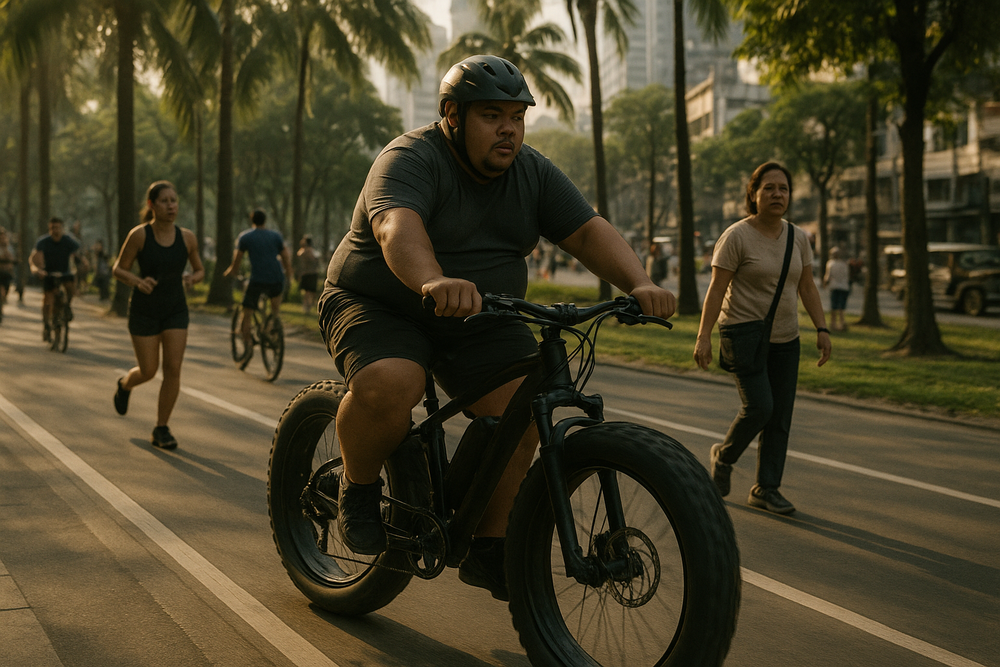
Amsterdam, a city that has long treated the bicycle as an extension of daily life, is reining in a new and controversial arrival on its streets: the electric fatbike. City authorities are moving to restrict these super-sized e-bikes after a surge in high-speed incidents raised alarms about public safety, even in a metropolis built around two wheels.
A City Built for Cycling Faces a New Challenge
For decades, Amsterdam has been held up as a global model of urban cycling, with wide bike lanes, traffic-calmed streets and a culture that places cyclists at the centre of public life. That infrastructure, however, is now being tested by electric fatbikes—bulky e-bikes with wide tyres and powerful motors capable of reaching speeds of up to 60 km/h (around 37 mph).
Originally designed for stability on sand or snow, fatbikes have found popularity in the Netherlands’ urban environment, particularly among younger riders. Their rapid acceleration and size, city officials say, have made them ill-suited for crowded cycle paths shared with commuters, children and tourists.
Vondelpark Becomes the Flashpoint
The concern came to a head in Vondelpark, Amsterdam’s most famous green space and a magnet for walkers and casual cyclists. Following what authorities described as a significant rise in high-speed riding, plans were unveiled to ban electric bikes with tyres wider than 7 centimetres from the park.
Officials argue that the measure is a practical way to target fatbikes without penalising standard e-bikes, which are limited to lower speeds and slimmer profiles. “Amsterdam is set to ban super-sized electric ‘fatbikes’ from its main park, Vondelpark, following a significant increase in high-speed…,” the proposal stated, reflecting growing anxiety over near-misses and crashes.
When an E-Bike Becomes a Moped
The park ban is only one part of a broader regulatory shift. At the national level, the Netherlands already treats faster e-bikes—known as speed pedelecs—more like mopeds than bicycles. These vehicles, which can reach 28 mph, require licensing and are subject to stricter rules.
Supporters of the crackdown say this distinction is overdue. “Speed pedelecs are bigger and faster, and riders routinely ignore the rules of the road, posing a danger to cyclists and pedestrians alike,” one assessment noted. Critics of lax enforcement argue that a bike lane is not designed to absorb such a wide gap in speed and mass.
Safety Gains—and New Risks
The debate is taking place against a backdrop of strong overall road safety. Last year, cars were involved in only 59 fatalities nationwide, and over the past five years vehicles accounted for 42 per cent of cyclist deaths—a relatively low figure by international standards. The statistics underline how effective infrastructure and strict rules have reduced risk.
Yet the arrival of fatbikes has introduced a new dynamic. Like a small motorbike moving through a crowd of pedestrians, critics say, their presence magnifies the consequences when things go wrong.
Balancing Freedom and Order on Two Wheels
Cycling advocates broadly support targeted regulation but warn against heavy-handed bans. The Dutch Cyclists’ Union, Fietsersbond, has backed licensing for faster e-bikes while stressing that enforcement alone is not enough. “Infrastructure and licensing are not mutually exclusive,” the group has argued, insisting that safer street design must go hand in hand with clear rules.
Opponents of the crackdown worry that equating powerful e-bikes with mopeds could push commuters back into cars or petrol-powered scooters, undermining decades of progress in active transport.
Lessons Beyond the Netherlands
While the issue is distinctly Dutch, the dilemma resonates beyond Amsterdam. Cities across Europe—and increasingly in crowded urban centres elsewhere—are grappling with how to regulate fast, electric micromobility without stifling innovation.
Amsterdam’s approach offers a glimpse of a possible future: not a rejection of e-bikes, but a recalibration of rules to match their growing power. In a city where bicycles once moved at walking pace, the challenge now is ensuring that speed does not outrun safety.