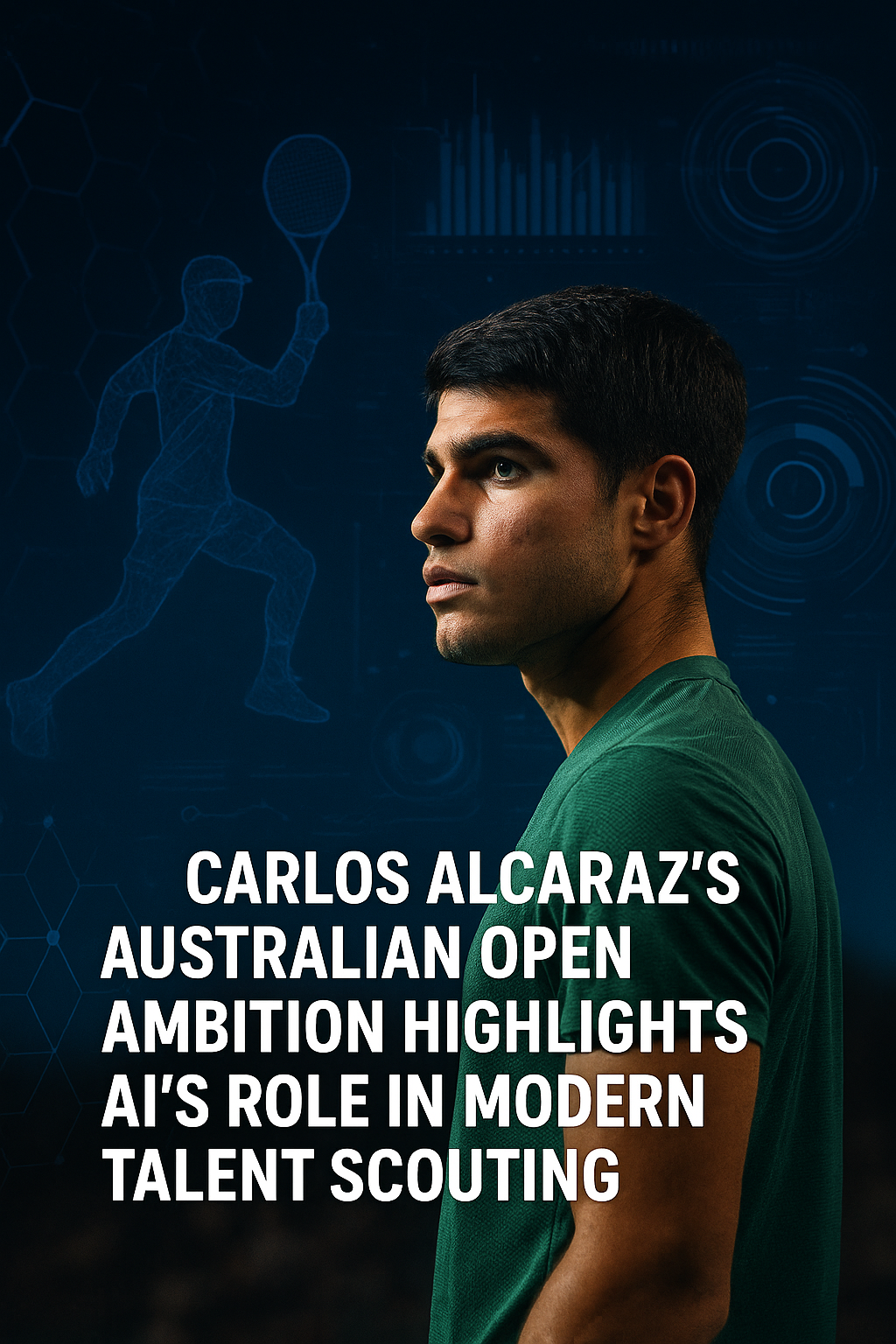
Melbourne, Australia – As tennis sensation Carlos Alcaraz gears up for his Australian Open campaign, his rapid rise to the top of the sport underscores a broader trend reshaping talent acquisition: the growing influence of AI-driven talent acquisition in both sports and technology industries. Alcaraz, discovered through data-driven scouting methods, exemplifies how artificial intelligence is revolutionizing how organizations identify and nurture top-tier talent—whether on the court or in the boardroom.
The 20-year-old Spaniard’s journey from a promising junior to a Grand Slam champion has been closely tracked by AI-powered analytics, which evaluated his performance metrics, psychological resilience, and adaptability. This approach mirrors strategies now being adopted by tech giants and sports franchises alike, where AI algorithms sift through vast datasets to pinpoint individuals with the highest potential for success.
The AI Advantage: How Data is Redefining Talent Scouting
Traditional talent scouting relied heavily on human intuition, subjective assessments, and limited sample sizes. Today, AI-driven talent acquisition leverages machine learning, predictive analytics, and biometric data to create a more objective and efficient process. In sports, platforms like Kitman Labs and Hudl analyze player movements, injury risks, and even emotional responses to pressure, while tech companies use tools like HireVue and Pymetrics to assess cognitive abilities and cultural fit.
According to a 2023 report by McKinsey & Company, organizations using AI in their hiring processes see a 35% reduction in turnover and a 20% increase in diversity among new hires. “AI doesn’t replace human judgment—it enhances it,” says Dr. Elena Martinez, a data scientist specializing in sports analytics. “By removing unconscious biases and expanding the talent pool, AI helps us find diamonds in the rough, just like Alcaraz was for tennis.”
For international students and young professionals, this shift presents both opportunities and challenges. While AI can level the playing field by identifying talent regardless of geographic or socioeconomic barriers, it also demands a new set of skills—digital literacy, adaptability, and a willingness to engage with AI-driven assessment tools.
From Tennis Courts to Tech Hubs: AI’s Expanding Role
The parallels between sports and tech in AI-driven talent acquisition are striking. In tennis, sensors embedded in rackets and wearables track everything from serve speed to fatigue levels, feeding data into AI models that predict future performance. Similarly, tech companies use natural language processing (NLP) to analyze coding samples, GitHub contributions, and even social media activity to gauge a candidate’s potential.
Key developments in this space include:
- Predictive Performance Modeling: AI tools like IBM’s Watson and Google’s DeepMind are being used to forecast an athlete’s or employee’s long-term success based on historical data patterns.
- Bias Mitigation: Companies such as Unilever and Goldman Sachs have adopted AI-driven hiring platforms to reduce human bias, resulting in more diverse workforces.
- Real-Time Feedback: AI-powered platforms provide instant feedback to candidates, helping them refine their skills—whether it’s a tennis player adjusting their backhand or a developer optimizing their code.
“The same AI that helped identify Alcaraz’s potential at 15 is now being used to scout software engineers in Lagos or data scientists in Bangalore,” explains Rajesh Kumar, a tech recruiter at a Silicon Valley firm. “The global talent pool has never been more accessible.”
What This Means for International Students and Professionals
For those looking to break into competitive industries—whether in sports, tech, or other fields—understanding AI-driven talent acquisition is no longer optional. Here’s how this trend impacts aspiring professionals:
- Skill Over Pedigree: AI levels the playing field by focusing on measurable skills rather than prestigious degrees or connections. A self-taught coder from India or a tennis player from a small Spanish town can now compete on equal footing with Ivy League graduates or elite academy products.
- Data-Driven Self-Improvement: Tools like LinkedIn’s AI career coach or Strava for athletes allow individuals to track their progress and receive personalized recommendations for improvement.
- Global Opportunities: AI-driven platforms enable remote scouting, meaning talent can be discovered and nurtured from anywhere in the world. This is particularly advantageous for international students who may not have access to traditional networking channels.
However, experts caution that AI is not a magic bullet. “While AI can identify potential, human mentorship and emotional intelligence remain critical,” says Dr. Martinez. “The best systems combine AI insights with human coaching to develop well-rounded professionals.”
Expert Tips: How to Stand Out in an AI-Driven Talent Market
To thrive in this new landscape, professionals and students should consider the following strategies:
- Optimize Your Digital Footprint: Ensure your online profiles—LinkedIn, GitHub, or even sports performance platforms—are up-to-date and highlight quantifiable achievements. AI tools often scrape these sources for initial evaluations.
- Engage with AI Assessment Tools: Familiarize yourself with platforms like HackerRank (for coders) or Playermaker (for athletes). Practicing with these tools can improve your performance in AI-driven evaluations.
- Develop Hybrid Skills: AI values versatility. A tennis player with strong analytical skills or a developer with a background in psychology may stand out more in AI-driven scouting.
- Seek Feedback Loops: Use AI-powered feedback tools to continuously refine your skills. Many of these platforms offer free tiers or student discounts.
“The future belongs to those who can adapt to AI, not fear it,” notes Kumar. “Whether you’re an athlete or a tech professional, the key is to treat AI as a partner in your development, not a gatekeeper.”
The Future: AI as the Great Equalizer
As AI-driven talent acquisition becomes more sophisticated, its impact will extend beyond sports and tech into fields like healthcare, finance, and the arts. For international students, this means unprecedented access to global opportunities—but also the need to stay ahead of the curve.
Looking ahead, we can expect:
- More Personalized Career Paths: AI will tailor development programs to individual strengths and weaknesses, much like how Alcaraz’s training regimen is customized based on his data.
- Greater Emphasis on Soft Skills: While AI excels at analyzing hard skills, human traits like creativity, leadership, and emotional intelligence will become even more valuable.
- Ethical and Transparent AI: As reliance on AI grows, so will the demand for transparency in how decisions are made, ensuring fairness and accountability in talent acquisition.
For now, the lesson from Carlos Alcaraz’s story is clear: in a world where AI is redefining potential, talent is no longer about where you come from—it’s about what you can prove.
Reach out to us for personalized consultation based on your specific requirements.