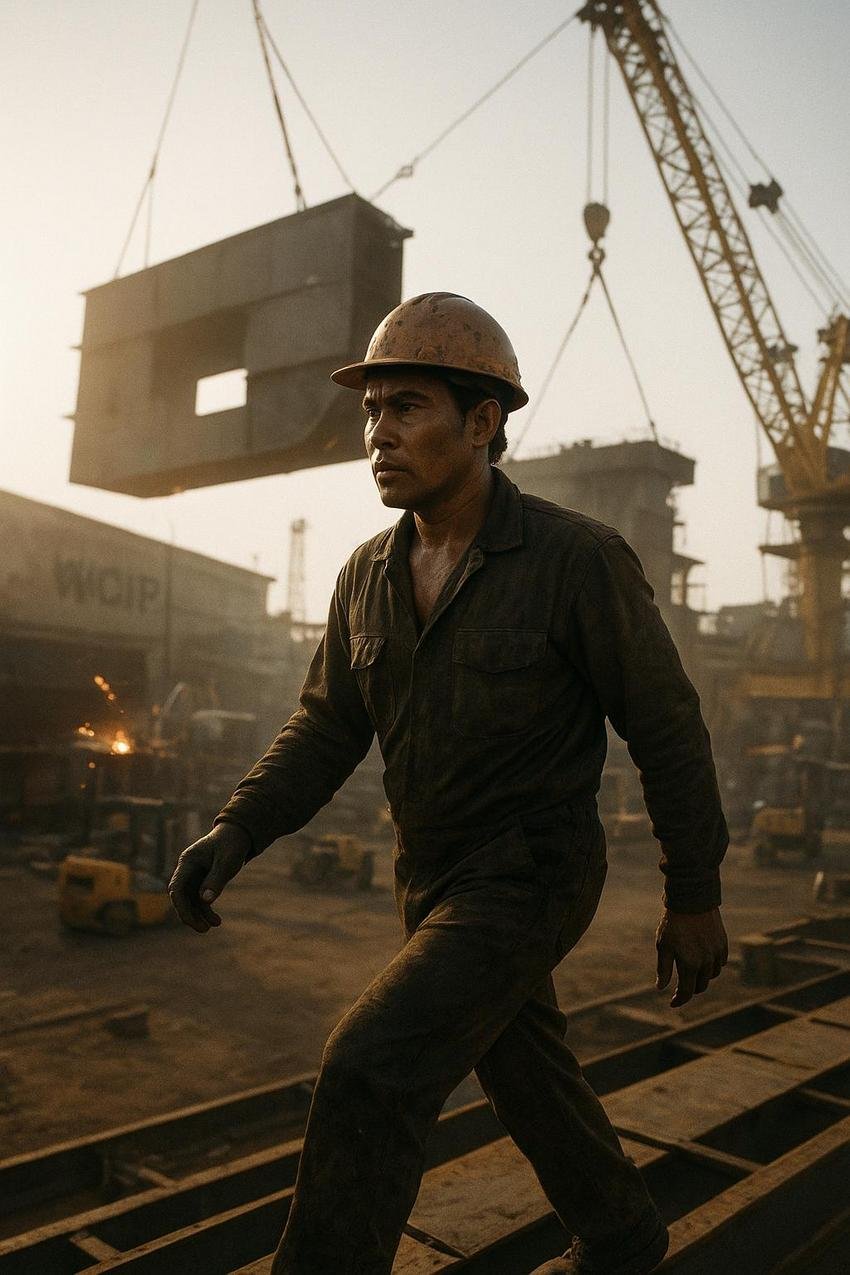
President Ferdinand “Bongbong” Marcos Jr. has authorized the expansion of the West Cebu Industrial Park (WCIP) in Balamban, Cebu, a strategic move aimed at reinforcing the province’s status as a heavyweight industrial and manufacturing hub in the Central Visayas. Through Proclamation No. 710, signed on October 16, 2024, by Executive Secretary Lucas Bersamin, the government added 17.6 hectares of land to the Philippine Economic Zone Authority (PEZA)-registered site, further strengthening Cebu’s role in the global shipbuilding industry.
Strategic Expansion to Fortify Shipbuilding Capital
The WCIP special economic zone, currently encompassing 540 hectares, has been the backbone of Balamban’s economic identity for over three decades. The additional 176,783 square meters annexed through the proclamation pushes the estate closer to its envisioned 600-hectare footprint. The newly designated parcels, located in the barangays of Arpili and Buanoy, are projected to house extended industrial operations, further invigorating the region’s already robust manufacturing base.
WCIP is operated by Cebu Industrial Park Developers, Inc., a joint venture between the homegrown Aboitiz Group and Japan’s Tsuneishi Group. This partnership has cultivated the industrial park into a bustling hub for medium to heavy industries, particularly shipbuilding. With more than 14,000 skilled Filipino workers employed on-site, Balamban has earned the unofficial title of the Philippines’ shipbuilding capital.
PEZA Incentives Drive Investor Confidence
Registered enterprises at WCIP benefit from PEZA’s portfolio of fiscal and non-fiscal incentives, attracting both domestic and foreign investors. These include:
- Income tax holidays ranging from 4 to 7 years
- Special corporate income tax rate of 5%
- Enhanced deductions for export-oriented enterprises up to 10 years
- Tailored incentives for domestic market firms, dependent on compliance and regional classification
According to PEZA Deputy Director General Maria Veronica Magsino, reforms and improved policy alignment have helped position economic zones like WCIP as consistent engines for export-led growth, contributing over half of the country’s total exports.
A Vision Beyond Industry: Mixed-Use Transformation
The WCIP expansion is not limited to industrial impact. The estate’s long-term blueprint envisions a transformation into a mixed-use development, including a Central Business District (CBD). New commercial facilities, such as supermarkets and a transport terminal, are in various stages of planning and construction. To accommodate the growing workforce, residential zones are also on the table.
As of early 2025, nearly 50% of the land in the newly added 40-hectare expansion zone has already been sold to manufacturing companies, signaling strong market demand.
Rafael Fernandez de Mesa, President & CEO of Aboitiz Land and Aboitiz Economic Estates, affirmed the estate’s broad ambitions: “We’re looking at developing additional complementary components […] By working together — government, investors and industry — we can design and unlock the next chapter of Cebu’s industrial journey, one defined by innovation, partnership and shared prosperity.”
Sustainability and Innovation at the Forefront
The push for industrial growth comes with a parallel commitment to sustainability. Environmental innovations such as the development of the world’s first methanol-powered Kamsarmax bulk carrier launched at WCIP underscore a shift toward greener manufacturing. The Cebu Industrial Summit 2025 reflected this philosophy, with leaders calling for inclusive models of development that balance economic expansion with ecological mindfulness.
Governor Pamela Baricuatro characterized Cebu’s approach as one that models “sustainable inclusive growth,” aligning provincial support with the national government’s industrial agenda.
A Cornerstone in Cebu’s Industrial Evolution
With more than 50 economic zones generating over ₱321 billion in investments and creating over 217,000 jobs, Cebu continues to anchor the Philippines’ industrial aspirations. The expansion of WCIP dovetails seamlessly into this narrative, reinforcing the island’s relevance in both local and international markets.
Nationally, PEZA oversees 419 economic zones as of April 2023. It approved over ₱36 billion in investments in the first quarter of 2024 alone and is targeting ₱200 billion by year-end—figures that suggest robust investor confidence across the economic zones framework.
Anticipated Impact and Operational Considerations
While generally welcomed as a positive move, large-scale industrial expansions carry an undercurrent of logistical and social challenges. Infrastructure capacity, environmental adherence, and the well-being of surrounding communities remain critical markers of success. Managing these variables will be instrumental as occupancy rates rise and economic activity intensifies in and around WCIP.
Still, the overriding sentiment among stakeholders remains optimistic. The confluence of strategic location, investor-friendly incentives, and a cooperative public-private sector framework has positioned WCIP as more than a shipyard—it is becoming the blueprint for future-ready industrialization in the Philippines.
A Milestone in National Industrial Development
President Marcos’s directive to expand the West Cebu Industrial Park is about more than adding land—it is a declaration of intent. It signals the Philippine government’s commitment to harnessing Cebu’s industrial strength and translating it into broader national growth. As the sails of progress fill with promise, Balamban’s shipyards once again set a course—this time towards a future of diversified innovation, resilient development, and shared economic prosperity.