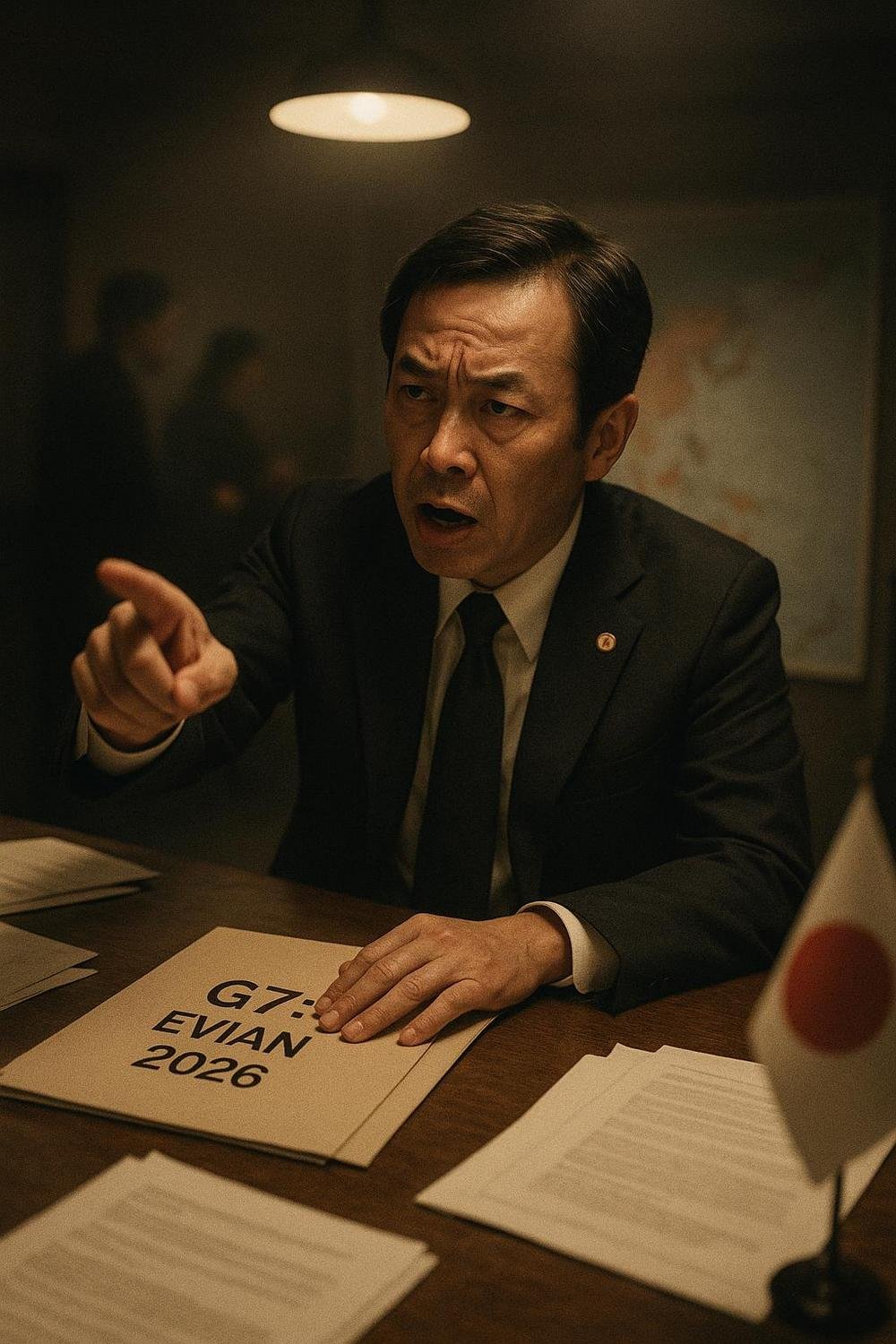
Japan has voiced strong unease over a potential French move to invite Chinese President Xi Jinping to the 2026 G-7 summit, cautioning that such a decision could fracture the unified front the bloc has maintained on key global issues, particularly its increasingly tough stance on China.
Tokyo Warns of Strategic Risks Amid Tensions With Beijing
With France set to host the 2026 Group of Seven summit in Evian, eastern France, Japanese officials have raised diplomatic alarms over reports that French President Emmanuel Macron is considering extending an invitation to President Xi. The concern in Tokyo is clear: Xi’s presence could cloud the G-7’s ability to send a unified message on China’s expanding military power, economic influence, and disregard for international norms.
“Japan attaches importance to the unity of the G-7, which shares basic values and strategic interests such as liberal democracy and the rule of law,” Japanese Foreign Minister Toshimitsu Motegi emphasized following Macron’s early December meeting with Xi in Beijing. Senior Japanese officials echoed the sentiment, urging European counterparts to “be aware of the many problems regarding China.”
While neither France nor China has officially confirmed that an invitation has been extended, Japanese sources suggest the issue was broached during Macron’s Beijing visit on December 4–5, 2025. In the days following that meeting, Tokyo formally conveyed its opposition to the potential diplomatic overture.
Historical Precedents and Shifting Alliances
This is not the first time France has signaled openness to engaging China within the G-7 format. In 2003, then-President Hu Jintao was invited to attend the G8 summit—when Russia was still a member of the group—which also took place in Evian. That precedent, however, occurred in a markedly different geopolitical climate, before China’s assertive turn under Xi’s leadership.
Today, Japan stands as the group’s only Asian member and has emerged as one of the most vocal critics of China’s expanding influence, warning that Beijing’s maritime activity, economic leverage, and military modernization represent a severe threat to regional order in the Indo-Pacific. Relations between Tokyo and Beijing have deteriorated dramatically through 2025, with tensions centered on territorial disputes, Taiwan’s security, and accusations of Chinese economic coercion.
Concerns Over G-7 Cohesion and Global Messaging
From Japan’s perspective, the G-7 serves not only as a forum for major economic powers but also as a critical platform to reinforce shared democratic values and cooperative strategies. A Japanese official noted, “A meeting of the G-7 is an opportunity to work together to send a clear message to China.”
Inviting Xi, Tokyo argues, could dilute the bloc’s credibility and muddle its strategic messaging—particularly on issues like human rights, transparency in military development, and freedom of navigation in contested waters. The November 2025 joint statement by G-7 foreign ministers in Niagara, Canada, emphasized those points, expressing opposition to “unilateral changes by force” and reiterating the importance of peace and stability around the Taiwan Strait.
France’s Pragmatic Engagement Strategy
For President Macron, the calculus may be different. Faced with economic pressures at home and growing concerns over global trade, his government has pursued a pragmatic strategy of diplomatic engagement with Beijing. This approach emphasizes addressing global economic imbalances and maintaining access to China’s vast market—a position that can at times diverge from Washington’s or Tokyo’s more confrontational stance.
Macron’s December visit to China underscores France’s interest in keeping communication lines open. The possible invitation to Xi could be interpreted as part of this wider diplomatic balancing act—one that aims to reduce tensions through dialogue but risks sending mixed signals to other G-7 partners.
Chinese Response: Sharp Rhetoric and Diplomatic Pushback
Beijing, for its part, has not acknowledged receipt of a G-7 invitation but has reacted with characteristic defiance to Tokyo’s remarks. Chinese Foreign Ministry spokesperson Lin Jian condemned Japan’s statements as “blatant interference in China’s internal affairs,” issuing a veiled warning that Tokyo should retract its comments to avoid consequences.
This rhetorical escalation reflects China’s broader diplomatic posture, which increasingly frames critiques of its governance and military policies as violations of sovereignty. It also illustrates the tightrope that Macron and other Western leaders walk in attempting to counterbalance strategic deterrence with economic diplomacy.
Divisions Within the G-7 and Broader Implications
Japan’s deepening anxiety about France’s approach exemplifies the broader fault lines within the G-7 as geopolitical rivalries intensify. While the group has historically aligned around shared values, its members differ significantly on how best to respond to China’s rise.
As Tokyo urges a firmer collective stance, some policy circles even advocate for expanding the G-7 membership to include democracies with direct strategic stakes in the Indo-Pacific, such as Australia and South Korea. Such a move, proponents argue, could reinforce the bloc’s influence and resilience against Chinese economic and military pressure.
Looking Ahead to Evian
As the 2026 summit in Evian approaches, the question of whether Xi will attend looms over G-7 preparations. For Japan, the issue is more than symbolic. It strikes at the heart of how like-minded nations coordinate to address what they increasingly see as a generational challenge: balancing economic interdependence with a coherent response to China’s authoritarian ascent.
While back channels between Tokyo and Paris remain active, and a Japanese diplomatic source said France is “fully aware of Japan’s concerns,” time will reveal whether consensus can be preserved—or whether the summit will become a stage for competing visions of engagement in a deeply divided world.