Philippine officials say a Chinese outpost in the South China Sea fired three signal flares toward a Philippine patrol plane on 6 December 2025, the latest in a series of tense encounters over disputed waters that are critical for regional security and global trade.
Flares Fired At Fisheries Patrol Over Subi Reef
The incident occurred as a surveillance aircraft from the Philippines’ Bureau of Fisheries and Aquatic Resources (BFAR), operating with the Philippine Coast Guard (PCG), flew near Subi Reef in the Spratly Islands. The aircraft, a Cessna Grand Caravan, was on a routine mission to monitor the marine environment and assess fisheries resources in waters Manila calls the West Philippine Sea.
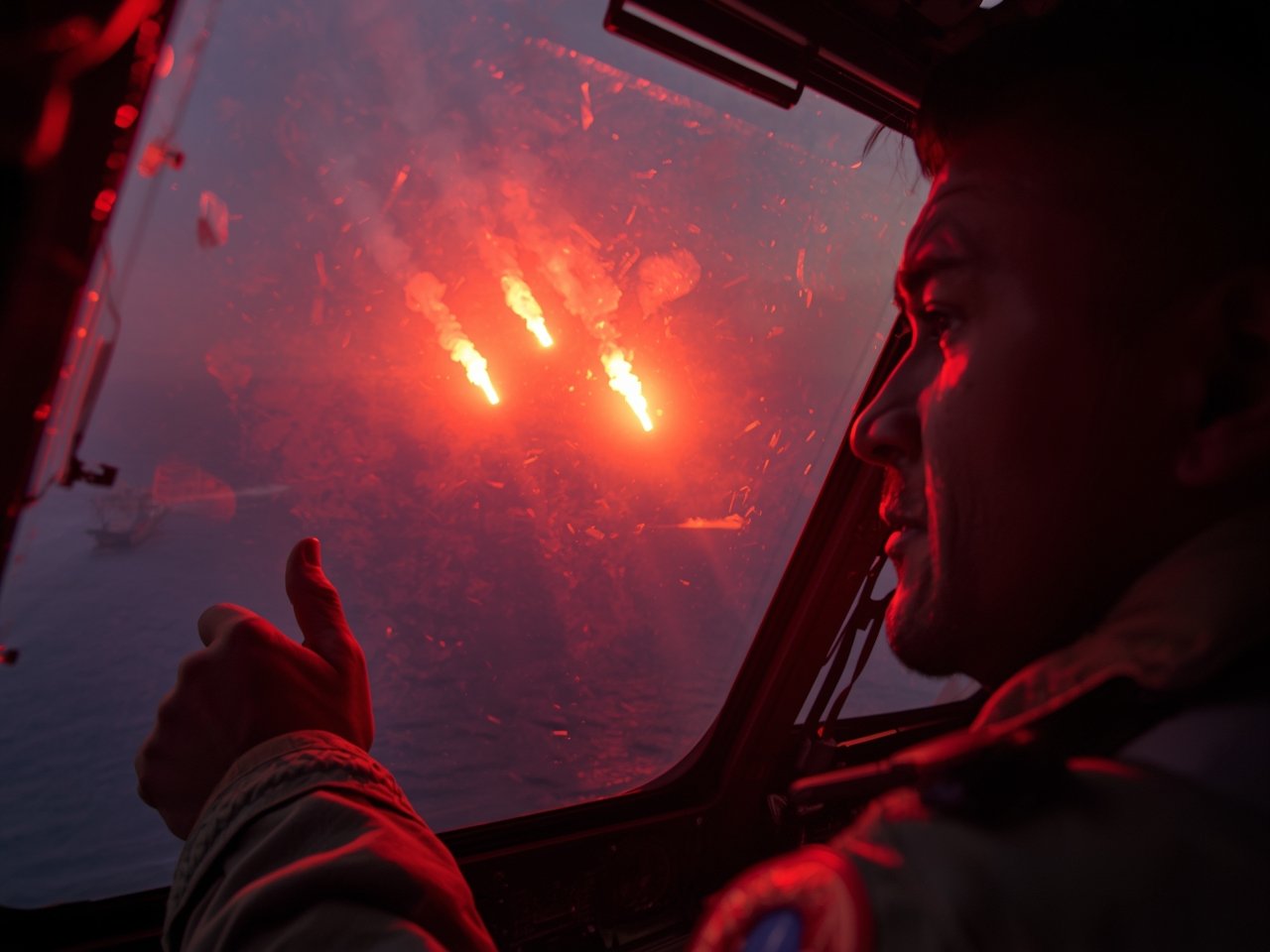
As the plane approached the vicinity of Subi Reef, forces based on the reef fired three signal flares toward the aircraft. The flares were recorded on video from onboard cameras. Despite the warning, the patrol plane did not alter its mission and completed its planned route.
The PCG later described the outcome in a brief assessment: “All safe and mission accomplished.” There were no reported injuries or damage to the aircraft.
Heavily Monitored Skies Over A Militarised Reef
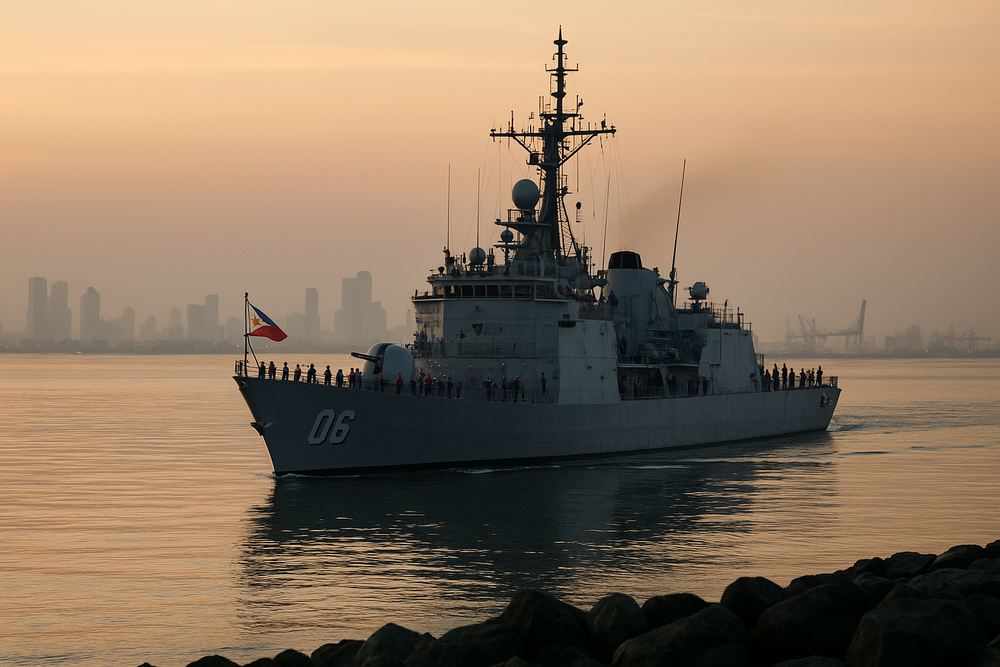
During the flight, the Philippine patrol plane observed a significant Chinese presence around Subi Reef. According to the PCG, the crew counted a Chinese hospital ship, at least two coast guard vessels, and 29 suspected militia ships anchored off the reef. The number and mix of vessels suggest a layered deployment of military, quasi civilian, and support units in the area.
Subi Reef is one of several features in the Spratly Islands that have been transformed over the last decade into large artificial islands. These sites are widely believed to host military grade runways, air defense systems, and other facilities that allow a state to project power far from its mainland. Subi Reef has become a visible symbol of the wider militarisation of the South China Sea.
Radio Challenges Near Sabina Shoal
The flare incident was not the only contact during the mission. The BFAR PCG aircraft also passed near six other disputed features, including Sabina Shoal. As the plane flew near Sabina, a Chinese navy vessel repeatedly issued radio challenges, questioning the presence of the Philippine aircraft and demanding identification.
Philippine authorities say the patrol remained within airspace they consider to be part of their own exclusive economic zone. The aircraft continued its flight path despite the radio calls, a sign that Manila intends to maintain regular surveillance and presence in contested areas.
Competing Claims In A Crowded Sea
The flare incident sits inside a long running dispute over the South China Sea, a semi enclosed body of water claimed partly or wholly by several countries, including China, the Philippines, Vietnam, Malaysia, Brunei, and Taiwan. At stake are overlapping claims to islands, reefs, shoals, and the surrounding maritime zones, along with access to rich fishing grounds and potential oil and gas reserves beneath the seabed.
The Philippines argues that parts of these waters fall within its exclusive economic zone, measured from its coastline under international maritime law. Manila refers to this area as the West Philippine Sea. Routine flights and patrols by BFAR and the PCG are presented as necessary to protect marine resources and to safeguard the livelihoods of Filipino fishermen.
China, by contrast, asserts expansive rights over almost the entire South China Sea, often described by reference to a so called Nine Dash Line. Under this view, foreign military or government patrols, even within what other states consider their own exclusive zones, are seen as intrusions into Chinese waters and airspace.
A Pattern Of Coercive Encounters
The use of flares near Subi Reef is not an isolated event. In August 2024, a similar incident was reported in the same general area, when a Chinese jet allegedly fired flares close to a Philippine surveillance aircraft. At that time, Philippine officials urged China to halt what they described as provocative and dangerous actions.
Other confrontations across the South China Sea have involved water cannons directed at Philippine vessels, the blocking of resupply ships, the use of lasers to temporarily blind or distract crews, and even collisions between ships. These actions form what many regional observers regard as a pattern of pressure and coercion, a kind of grey zone strategy that stops short of open armed conflict but steadily reinforces control on the water and in the air.
The heavy presence of suspected militia ships around Subi Reef, alongside coast guard and other vessels, appears to support this view. These ships often resemble fishing boats but can act as an informal extension of state power, filling the sea like a moving fence that signals control without formal declarations.
Philippine Response And Silence From Beijing
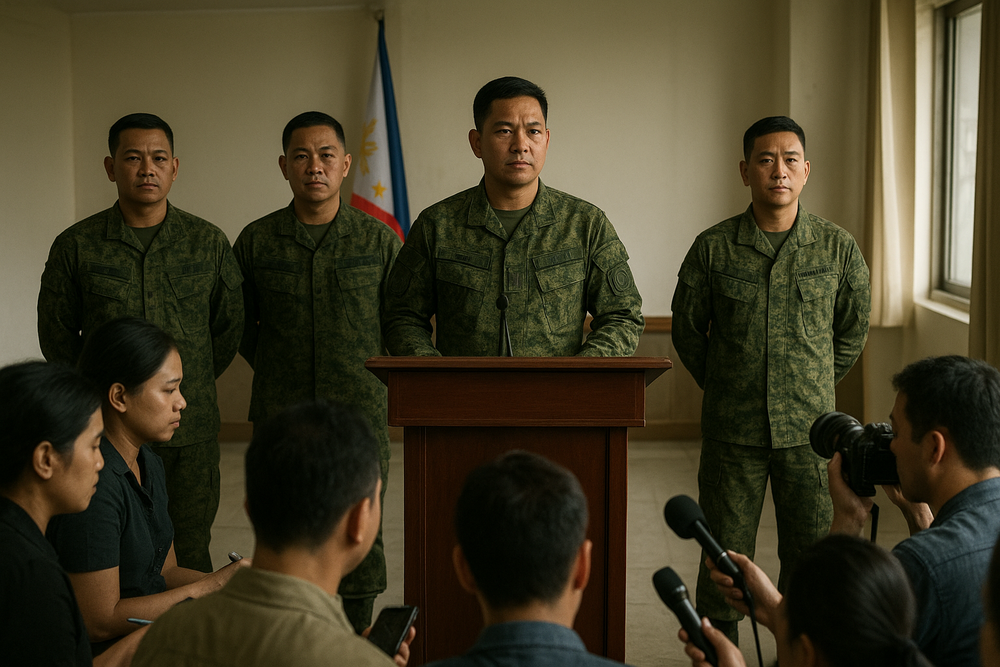
The Philippine Coast Guard has confirmed that the BFAR aircraft recorded the flare firing on video and that the footage forms part of the mission report. Officials stress that the surveillance flights are legitimate operations under Philippine law, focused on environmental monitoring, fisheries management, and the protection of national interests.
PCG spokesperson Jay Tarriela framed the mission in simple terms, stating that the flight ended with everything “all safe and mission accomplished.” That phrase highlights both the routine nature of such patrols and the risks crews accept when flying or sailing near disputed features that are heavily defended.
As of the time of reporting, there has been no public statement or acknowledgment from Chinese authorities regarding the flare incident. In previous cases, responses from Beijing have typically referenced the protection of what it views as national sovereignty and territorial integrity.
Legal And Historical Fault Lines
The latest encounter also unfolds against a legal backdrop that has sharpened diplomatic tensions. In 2016, an international tribunal ruled that China’s sweeping maritime claims in the South China Sea, including the Nine Dash Line, had no legal basis under the law of the sea. The decision upheld many of the Philippines’ rights over its claimed waters and maritime features.
China has repeatedly rejected that ruling and has continued to expand and reinforce its positions on artificial islands and occupied reefs, including Subi Reef. For Manila, the tribunal decision remains a central reference point in asserting its own rights. For Beijing, it is treated as a document without binding force.
This legal split deepens the sense of uncertainty in the region. One side points to international law and tribunal findings, the other to historical rights and effective control on the water. The result is a strategic stalemate that plays out through repeated, sometimes dangerous, encounters like the flare firing on 6 December.
High Stakes For Trade, Security, And Fishing Communities
The South China Sea is not just a regional dispute. It is a crucial corridor for global trade and energy transit. A large share of the world’s maritime commerce passes through these waters. Any escalation, even from seemingly small incidents, can raise insurance costs, disrupt shipping routes, and heighten concerns among states far from the immediate dispute.
For local communities, the stakes are more personal. Filipino fishermen rely on access to rich fishing grounds near reefs and shoals now crowded with foreign coast guard ships and suspected militia vessels. Aggressive maneuvers, radio threats, and visual signals like flares can have a chilling effect, sometimes deterring fishermen from areas they once considered part of their regular routes.
In this way, an encounter between a patrol plane and a fortified reef becomes a symbol of a wider struggle. It is not only about aircraft and flares, it is also about food security, economic livelihoods, and the sense of safety at sea for people whose lives are tied to these waters.
Unanswered Questions And Possible Next Steps
Several important questions remain open. One is the exact distance between the BFAR aircraft and Subi Reef at the moment the flares were fired. That distance is crucial to understanding how close the incident came to endangering the plane and whether it could reasonably be described as a safety measure, a warning, or a form of intimidation.
Another question concerns the 29 suspected militia ships anchored near the reef. Their precise status and role are unclear. They could be civilian fishing vessels, paramilitary ships, or units that shift between commercial and state aligned tasks. Their presence, alongside coast guard and other vessels, suggests a coordinated pattern of deployment that merits closer scrutiny.
Diplomatic responses are also unresolved. It remains to be seen whether the Philippines will issue a formal protest or seek support from allies and regional partners. Similarly, it is not yet clear whether Beijing will publicly address this specific incident or treat it as part of routine enforcement activity around Subi Reef.
Finally, there is the question of the long term impact on fishermen who operate in and around disputed waters. Reports over time from coastal communities will help show whether the flare incident and similar actions are reshaping fishing routes, catch levels, and perceptions of safety at sea.
Timeline Of The 6 December Flight
- 6 December 2025: A BFAR PCG surveillance flight departs for a routine mission over the West Philippine Sea, with a focus on assessing the marine environment and fisheries resources near Subi Reef and other features.
- 6 December 2025: As the aircraft nears Subi Reef, forces on the reef fire three signal flares toward the plane. The flares are captured on the aircraft’s onboard video system.
- 6 December 2025: The crew observes a Chinese hospital ship, two coast guard vessels, and 29 suspected militia ships anchored around Subi Reef.
- 6 December 2025: While flying near Sabina Shoal, the aircraft receives repeated radio challenges from a Chinese navy vessel, but continues its planned route in what Manila considers its own airspace.
- 6 December 2025: The PCG reports that the mission concludes without incident, with the aircraft and crew returning safely and the patrol formally logged as “all safe and mission accomplished.”
A Flashpoint In A Wider Maritime Struggle
The firing of flares at a Philippine patrol plane near Subi Reef may appear minor when compared with open clashes, but it offers a clear snapshot of a larger reality. The South China Sea is a crowded space where maps, laws, and ships collide. Each flare, water cannon, or radio challenge adds another layer to a complex dispute that touches on sovereignty, security, and everyday survival.
As the Philippines continues to assert its rights through patrols and surveillance, and as China maintains and expands its presence around artificial islands and contested reefs, the margin for miscalculation remains narrow. The 6 December flight shows how quickly routine monitoring can brush against fortified positions, creating moments when decisions made in seconds can carry consequences felt across the region.