The Philippine Department of Education has begun installing solar-powered, disaster-resilient classrooms in parts of Cebu and Masbate, aiming to restore schooling within weeks of earthquakes and typhoons that left hundreds of students without proper learning spaces.
The initiative, built around prefabricated Learning Continuity Spaces (LCS), is already serving 90 learners in Bogo City, Cebu, after a 6.9-magnitude earthquake struck in September 2025, and 270 students across six public schools in Masbate, which were damaged by Typhoon Opong during the same month. President Ferdinand Marcos Jr. inspected newly installed units in both provinces, casting the effort as part of a broader strategy to confront the country’s chronic classroom shortage while preparing for an era of intensifying disasters.
Rapid Classrooms After Disaster
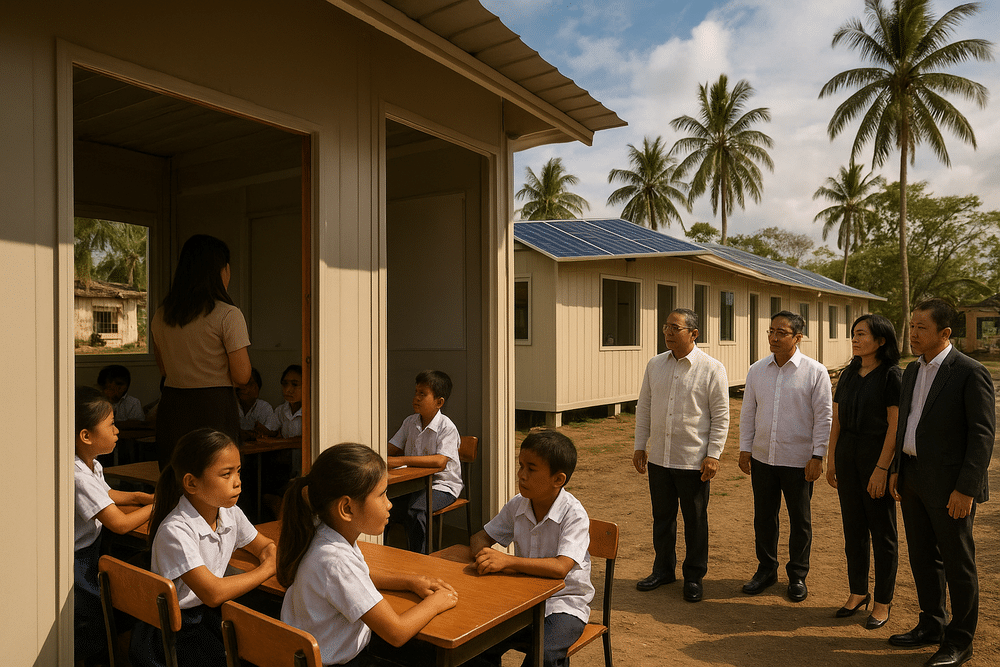
The modular units — assembled off-site and installed within two weeks — are designed to serve as temporary but fully functional classrooms. Each unit is equipped with solar panels and internet connectivity, allowing schools to resume both face-to-face and blended learning even when local utilities remain down.
In Cebu, the structures were installed at Marcelo B. Fernan–Polambato Elementary School in Bogo City, where the September earthquake disrupted classes for dozens of pupils. In Masbate, the classrooms were deployed to:
Calolod Elementary School
Electo T. Verano Elementary School
B. Titong High School
Asid Integrated School
Luy-A Elementary School
Paniqui National High School in Barangay Panique, Aroroy
In total, 360 learners affected by last year’s calamities have regained structured learning environments through the initial wave of installations.
Inspections Underscore National Push
On March 16, 2026, President Marcos, accompanied by First Lady Louise Araneta-Marcos and Education Secretary Sonny Angara, inspected the facilities at Marcelo B. Fernan–Polambato Elementary School in Cebu. Earlier visits included schools in Masbate, among them Paniqui National High School.
The administration framed the rollout as both a recovery tool and a forward-looking investment.
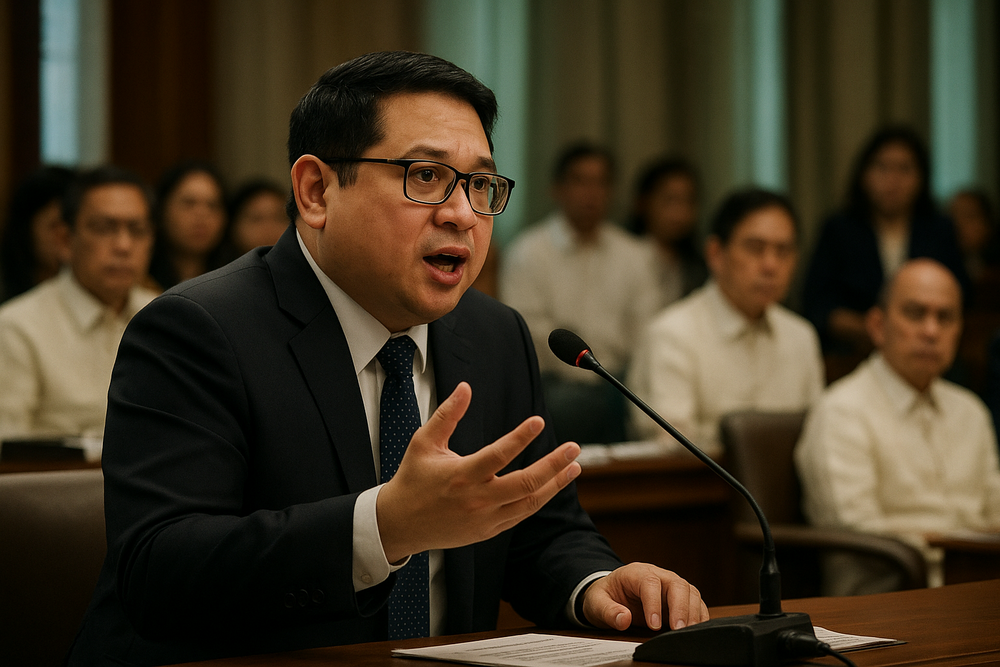
“These climate-resilient structures represent efforts to ensure that no Filipino learner is left behind even in the face of calamities,” Secretary Angara said.
He added: “This project reflects the marching orders of President Marcos to ensure that no Filipino learner is left behind, even in the face of the most challenging calamities… By integrating solar power and digital tools into these temporary spaces, we are not just rebuilding classrooms, but building a more resilient future for our children.”
Angara further emphasized preparedness over patchwork repairs, saying, “The President has mandated that we should be prepared for emergencies… it’s essential not only to conduct repairs but also to build smarter and more resilient school facilities.”
Part of a Broader Funding Plan
The Learning Continuity Spaces are funded under DepEd’s 2026 Disaster Preparedness and Response Fund, which targets the deployment of 1,380 LCS units nationwide. The initiative runs parallel to the department’s Improved Shelter and Resilient Schools (ISRS) Project, backed by a ₱9.39 billion budget for the construction of more than 4,700 school buildings and 13,000 classrooms.
In Masbate, the government has released ₱139.4 million for typhoon-hit schools. Validation of funding requirements in Cebu remains ongoing, according to official disclosures.
The twin strategy — permanent reinforced buildings combined with rapidly deployable modular classrooms — reflects an acknowledgment that rebuilding in disaster-prone regions must occur on two timelines: immediate continuity and long-term resilience.
Communities on the Front Line
For families in northern Cebu and Masbate — provinces frequently battered by typhoons and vulnerable to seismic activity — the stakes extend beyond infrastructure. When schools close for weeks or months, children often fall behind, and parents must juggle caregiving with work in farming and fishing communities already strained by disaster recovery.
By restoring classrooms within weeks rather than months, the LCS units aim to reduce learning loss and limit the need to convert evacuation centers and barangay halls into makeshift schools. Solar power systems reduce dependence on unstable electrical grids, while internet connectivity supports digital learning in areas where connectivity is often fragile.
In effect, the modular rooms function as academic lifeboats — temporary yet sturdy spaces that keep the education system afloat while permanent structures are repaired or rebuilt.
A Test of Long-Term Resilience
The Philippines ranks among the world’s most disaster-prone countries, facing frequent typhoons, earthquakes and volcanic activity. Education officials say that building back to pre-disaster standards is no longer sufficient.
With 1,380 modular units planned across the country this year alone, the government is positioning disaster-readiness as central to its education policy. Whether the initiative can meet the scale of need — and address the country’s longstanding classroom deficit — will likely become clearer as rollout expands beyond Cebu and Masbate.
For now, in classrooms once cracked by tremors or stripped by storm winds, students have returned to desks under new roofs — powered by the sun and, officials hope, anchored against the next catastrophe.