Pope Leo XIV has issued a pointed moral challenge to Christians who hold power over war, asking whether they have the humility to confess their sins if they are responsible for bloodshed.
Speaking on March 13, 2026, at the Vatican’s Clementine Hall, the Pope addressed priests and seminarians attending the 36th Course on the Internal Forum, organized by the Apostolic Penitentiary. His remarks focused on the sacrament of reconciliation, but they carried a sharp message for political leaders engaged in armed conflicts.
“Do those Christians who bear serious responsibility in armed conflicts have the humility and courage to make a serious examination of conscience and to go to confession?” Pope Leo asked.
Though he did not name specific countries or leaders, his comments come amid heightened global tensions, including the United States–Israel conflict with Iran, and repeat earlier appeals for peace in the Middle East.
A Moral Question Framed by Confession
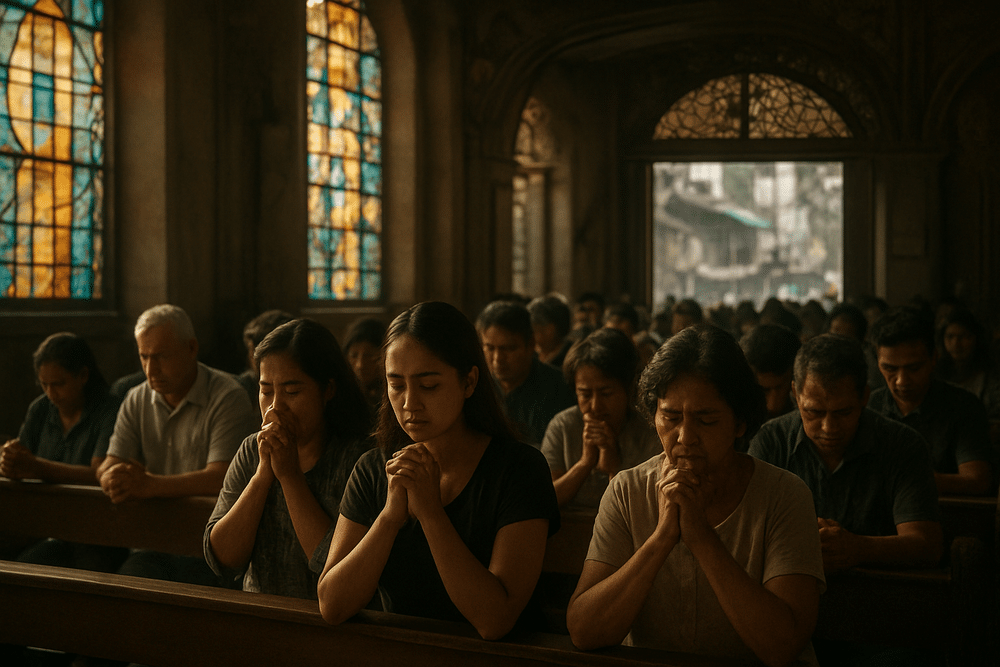
The Pope’s speech centered on the Catholic understanding of confession as a path to personal and social healing. Catholic teaching, codified in Canon 989, requires the faithful to confess serious sins at least once a year — a mandate first formalized in 1215 and reaffirmed by the Second Vatican Council.
By placing war within the context of sacramental confession, Pope Leo underscored personal accountability. “Only a reconciled person is capable of living in a way that is both unarmed and disarming,” he said.
The sacrament, he told his audience of clergy, is not a ritual formality but a moral reckoning. His question suggested that no political office or national cause exempts a Christian from examining his or her conscience.
War and the “Just War” Debate
The Pope’s remarks follow earlier warnings that “war is back in vogue and a zeal for war is spreading,” an observation he made in January while appealing for peace in the Middle East.
Days before the March 13 address, Cardinal Robert McElroy of Washington argued that the conflict involving Iran fails to meet the Catholic Church’s just war principles. He cited the absence of an imminent threat and what he described as disproportionate and unclear objectives.
The just war doctrine — developed over centuries of Catholic moral theology — sets strict conditions for when war may be morally justified, including last resort, proportionality and a reasonable chance of success. While Pope Leo did not explicitly invoke the doctrine in his March speech, his comments echoed its central demand: moral responsibility rests with those who order and wage war.
No Direct Political Targets
The Vatican did not identify any specific leaders as the object of the Pope’s remarks. Several prominent American officials associated with the Iran conflict, including Catholic public figures, have not publicly responded to the Pope’s comments.
The Holy See has consistently framed its interventions in broad moral terms rather than direct political rebuke. In this case, the emphasis was not on policy prescriptions but on personal conversion.
Resonance in a Catholic Nation
While the Pope’s appeal was global, it carries particular weight in countries like Malta and the Philippines, where Catholicism shapes public life and moral conversation.
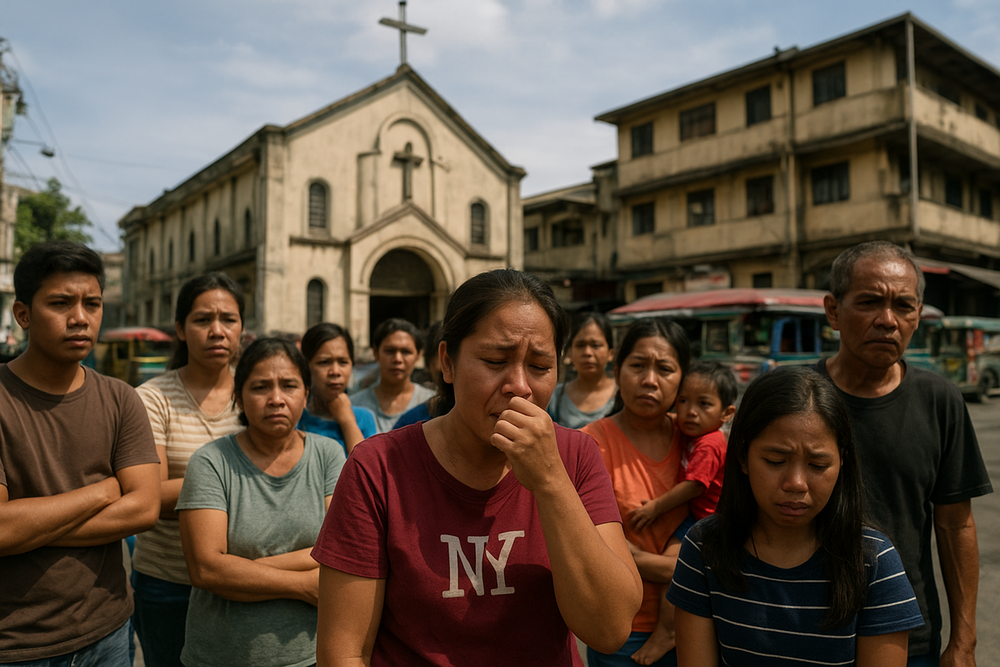
The Philippines, home to an estimated 86 million Catholics — more than 80 percent of its population — often looks to Rome for guidance on questions of war, peace and political ethics. Though the country is not directly involved in the conflicts referenced by the Pope, Church leaders frequently echo Vatican teaching in local homilies, especially during the Lenten season, when the faithful are encouraged to reflect on repentance and reconciliation.
For ordinary Catholics, the Pope’s challenge may feel less like a geopolitical critique and more like a Lenten examination of conscience: a reminder that accountability begins within, whether in a parish pew or a presidential palace.
Confession as an Act of Peace
The Apostolic Penitentiary course, which formed the backdrop of the speech, trains priests in the delicate task of hearing confessions and guiding penitents through moral discernment. By linking the confessional to the battlefield, Pope Leo drew a stark contrast: reconciliation is the antidote to cycles of retaliation.
Confession, in his framing, is not merely private devotion. It is a discipline that can ripple outward into public life. A leader who submits to moral scrutiny, the Pope implied, may be less inclined to resort to arms.
As global tensions persist, Pope Leo’s question lingers — simple, direct and difficult to ignore: will those who claim the Christian faith also submit their decisions about war to the same moral examination they expect of the faithful?